
Geminated Teeth
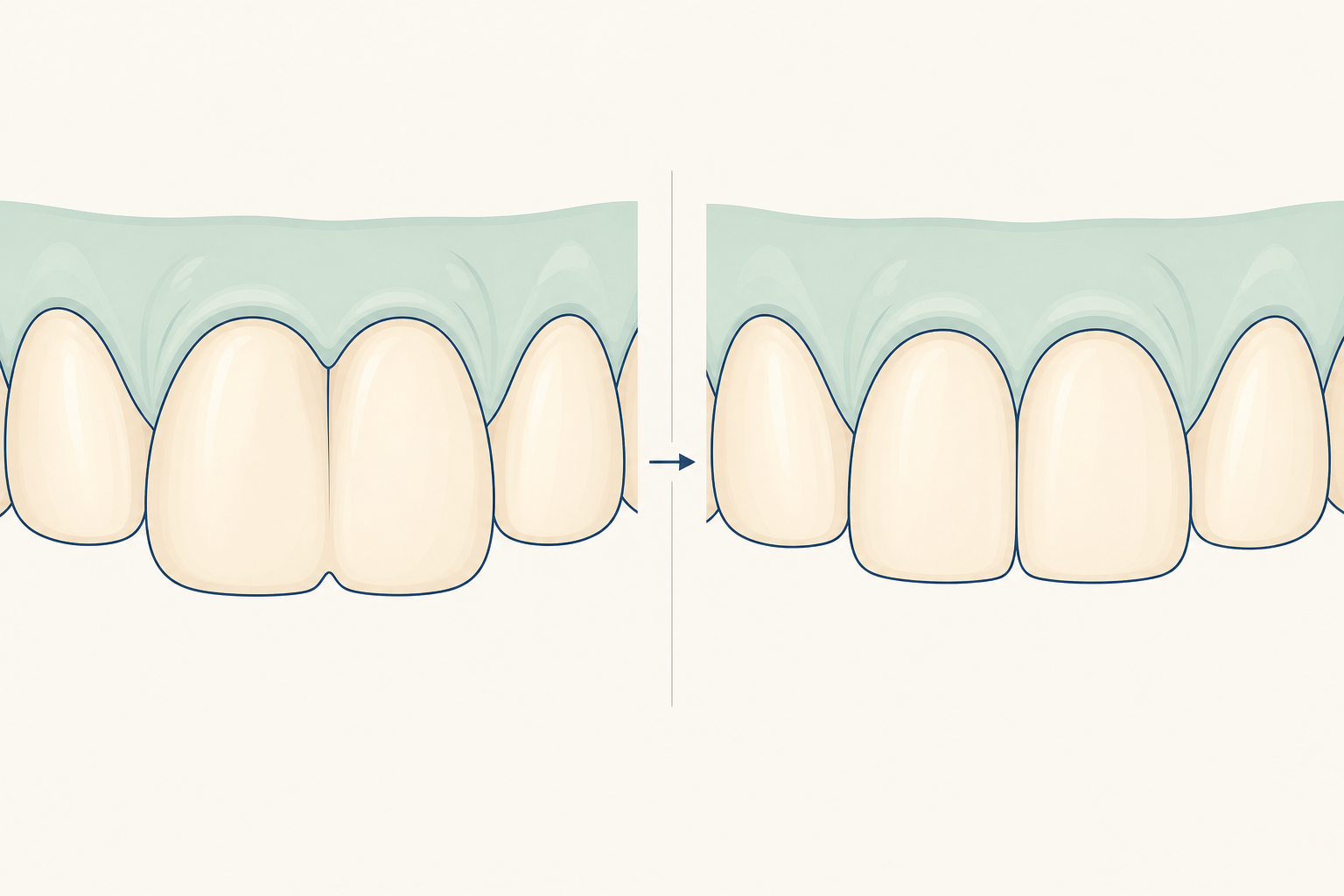
A geminated tooth develops when one tooth bud partly divides, leaving a broad or split-looking crown but the usual tooth count.
[2]The short answer
Gemination happens when one developing tooth bud attempts to divide, producing a partially split or bifid crown while the total number of teeth remains unchanged.
[2]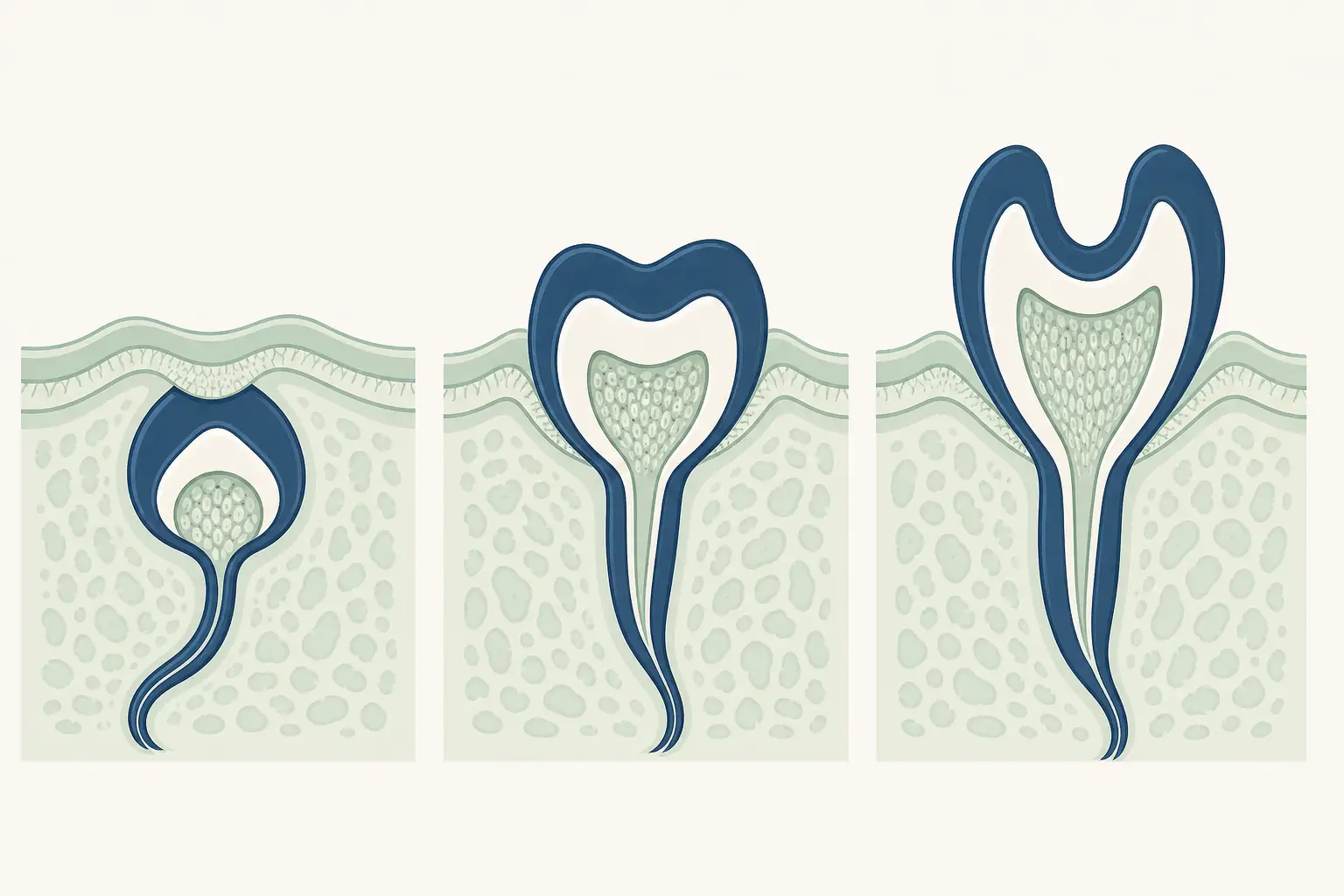
What the change looks like
What does a geminated tooth look like?
What causes gemination?
Gemination begins during tooth development when a single tooth bud tries to divide. The attempt does not create two separate teeth, so one unusually shaped tooth remains.
[2]How is gemination different from fusion?
Which problems can the tooth shape create?
The deep grooves left by an attempted division can retain plaque. This makes a geminated tooth more susceptible to decay and periodontal problems, and it can interfere with eruption of a nearby tooth.
[1]How is gemination diagnosed?
How can a geminated tooth be treated?
Treatment is directed at the actual problem created by the tooth's form, such as appearance, plaque-retaining grooves, decay, periodontal disease, or an eruption disturbance.
[1]What affects the cost of treatment?
The cost depends on whether care is needed for decay, gum disease, an eruption problem, or the tooth's appearance, because those concerns call for different clinical work. A broad crown alone does not identify the treatment required or confirm fusion in every case.
[1]What can happen if grooves trap plaque?
Plaque can collect in the deep grooves of a geminated tooth. Those grooves raise the chance of caries and periodontal problems, so cleaning the tooth carefully is particularly important.
[1]Can gemination be prevented?
Gemination is a developmental tooth anomaly and cannot be prevented. Meticulous oral hygiene helps limit plaque accumulation in the grooves created by the partial division.
[1]