Dental Nation
Condition guide

Fissured Tongue

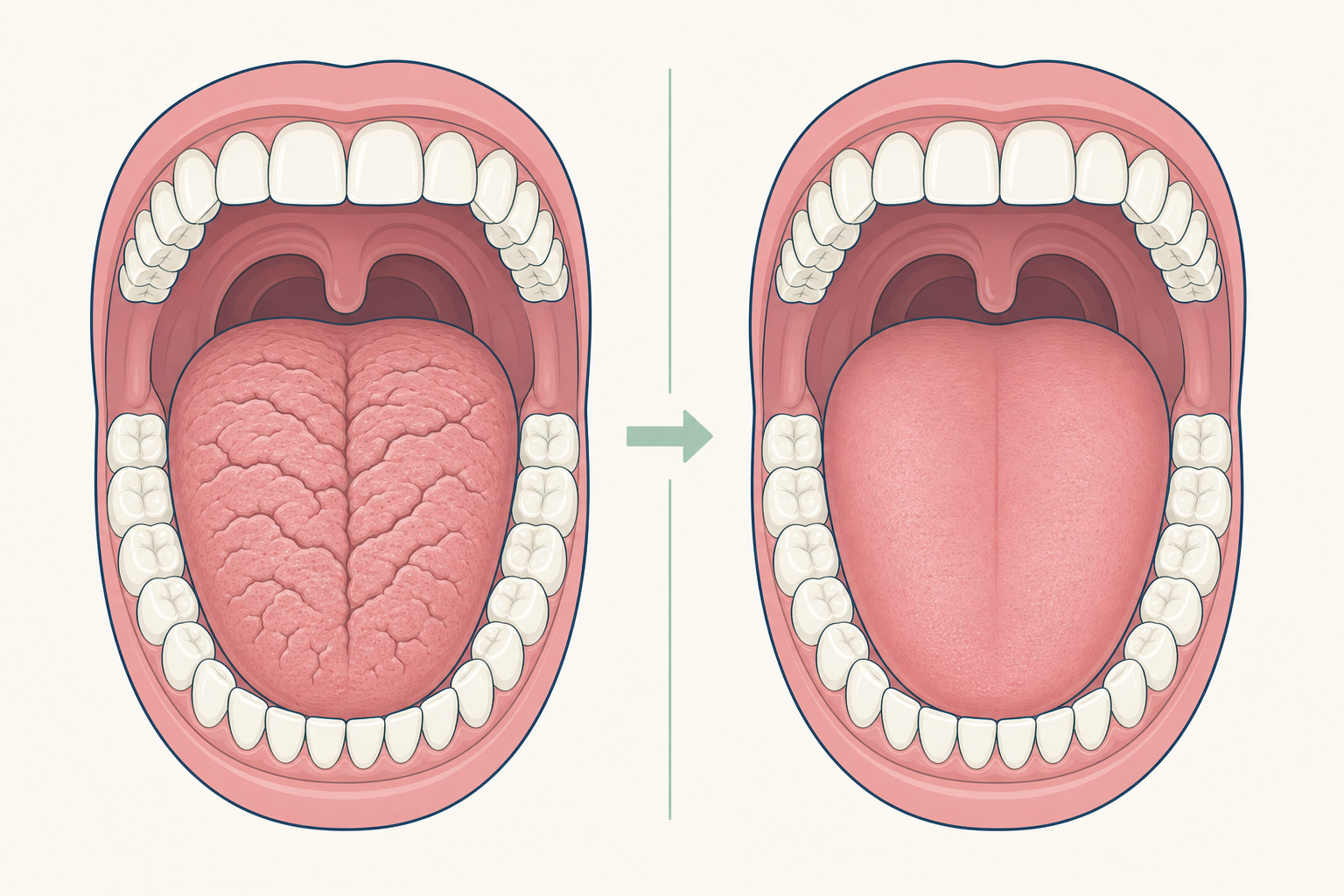
Fissured tongue produces grooves on the tongue surface; trapped food can irritate them or contribute to bad breath.

[1][2]

The short answer

Fissured tongue is a benign pattern of deep grooves on the tongue that can trap food debris and cause irritation or bad breath.

[1][2]
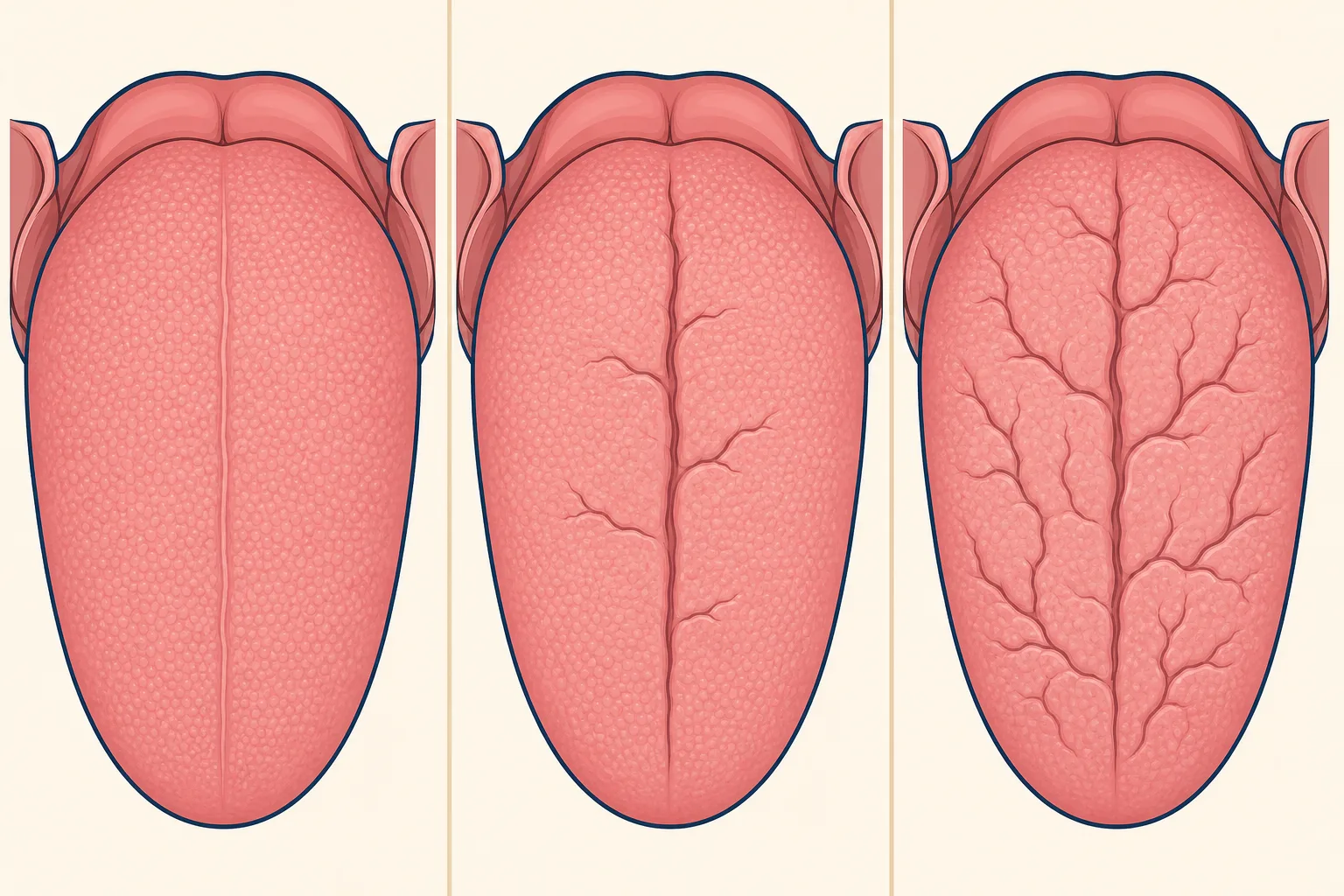
Fissured Tongue dental educational illustration

What the change looks like

Illustrative diagram: Fissured Tongue
Illustration — a representative diagram, not a patient photo.
The DN First Look799 AED
Book The DN First Look

What does a fissured tongue feel like?

Changes to report
ChangeWhat it can mean
Visible grooves on the tongueThese are the defining surface feature of fissured tongue.[1][2]
Irritation after debris collectsDeep fissures can retain material and become uncomfortable.[1][2]

[1][2]

Why do tongue fissures develop?

Fissured tongue is a recognised tongue pattern with grooves of variable depth. A clinical history and examination help determine whether discomfort is due to retained debris or another tongue condition.

[1][2]

How should changes in the grooves be followed?

The depth and pattern of fissures can vary. The useful question is whether pain, redness, coating, or a new change has developed; these sources do not provide a patient staging chart.

[1]
Details useful at review
DetailWhy it matters
New pain or burningIt may point to irritation or another condition needing assessment.[1]
Debris or coating in a grooveIt can guide advice about tongue cleaning.[1][2]

[1][2]

When should you book an assessment?

Book an assessment if a fissured tongue becomes painful, repeatedly irritated, or has a new appearance. A painful tongue can have a cause beyond the fissures themselves.

[1][2]

How is fissured tongue identified?

A clinician identifies fissured tongue by examining the tongue surface and asking about symptoms. Examination also helps distinguish simple fissures from other causes of tongue soreness or surface change.

[1]

What care may help?

Fissured tongue often needs no treatment beyond careful tongue cleaning. When there is discomfort, the clinician looks for retained debris, irritation, or another cause and advises care accordingly.

[1][2]
Care choices based on findings
FindingCare approach
Fissures without discomfortGentle cleaning can remove retained material.[1][2]
Painful or changing tongue surfaceAssessment can check for another cause of symptoms.[1]

[1][2]

What should the care discussion cover?

The discussion should cover the tongue examination, cleaning advice, any suspected cause of discomfort, and follow-up if symptoms persist. Treatment is based on the finding rather than the grooves alone.

[1][2]

What if a fissured tongue is not kept clean?

Debris can collect in deep fissures and contribute to irritation or discomfort. Persistent pain or a new tongue change should be assessed because it may not be explained by fissures alone.

[1][2]

How can discomfort be reduced?

Gentle tongue cleaning can reduce retained debris in fissures. Avoiding irritation when it is identified may help, while pain or a changing surface still calls for clinical review.

[1][2]

Frequently asked questions

Does fissured tongue always need treatment?

Fissured tongue often needs only gentle cleaning, but pain, irritation, or a new tongue change should be assessed for another cause.

[1][2]

Sources used for this guide

  1. Fissured TongueAmerican Academy of Oral Medicine · 2026-07-21
  2. Lingua plicataIndian Dermatology Online Journal · 2026-07-21