
Dental Nation
Condition guide

Enamel Erosion

Acid can cause permanent loss of tooth mineral, so reducing further acid exposure is the first priority.

[1][2]

The short answer

Enamel erosion causes progressive, irreversible loss of tooth mineral, so preventing further acid exposure comes first.

[1][2]
Enamel Erosion dental educational illustration

What the change looks like
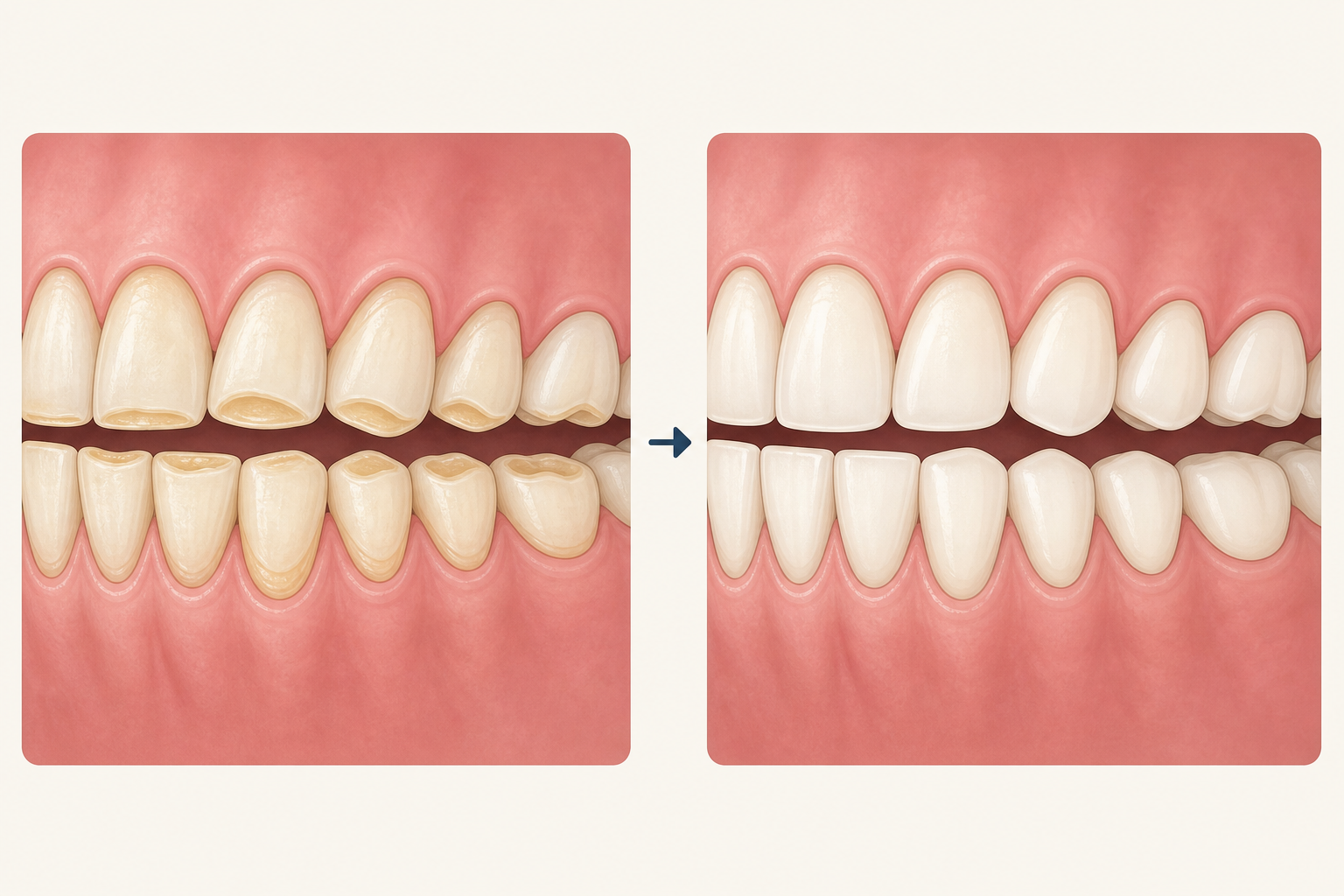
Illustrative diagram: Enamel Erosion
Illustration — a representative diagram, not a patient photo.
The DN First Look799 AED
Book The DN First Look

What is enamel erosion?

What signs can enamel erosion cause?

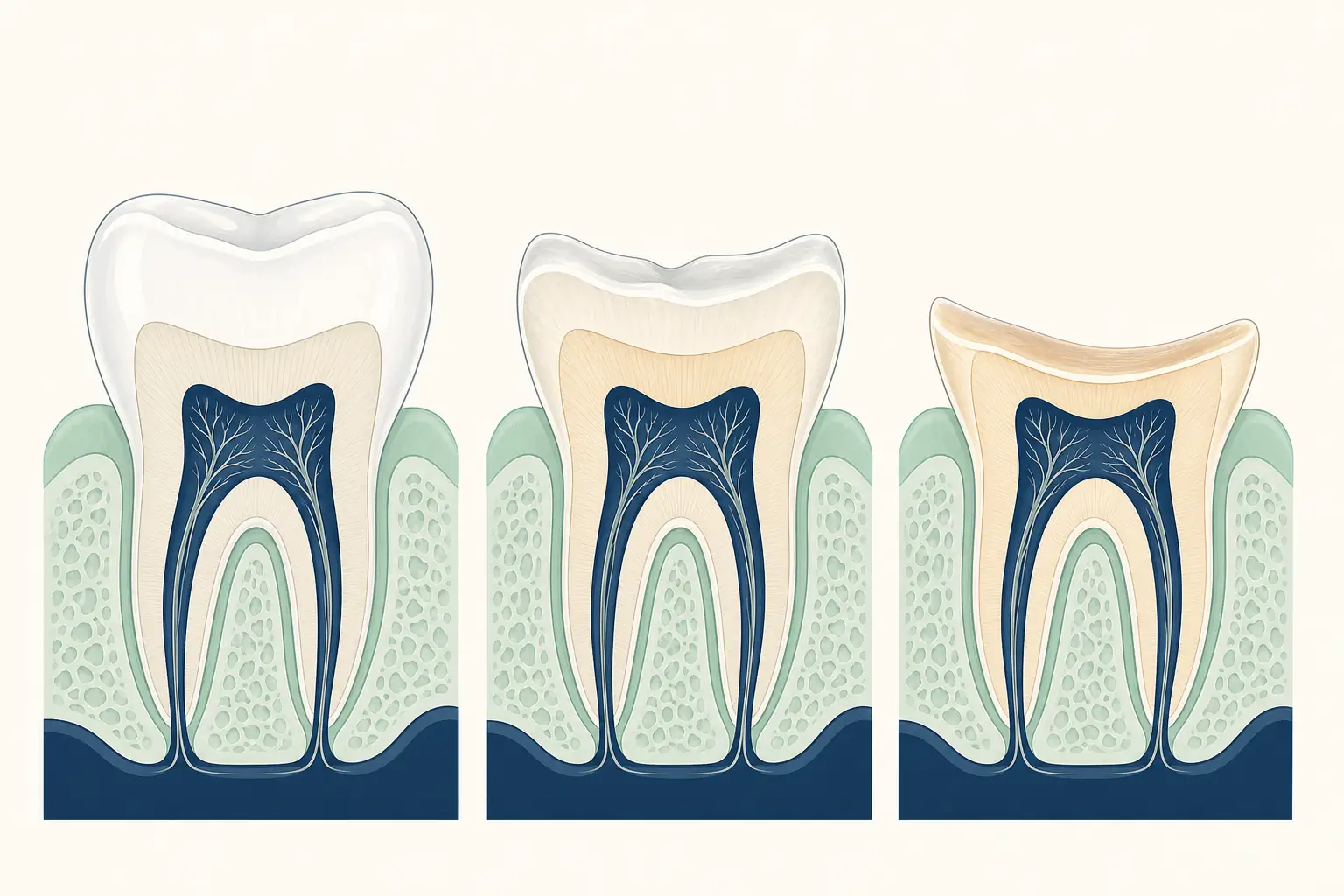
A clinician may see loss of enamel texture, or cupping and flattening on biting surfaces. These changes can develop before they are obvious to you.

[1]
Changes that can be seen during an examination
FindingWhere it appears
Loss of enamel textureThe enamel surface no longer has its usual texture.[1]
Cupping or flatteningThese changes can appear on the chewing surfaces of teeth.[1]

[1]

What causes enamel erosion?

Acid from inside the body, such as acid reflux or repeated vomiting, can contribute to erosion. Acidic foods and drinks are external causes; frequent soft drinks, acidic sweets, and acidic fruit juice can raise the risk.

[1][2]

How can enamel erosion progress?

Early tooth wear can be subtle. If erosion and other wear processes continue, structural breakdown can become severe enough to need major rehabilitative treatment.

[1][2]
How the problem can change over time
Point in progressionWhat may happen
Early changeThe signs of tooth wear may be subtle.[1][2]
Advanced breakdownMajor rehabilitative treatment may be needed when structural breakdown is severe.[1][2]

[1][2]

What raises the risk of enamel erosion?

Frequent carbonated soft drinks are a primary risk factor for erosive tooth wear. Holding, swishing, or straining an acidic drink between the teeth also increases the acidic challenge to enamel.

[1][2]

How is enamel erosion checked?

Checking for erosion involves a careful clinical examination and an evaluation of possible acid exposures. The assessment looks for visible wear signs and the factors that may be driving them.

[1][2]

How is care matched to the damage?

Care begins by reducing further erosion through lifestyle and dietary changes. Restorative treatment may be used to halt progression when erosive lesions need it.

[1][2]
Two parts of managing erosive tooth wear
Part of carePurpose
Lifestyle and dietary changesThey reduce the acid exposures that can continue erosion.[1][2]
Restorative treatmentIt may be needed to halt progression of erosive lesions.[1][2]

[1][2]

What affects the cost of care in Dubai?

Care may involve preventive changes alone or restorative treatment to halt erosive lesions. The amount of restorative treatment needed is therefore one practical part of the care involved.

[1][2]

What can happen if enamel erosion continues?

Erosive demineralisation can lead to progressive, irreversible loss of tooth mineral. Erosion can also strengthen the damaging effect of abrasion or tooth-to-tooth wear.

[1][2]

How can you reduce further enamel erosion?

Avoid dietary acids between meals and reduce acidic beverages. Drink water with acidic foods or rinse with water afterwards; after vomiting, rinse with water, a sodium bicarbonate rinse, or milk instead of brushing immediately.

[1]

Frequently asked questions

Can reflux or vomiting contribute to enamel erosion?

Yes. Acid reflux and excessive vomiting are internal acid exposures that can contribute to erosive demineralisation.

[1][2]
Should I brush straight after an acidic drink?

Rinse with water after an acidic drink or food rather than brushing immediately.

[1]