
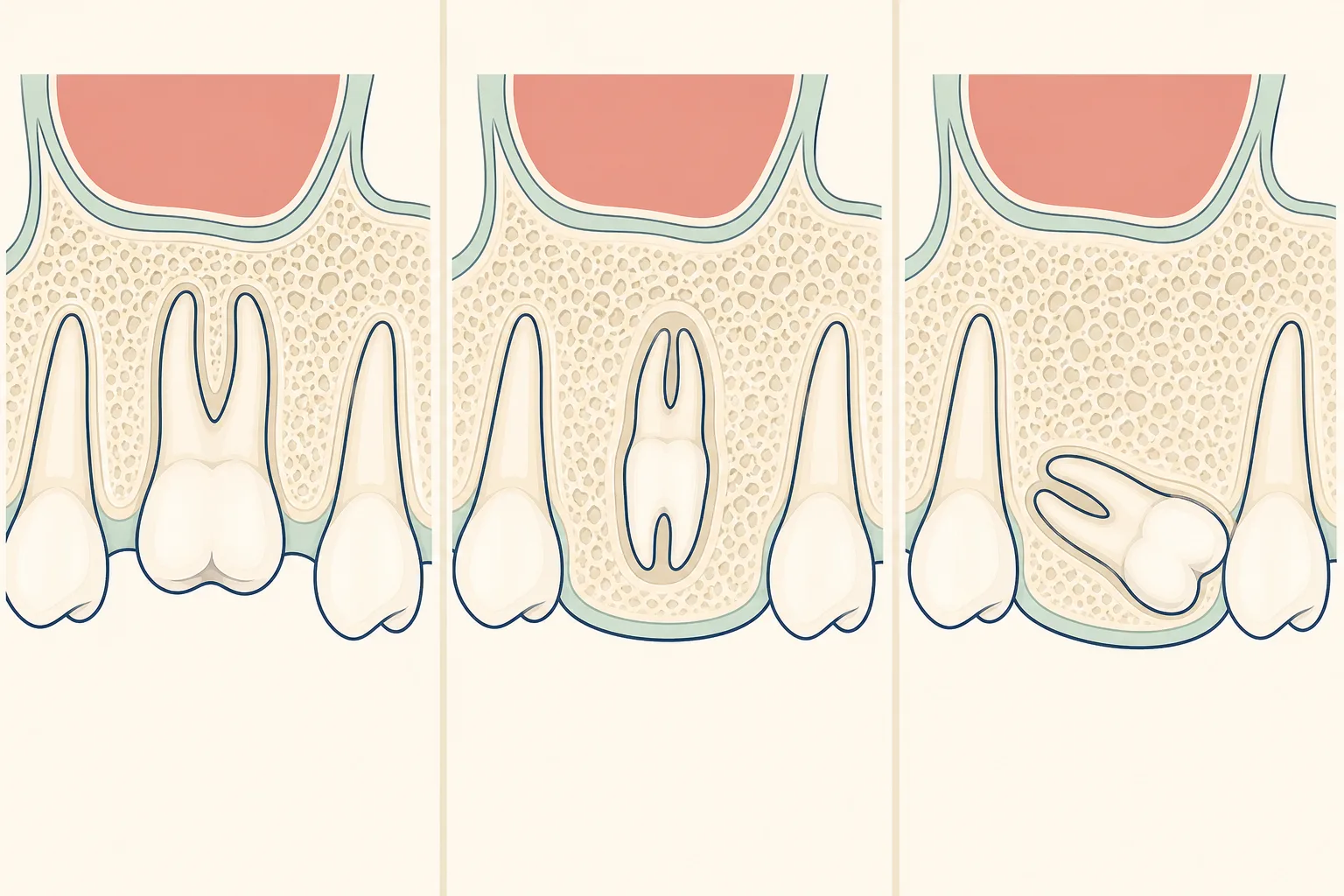
What the change looks like
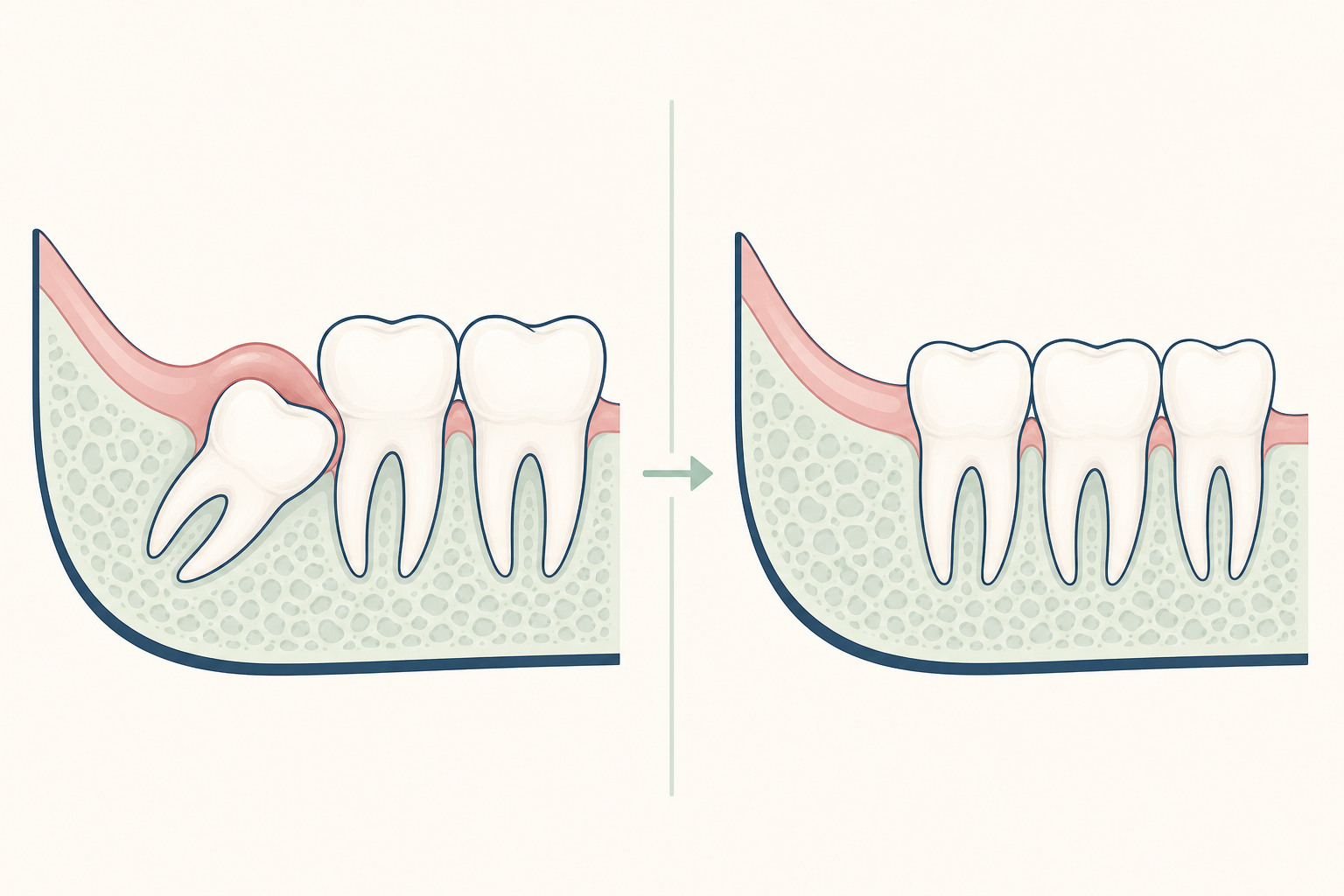
What can an embedded tooth mean for your mouth?
A tooth that does not emerge through the gum as expected is an unerupted tooth. Extraction of an unerupted tooth can involve bleeding, infection, nerve injury or delayed healing.
[4]Why does a tooth become embedded?
How is an embedded tooth different from other eruption problems?
A submerged tooth has already erupted but becomes ankylosed and cannot keep erupting as the jaws grow. Primary failure of eruption is a partial or complete failure after the eruption path has formed.
[3]What can interfere with normal eruption?
How is an unerupted tooth assessed?
Assessment of an unerupted tooth includes deciding whether there is a physical obstruction, because that separates an impacted tooth from an embedded one. Imaging may be needed before surgery when displacement is suspected.
[3]What treatment may be needed?
Surgical extraction of an unerupted tooth can include raising a flap, removing bone, sectioning the tooth and placing sutures. The approach is planned around the tooth and nearby anatomy.
[4]What can affect the care needed?
What are the risks of extraction?
Can problems from an embedded tooth be limited?
Frequently asked questions
Is an embedded tooth the same as an impacted tooth?
No. An impacted tooth has a physical barrier blocking eruption, whereas an embedded tooth stays unerupted without an obstruction because eruptive force is insufficient.
[3]