
Dry Socket
Severe pain three to five days after an extraction can occur when the protective blood clot is lost and bone becomes exposed.
[1][2]The short answer
Dry socket occurs when an extraction socket loses its protective blood clot or the clot never forms, exposing the bone and nerves underneath.
[1][2]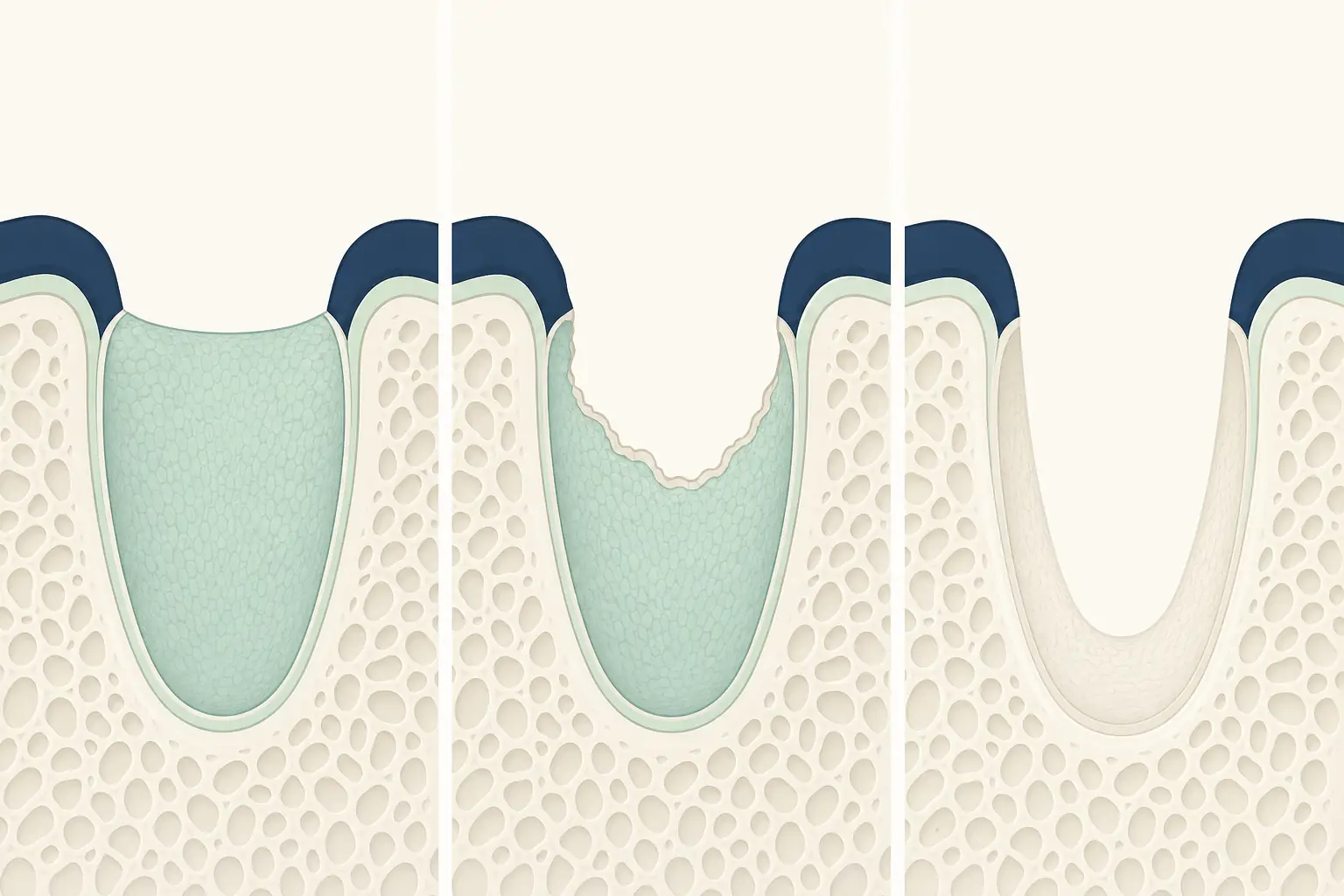
What the change looks like
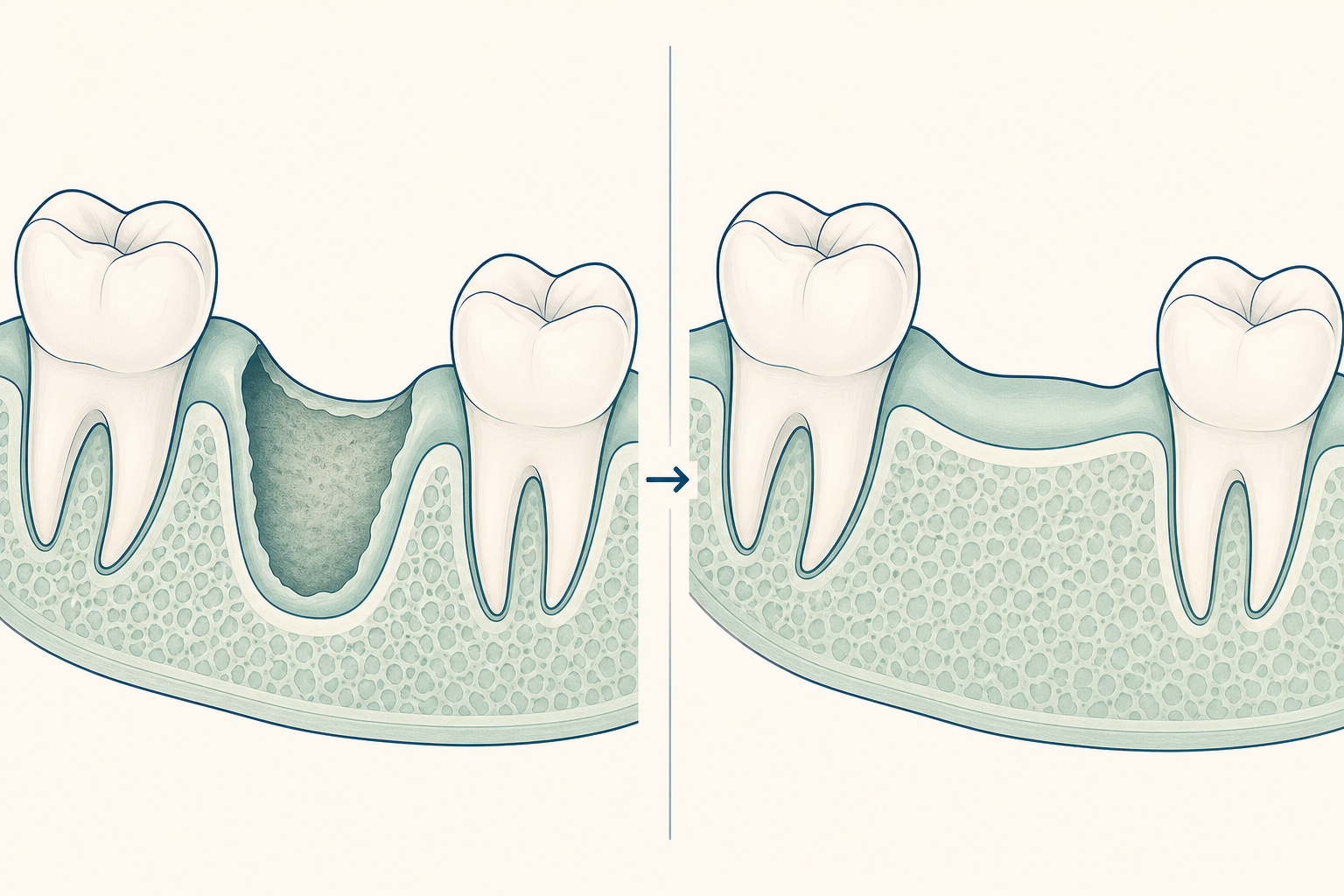
How does dry socket feel?
Why does dry socket happen?
When does it usually start?
What can make dry socket more likely?
Smoking, drinking through a straw, and vigorous rinsing can dislodge the blood clot. Suction from a straw can pull the clot loose, and hard swishing can do the same.
[2]How is dry socket identified?
Severe pain after an extraction raises concern for dry socket. The socket is checked directly, and an X-ray may be taken to look for tooth fragments left in the jaw.
[2]How is dry socket treated?
Treatment can include gently irrigating the socket with salt water, placing a medicated dressing, and using pain medicine. Antibiotics may be used when infection is suspected.
[2]What care may be needed after an extraction?
Dry-socket care may involve examination, socket irrigation, a medicated dressing, pain relief, and sometimes an X-ray or antibiotics when infection is suspected.
[2]Why should severe post-extraction pain be checked?
Dry socket pain can be intense and can radiate from the jaw to the head and neck. Infection, an unpleasant taste, and bad breath can occur alongside the pain.
[2]How can you protect the blood clot?
Leave the clot alone, avoid straws for at least a week, and do not rinse vigorously. If rinsing is advised, tilt the head and let the liquid soak the area rather than swishing hard.
[2]Frequently asked questions
Can I use a straw after an extraction?
Avoid straws for at least a week because suction can dislodge the clot that protects the socket.
[2]