
Developmental Odontogenic Cyst
Cysts from tooth-forming tissues can stay silent or delay eruption, move teeth, and swell the jaw.
[3]The short answer
Developmental odontogenic cysts arise from tooth-forming tissues and may be found on imaging before they delay eruption or swell the jaw.
[3]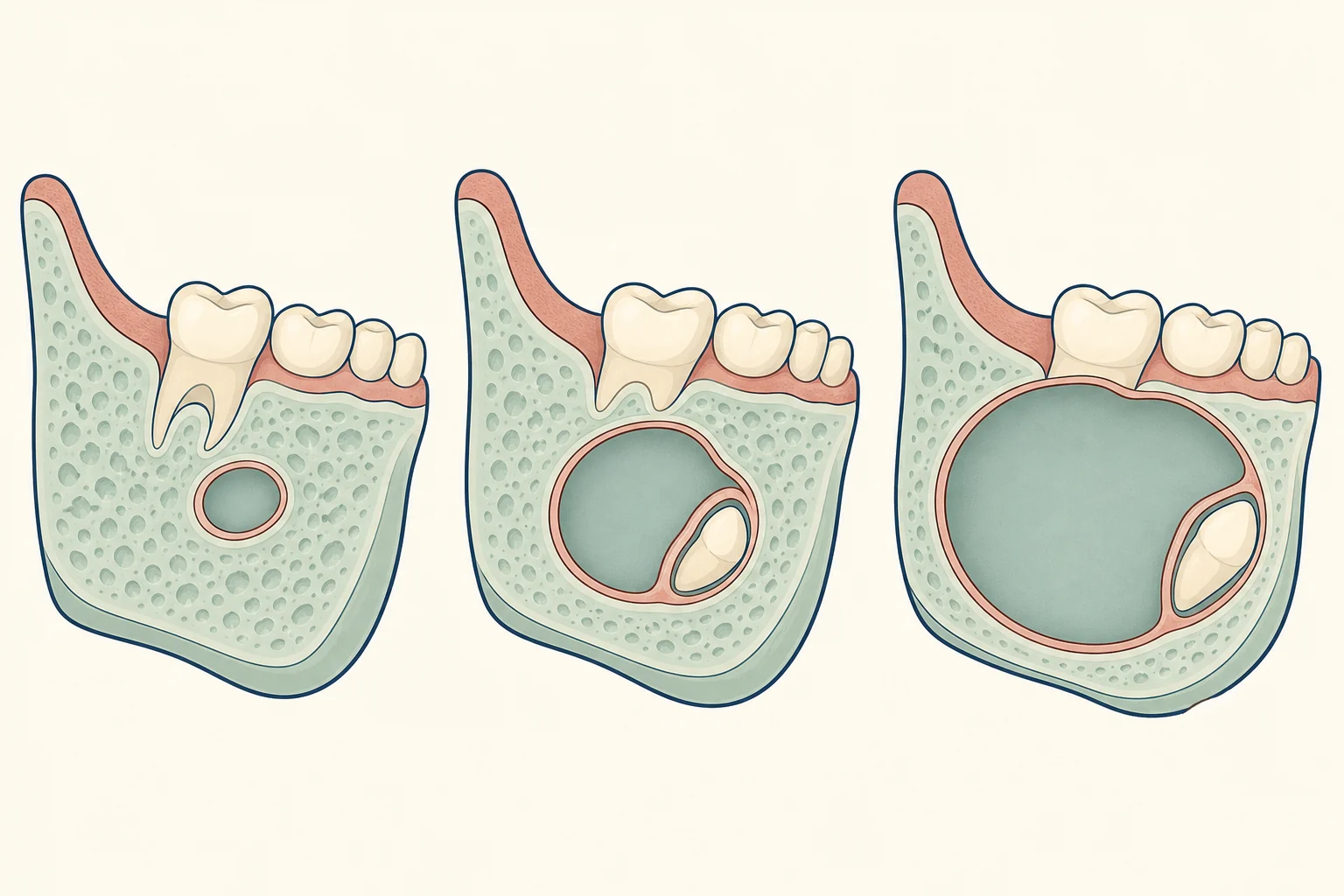
What the change looks like
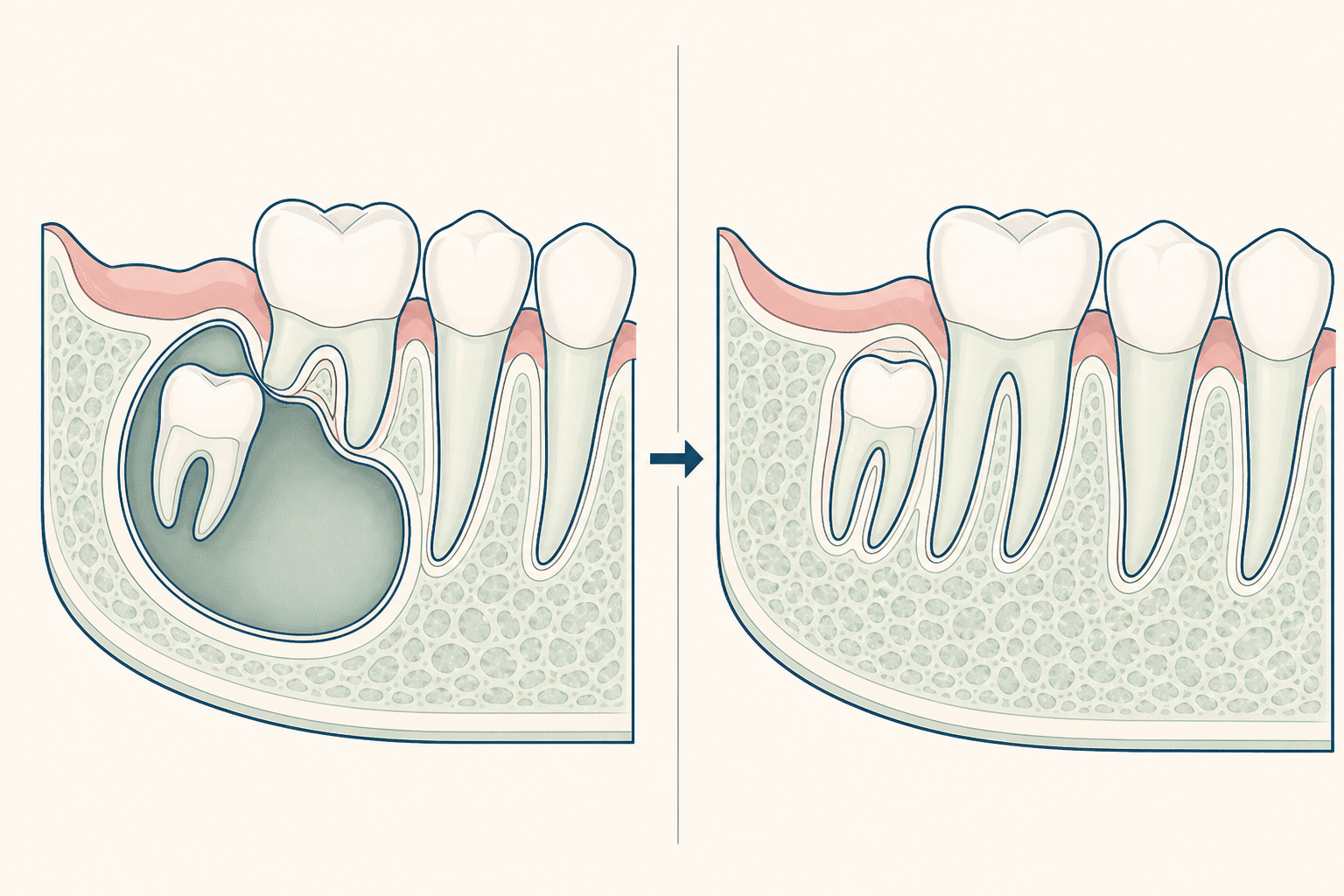
What symptoms can they cause?
An eruption cyst can appear as bluish, swollen tissue over an emerging primary or permanent tooth. Other cysts may cause pain, infection, tooth movement or swelling.
[3]Why do these cysts form?
These cysts arise from remnants involved in tooth development. A dentigerous cyst is associated with an unerupted tooth, while eruption cysts occur as primary or permanent teeth emerge.
[3]How can a cyst change over time?
A lesion can be quiet while it expands within alveolar bone. Later findings can include delayed eruption, tooth displacement, swelling, pain, trismus, altered sensation or infection.
[3]Who may develop one?
Dentigerous cysts are most often associated with third molars and maxillary canines and occur more often in the first and second decades of life. Eruption cysts occur in infants and children during tooth eruption.
[3]How is the diagnosis confirmed?
Radiographs show a cyst as a well-defined radiolucent area and establish its relationship with nearby teeth. Similar appearances can occur with aggressive jaw tumours, so a biopsy may be needed for a definite diagnosis.
[3]What treatment is used?
Eruption cysts are often self-limiting and usually have no complications. A dentigerous cyst can be treated by removing the impacted tooth and taking a biopsy; surgical removal commonly resolves the lesion.
[3]What affects the cost in Dubai?
Treatment can include diagnostic radiographs, biopsy, removal of the cyst and treatment of an impacted tooth. The steps required depend on the cyst's type and its relationship to the tooth.
[3]What happens if a cyst grows?
Odontogenic keratocysts can expand in the jaw with little outward swelling. They may later cause swelling, pain, trismus, altered sensation or infection; large cysts can damage bone or adjacent teeth.
[3]Can developmental odontogenic cysts be prevented?
Frequently asked questions
Can a cyst around an unerupted tooth disappear on its own?
Eruption cysts are often self-limiting, while a dentigerous cyst generally needs assessment and may require removal with the associated impacted tooth.
[3]