
Developmental Jaw Disorder
A jaw-development problem can alter the bite, comfort, and oral health; early assessment can widen treatment options while growth continues.
[2]The short answer
A developmental jaw disorder may begin as a bite problem, with the lower teeth or jaw positioned in front of the upper teeth. As the discrepancy becomes more substantial, it can affect comfort and oral health. Jaw discomfort or pain, especially around the joints, and uneven or accelerated tooth wear are symptoms that can accompany an abnormal bite.
[2]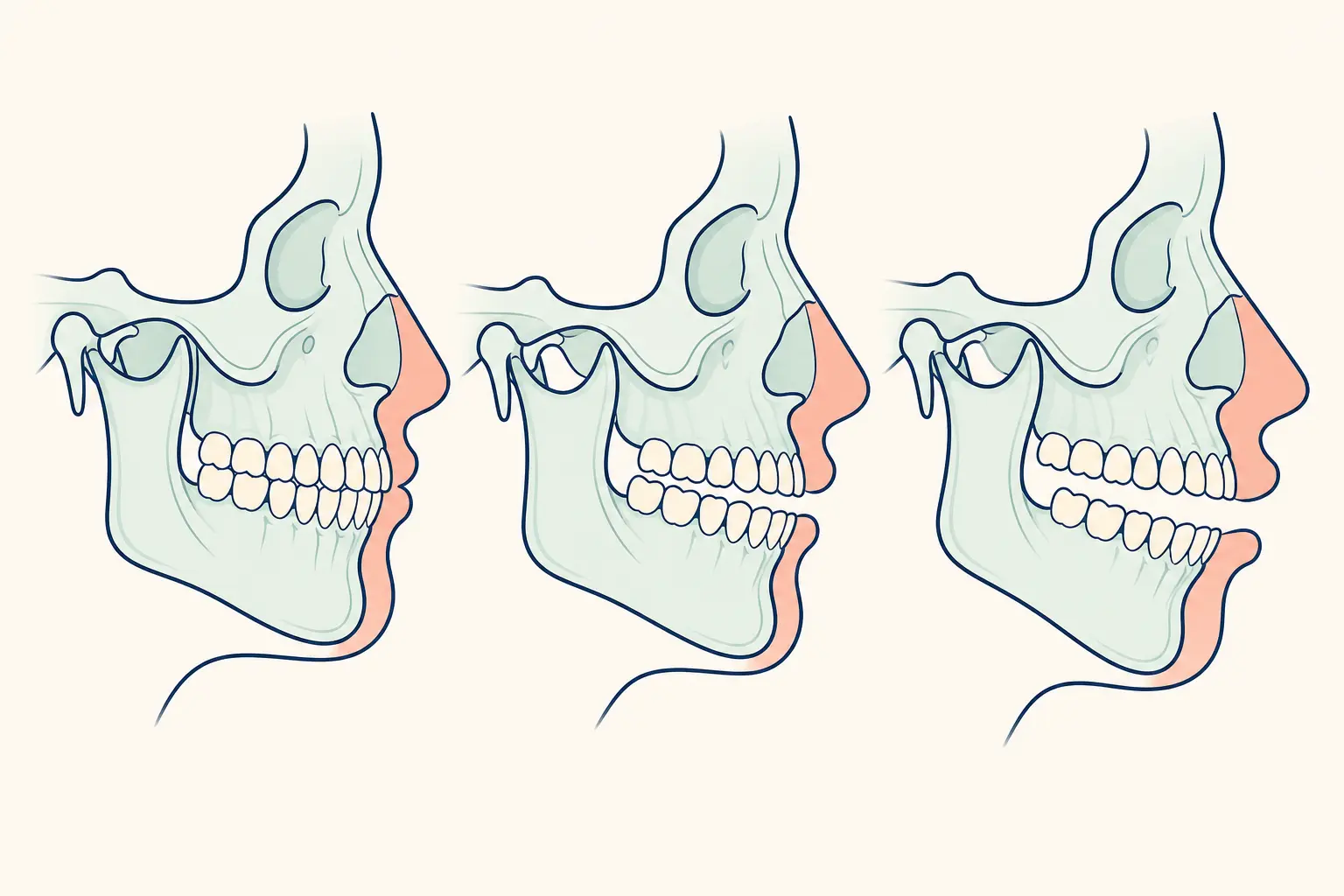
What the change looks like
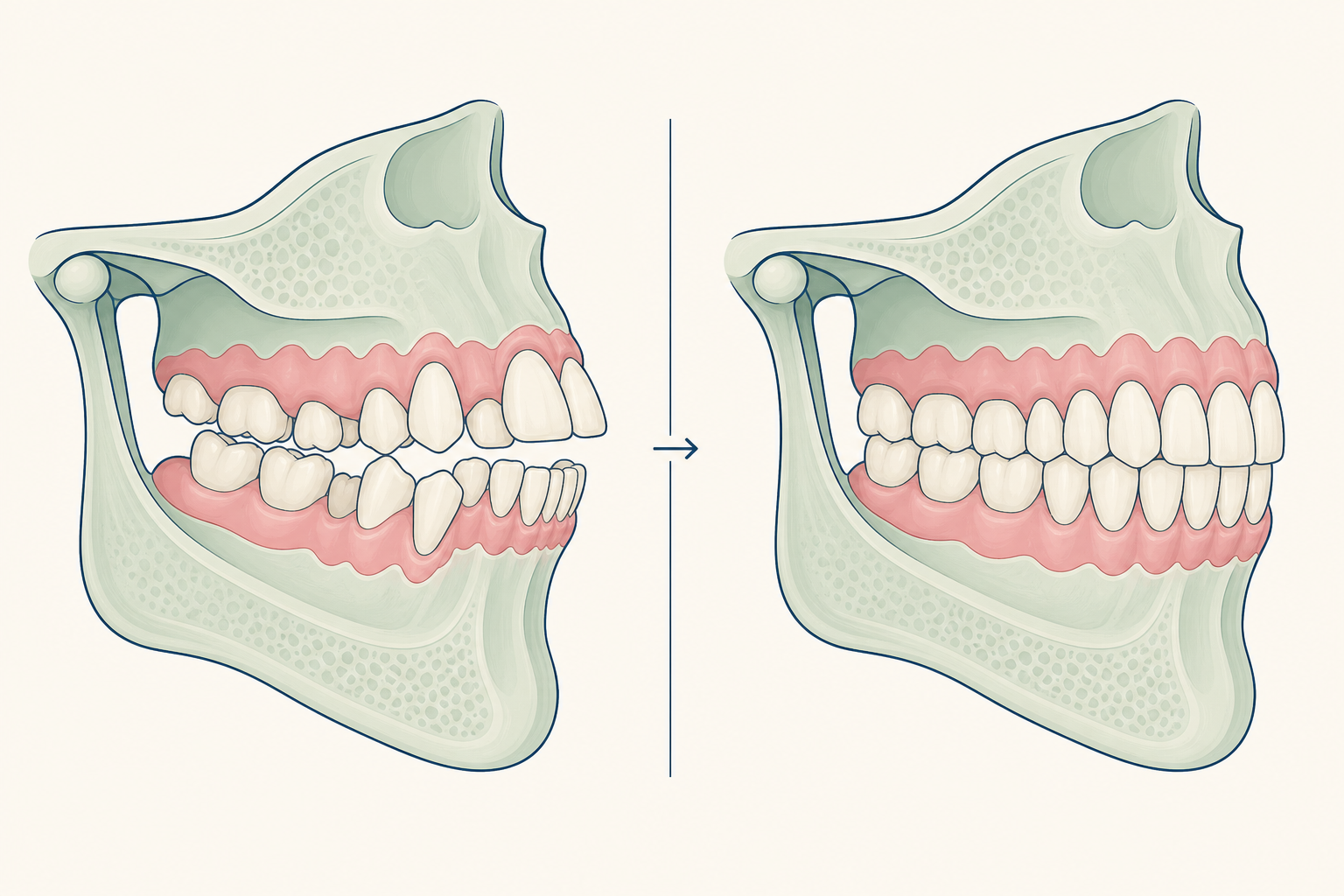
What symptoms can a developmental jaw disorder cause?
What can affect jaw and bite development?
Childhood habits can influence how the teeth and jaws develop. Prolonged thumb sucking, extended pacifier use, tongue thrusting, and chronic mouth breathing are all described as influences during the early years. When jaw development is still underway, growth-guiding appliances can use that remaining growth to improve jaw alignment.
[2]How does the problem change as the jaws grow?
The practical difference is whether the jaws are still growing. A child may have access to growth appliances that guide jaw development, while an adult has completed jaw growth and may need a more involved plan for a severe discrepancy. Adults can still receive treatment and achieve good results.
[2]Who may be more likely to develop this bite problem?
The childhood habits linked with altered dental development include prolonged thumb sucking, extended pacifier use, tongue thrusting, and chronic mouth breathing. Continuing an oral fixation after other approaches have failed can also prompt the use of a dental appliance to prevent future jaw problems.
[1][2]How is a developmental jaw disorder diagnosed?
Diagnosis looks at the teeth, bite, jaw position, and facial structure together. A clinical examination assesses how the teeth fit and how the jaws align, giving the clinician the full picture needed to judge the discrepancy.
[2]What treatment is used at different stages?
For a growing child whose underbite relates to jaw development, a palatal expander may be paired with reverse-pull headgear to encourage forward growth of the upper jaw. A significant skeletal discrepancy after jaw growth may require orthognathic surgery, usually with orthodontic treatment before and after it.
[2]| Situation | Treatment described |
|---|---|
| Child still growing | A palatal expander and reverse-pull headgear may guide upper-jaw growth and improve alignment.[2] |
| Significant skeletal discrepancy | Jaw surgery may be combined with orthodontic treatment before and after the procedure.[2] |
What shapes the treatment route in Dubai?
The treatment route is shaped by growth and by whether the discrepancy is dental or skeletal. A growing child may use a jaw-guiding appliance, while a substantial skeletal problem after growth may involve jaw surgery with orthodontic treatment around it. Those are different clinical services and should not be treated as one interchangeable procedure.
[2]What can happen if the bite problem is left untreated?
An untreated underbite can affect oral health, comfort, and quality of life. The bite may also be associated with jaw discomfort or pain around the joints and uneven or accelerated tooth wear. A large skeletal discrepancy can progress beyond what orthodontic treatment alone can correct.
[2]Can early action reduce future jaw problems?
An orthodontic evaluation by age 7 can identify developing bite problems while the jaws are still growing. If a child is 3 to 4 years old and still using a pacifier, cutting the rubber tip breaks the suction seal and removes the soothing sensation; a dental appliance may help when other methods fail.
[1][2]Frequently asked questions
Can adults still have a developmental jaw disorder treated?
Yes. Adults can receive underbite treatment and achieve good results, although a severe discrepancy may require a more involved plan after jaw growth is complete.
[2]