Dental Nation
Condition guide

Dentin Hypersensitivity

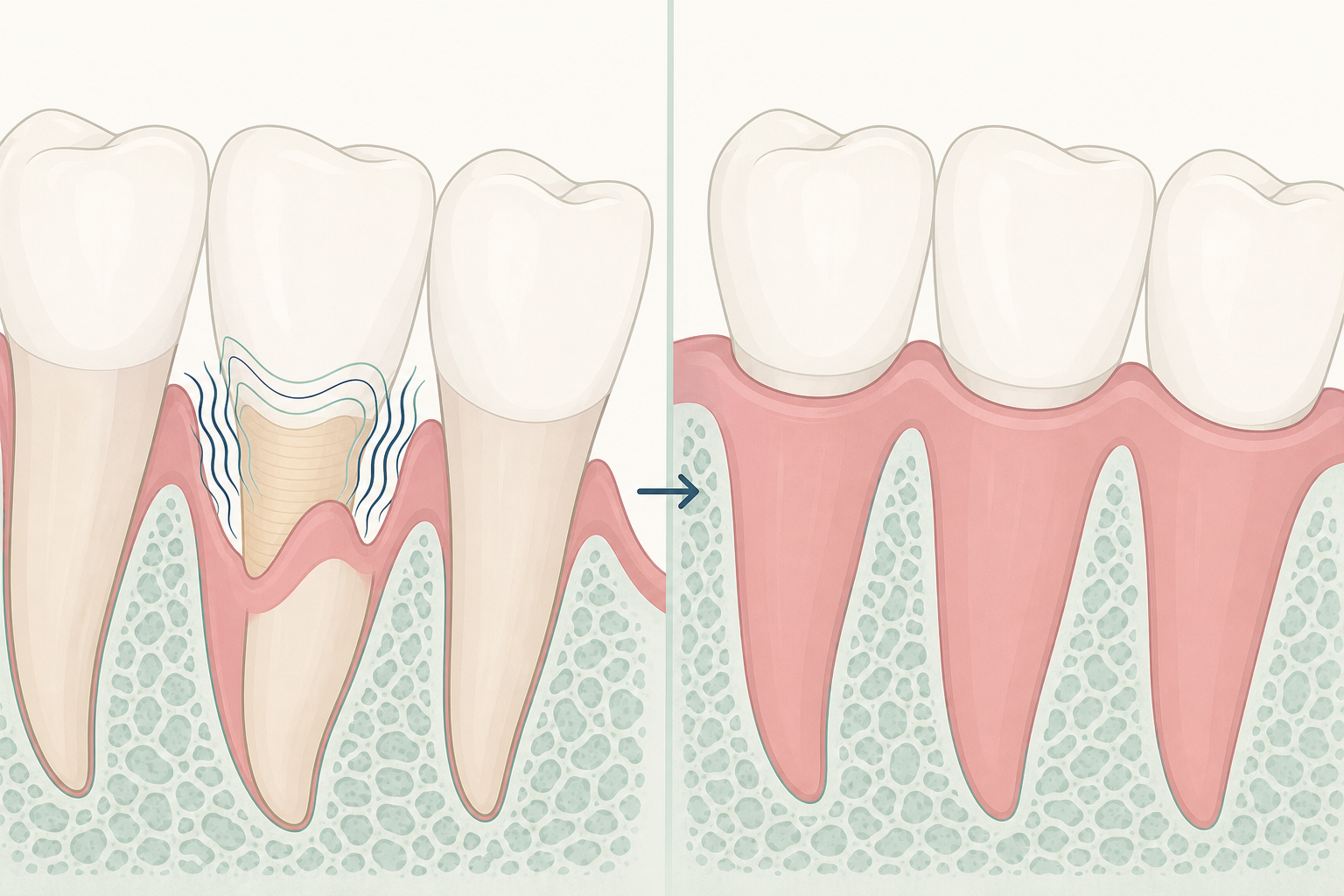
When dentin loses its enamel or cementum cover, cold, heat, acids and sticky foods can reach the nerve and trigger sensitivity.

[1][2]

The short answer

Dentin hypersensitivity happens when exposed dentin tubules let cold, heat, acidic or sticky foods reach nerves inside the tooth.

[1][2]
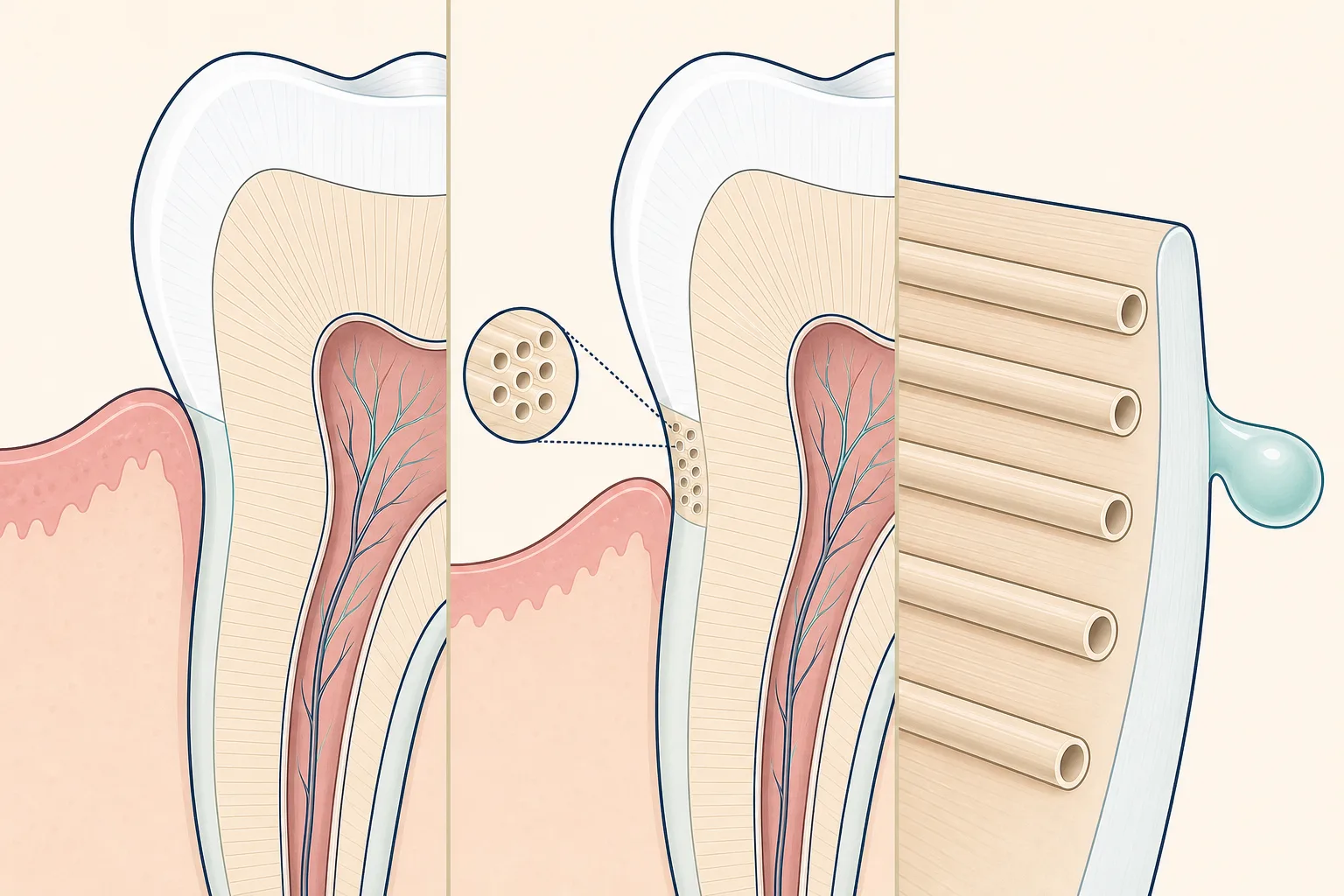
Dentin Hypersensitivity dental educational illustration

What the change looks like

Illustrative diagram: Dentin Hypersensitivity
Illustration — a representative diagram, not a patient photo.
The DN First Look799 AED
Book The DN First Look

What does dentin hypersensitivity feel like?

Triggers that can reach exposed dentin
TriggerPathway
Cold or heatOpen dentin tubules allow the stimulus to reach nerves and cells inside the tooth.[1][2]
Acidic or sticky foodsThey can reach the nerve through dentin tubules when the covering is lost.[1][2]

[1][2]

Why does dentin become exposed?

Dentin is exposed when enamel or cementum no longer covers it, and gum recession can expose it at the root. Tooth decay, fractured teeth, worn fillings, gum disease, worn enamel and an exposed root are listed causes of sensitive teeth.

[1][2]

Which tooth layer is involved?

Enamel covers the crown above the gum line, cementum covers the root below it, and dentin lies beneath both. Dentin is less dense and contains microscopic hollow tubules, so loss of either covering can create sensitivity.

[1][2]
Protective layers around dentin
LocationUsual covering
Above the gum lineEnamel protects the crown.[1][2]
Below the gum lineCementum protects the root.[1][2]

[1][2]

What problems can sit behind sensitivity?

Sensitivity can accompany a cavity, a fractured tooth, a worn filling, gum disease, worn enamel or an exposed root. Those causes matter because treatment aims at the reason dentin has become exposed.

[1][2]

How is dentin hypersensitivity assessed?

Clinical management begins by identifying the cause of the sensitivity and following a consistent strategy from diagnosis to prognosis. The assessment distinguishes exposed dentin from other reasons a tooth may be painful.

[2][4]

What treatments can reduce sensitivity?

Desensitising toothpaste can block transmission of sensation from the tooth surface to the nerve, though it usually needs several applications. Fluoride gel can strengthen enamel and reduce sensation transmission; bonding, an inlay, a crown, gum grafting or root canal treatment may be used for particular underlying problems.

[1][2]
Treatment matched to the cause
OptionUse described
Desensitising toothpasteHelps block sensation transmission and usually needs several applications.[1][2]
Surgical gum graftProtects a root where gum tissue has been lost and reduces sensitivity.[1][2]

[1][2]

What changes the treatment needed?

Care can be as simple as repeated use of desensitising toothpaste or fluoride gel, but a flaw, decay, lost gum tissue or severe persistent sensitivity can require bonding, a restoration, gum grafting or root canal treatment.

[1][2]

Why should sensitivity be explained?

Sensitivity can signal decay, a fracture, gum disease, worn enamel, a worn filling or an exposed root. Persistent discomfort may therefore continue until the cause of exposed dentin is addressed.

[1][2][3]

How can sensitive teeth be protected?

Proper oral hygiene helps prevent sensitive-tooth pain. Protecting enamel and cementum, and addressing gum recession or other causes of exposed dentin, reduces the pathway through which triggers reach the nerve.

[1][2]

Frequently asked questions

Can toothpaste help sensitive teeth?

Desensitising toothpaste helps block sensation transmission from the tooth surface to the nerve, but it usually requires several applications.

[1][2]