
Dentin Hypersensitivity
When dentin loses its enamel or cementum cover, cold, heat, acids and sticky foods can reach the nerve and trigger sensitivity.
[1][2]The short answer
Dentin hypersensitivity happens when exposed dentin tubules let cold, heat, acidic or sticky foods reach nerves inside the tooth.
[1][2]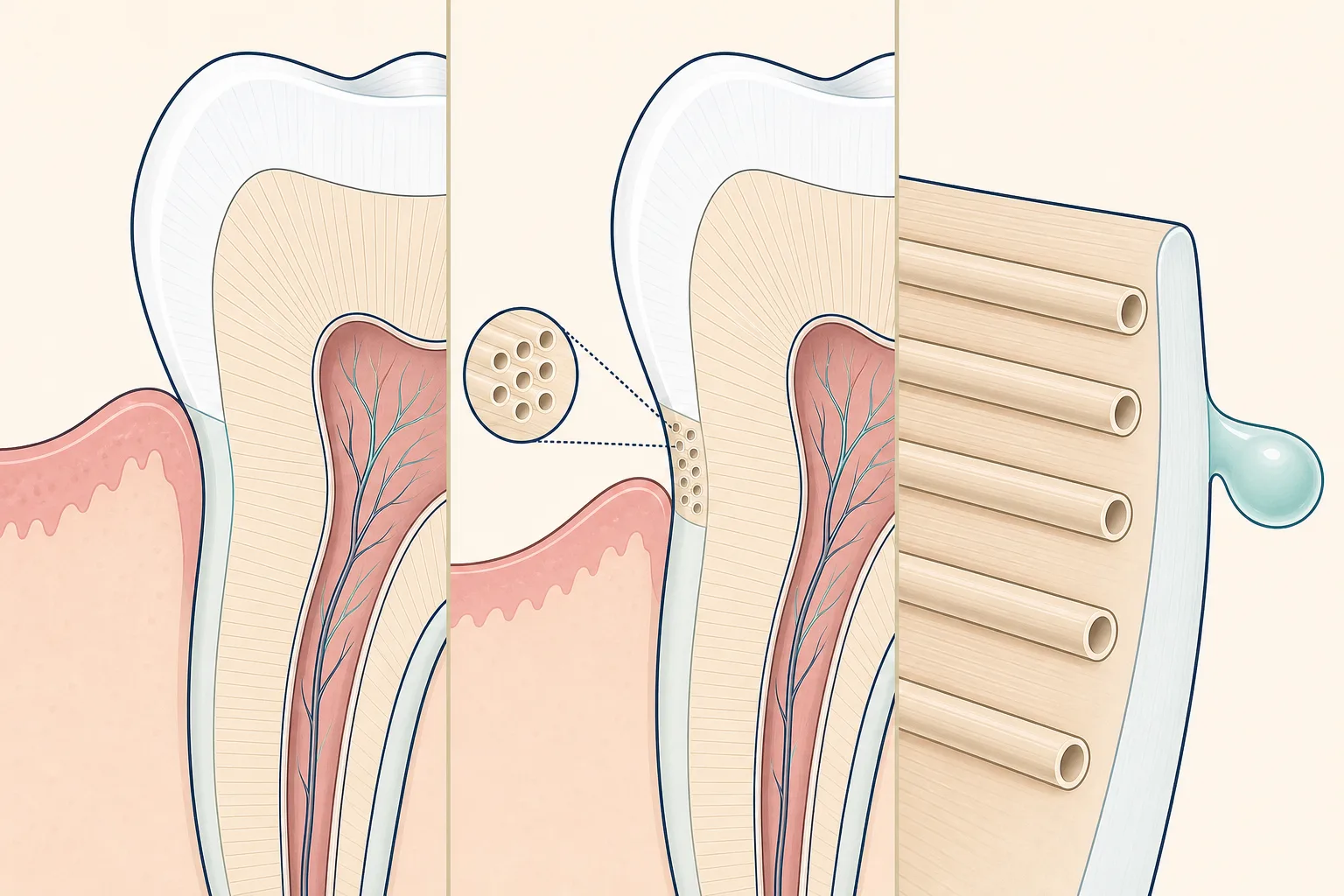
What the change looks like
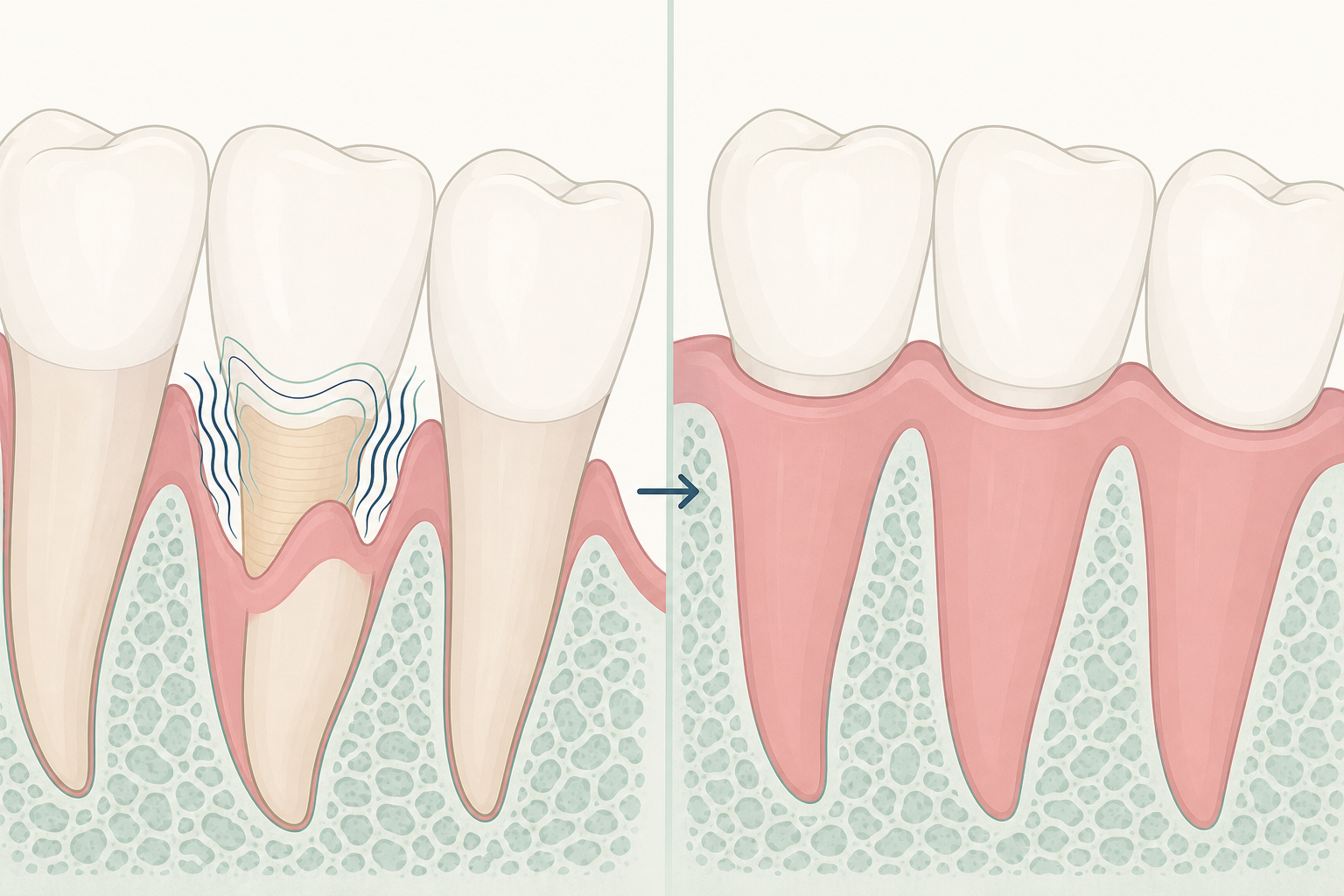
What does dentin hypersensitivity feel like?
Why does dentin become exposed?
Which tooth layer is involved?
What problems can sit behind sensitivity?
How is dentin hypersensitivity assessed?
What treatments can reduce sensitivity?
Desensitising toothpaste can block transmission of sensation from the tooth surface to the nerve, though it usually needs several applications. Fluoride gel can strengthen enamel and reduce sensation transmission; bonding, an inlay, a crown, gum grafting or root canal treatment may be used for particular underlying problems.
[1][2]What changes the treatment needed?
Why should sensitivity be explained?
How can sensitive teeth be protected?
Frequently asked questions
Who wrote this page
This library is published by Dental Nation, a licensed dental group practising in the United Arab Emirates. Pages are written and overseen by the same clinical team that treats patients in our clinics, and are held to a fixed editorial standard for safety and accuracy.
This page is patient education, not medical advice, and cannot replace an examination. Anything urgent — facial swelling, trauma, uncontrolled bleeding or severe pain — needs a dentist or emergency care now.