
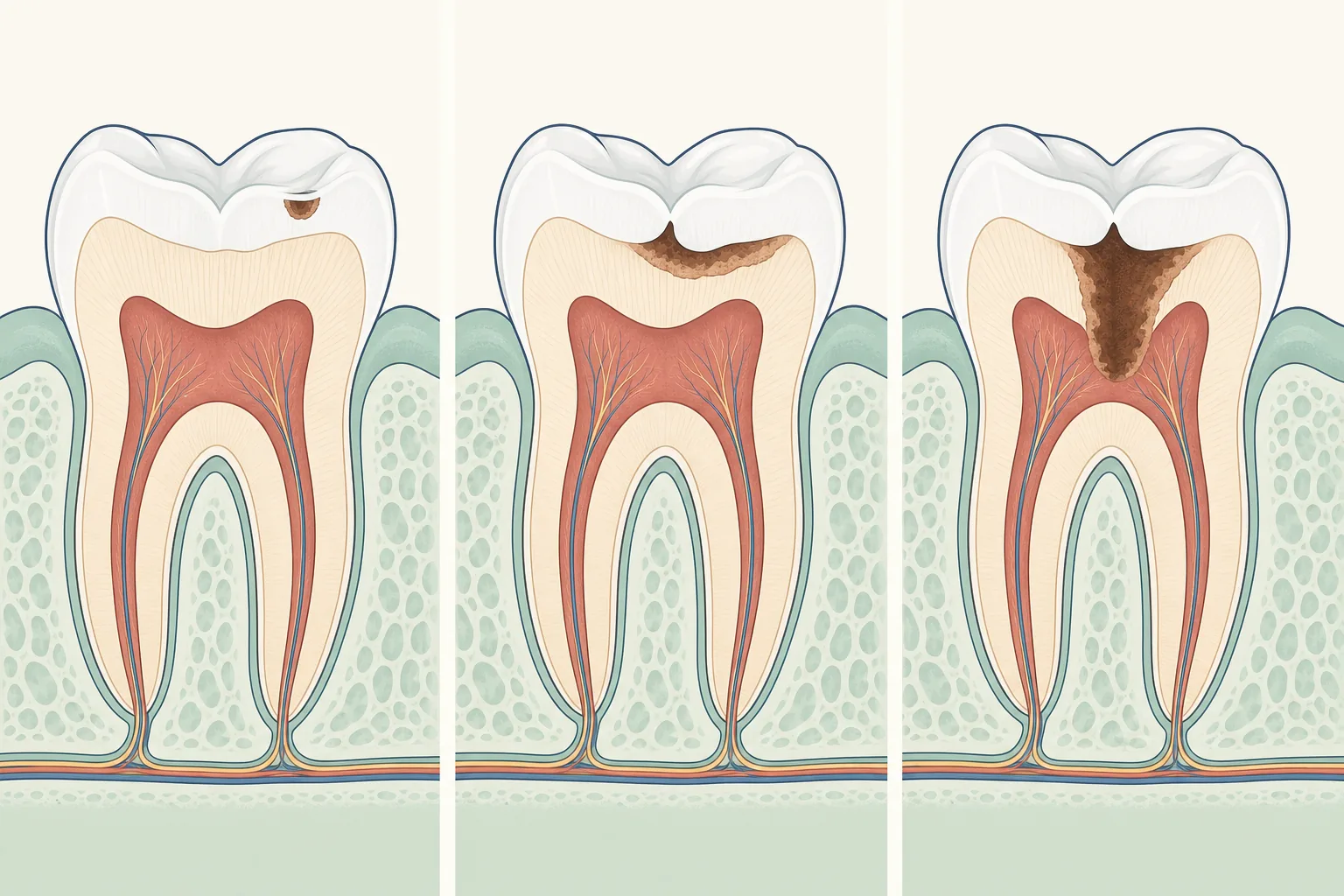
What the change looks like
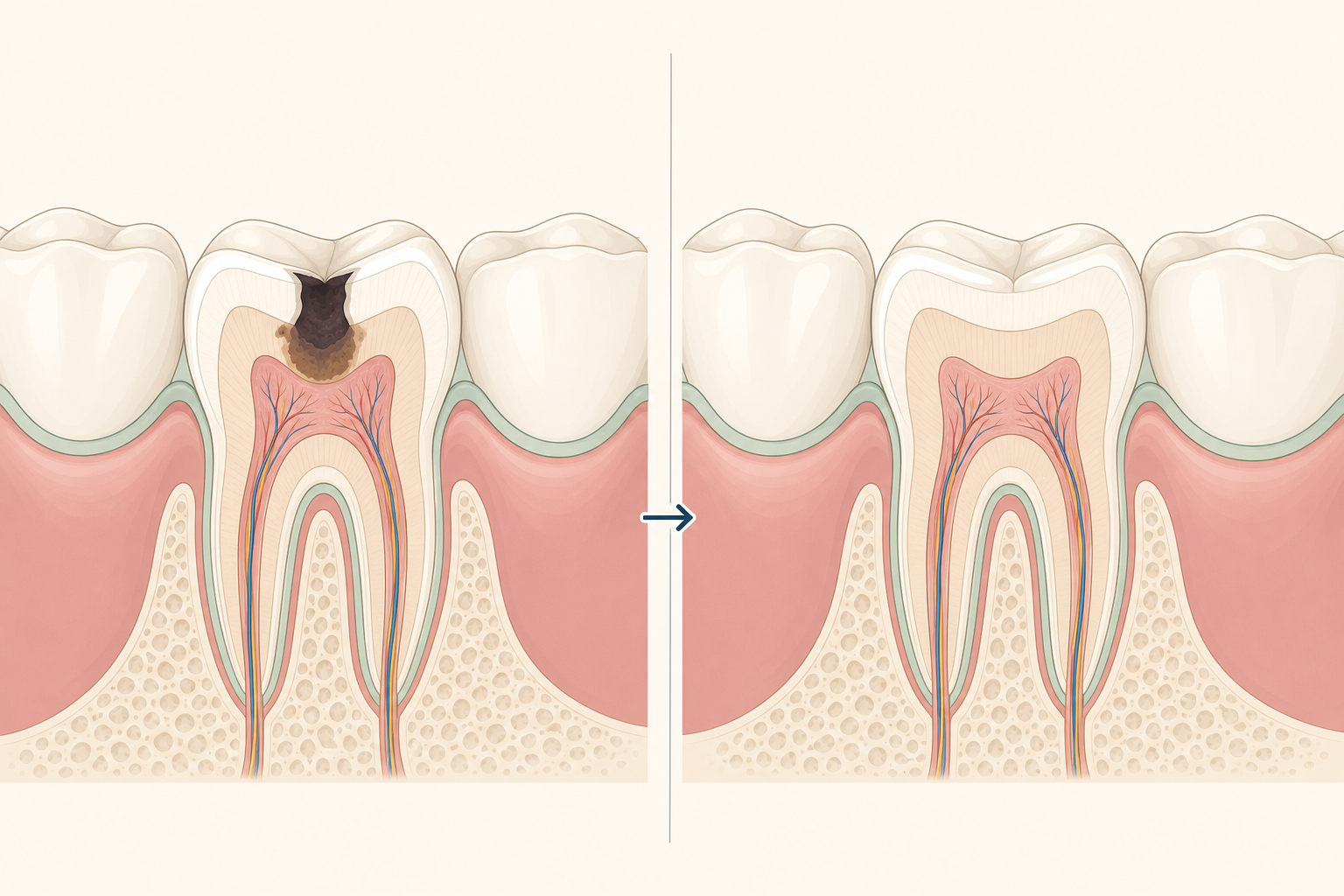
What does dentin caries mean?
As the process progresses into dentin, the tooth produces tertiary dentin in an attempt to protect the pulp. A lesion may appear white or brown and may be matte or shiny.
[2]How does decay reach dentin?
Frequent sugar consumption shifts the dental biofilm toward acid-producing, acid-tolerant bacteria. The acid challenge causes mineral loss in hard tooth tissue and can first appear as a white spot.
[2]When is dentin involvement more serious?
An occlusal lesion can look non-cavitated in the mouth yet extend substantially into dentin on a radiograph. Cavitated occlusal lesions visible in dentin on a bitewing radiograph need invasive treatment.
[2]What raises the chance of progression?
Regular exposure to fermentable carbohydrates and a cariogenic biofilm are both needed for caries to progress. Insufficient fluoride exposure is also a contributing factor in the disease process.
[2]How is dentin caries checked?
Visual-tactile examination, radiographs and fibreoptic illumination can be used to assess caries. Bitewing radiographs can detect lesions on contacting tooth surfaces, while ICDAS records severity across six categories.
[2]What treatment is used when decay reaches dentin?
A lesion that can be reached and cleaned may be managed without a filling through biofilm disruption, remineralisation or sealing. A non-cleansable cavitated dentin lesion requires restorative treatment to rebuild lost tooth structure.
[2][3]| Clinical situation | Management focus |
|---|---|
| Accessible, cleansable lesion | Plaque control, remineralisation or sealing may be used without removing dental tissue.[2][3] |
| Cavitated dentin lesion that cannot be cleaned | Restorative care is needed because biofilm removal and remineralisation cannot control it.[2][3] |
What shapes the work needed for dentin caries?
What can happen if dentin caries progresses?
How can new dentin caries be prevented?
Frequently asked questions
Can a tooth look intact when decay has reached dentin?
Yes. An occlusal lesion can appear non-cavitated clinically while a radiograph shows that it extends into dentin.
[2]