
Dental Trauma
Dental trauma can crack, loosen, displace, or knock out a tooth, with pain, bleeding, swelling, or an altered bite.
[3]The short answer
Dental trauma can crack, chip, displace, loosen, or completely knock out a tooth, with bleeding, pain, swelling, altered bite, or lip numbness.
[1][3]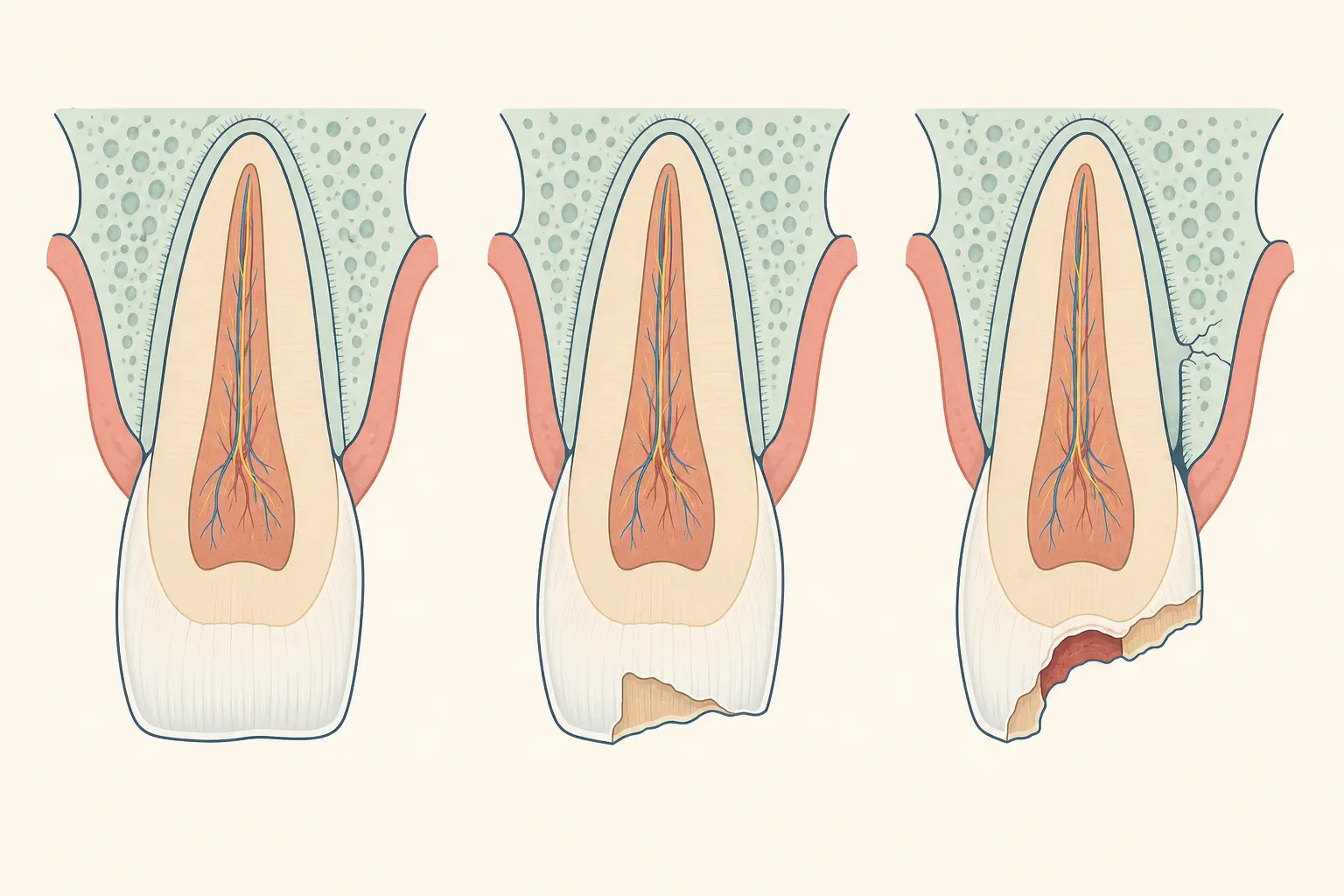
What the change looks like
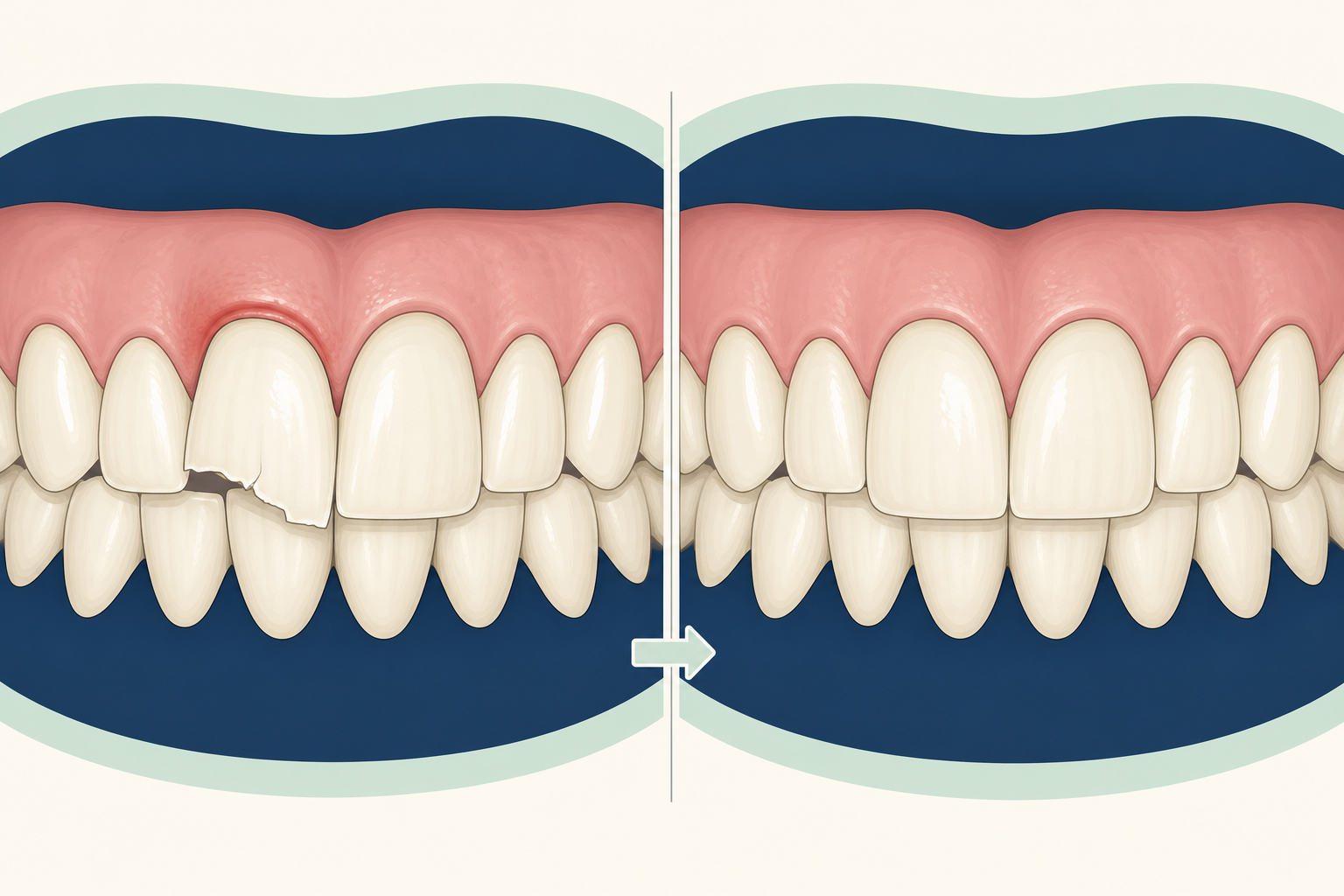
What symptoms can appear?
| Clinical question | What the assessment considers | Patient-facing next step |
|---|---|---|
| A change noticed by the patient | The timing, trigger, location, and effect on function | Record what changed and arrange a dental assessment[1][3] |
| A finding after treatment or injury | The tooth, implant, sinus, nerve, or developing teeth may need separate checks | Take the treatment or injury history to the appointment[1][3] |
What can cause it?
Falls, blows, sports injuries, collisions, and biting hard objects can injure teeth and their supporting tissues. The same event can affect enamel, dentine, pulp, periodontal tissues, or the jaw. In children, an injured primary tooth can also be close to the developing permanent tooth, so the dental history must include which tooth was hit and where it went.
[3][4]How is it classified over time?
The first distinction is whether the tooth is chipped, fractured, displaced, loosened, or avulsed. The next distinction is whether the pulp and supporting tissues remain healthy. An injury can evolve after the initial event, so an apparently minor fracture still needs the follow-up advised by the dental team.
[3]| Clinical question | What the assessment considers | Patient-facing next step |
|---|---|---|
| Earlier or developing finding | The history and examination may show a problem at a different point in its course | Ask what finding supports the classification[3] |
| Established or persistent finding | The next step depends on tissue status, function, and the suspected source | Ask what needs monitoring or treatment[3] |
What raises concern?
Risk depends on the force, direction, object involved, tooth development, existing restorations, and whether the mouth was protected. Children and adults have different tooth anatomy and different consequences after injury. A previous injury or weakened tooth can also change what the examination finds.
[3][4]How is it diagnosed?
Assessment records the event, examines the tooth and surrounding tissues, checks the bite and mobility, and uses dental imaging when needed. The dentist may compare the injured tooth with neighbouring teeth and arrange follow-up to monitor the pulp and supporting structures. Primary and permanent teeth require different questions.
[1][3]How is treatment planned?
A chipped tooth may need smoothing or restoration, while a displaced or loose tooth may need repositioning and support. A fracture involving the pulp can require endodontic care or another planned treatment. A knocked-out permanent tooth needs urgent dental management. Treatment for an injured primary tooth is chosen with the developing successor in mind.
[1][3][4]| Clinical question | What the assessment considers | Patient-facing next step |
|---|---|---|
| A local, repairable finding | Care may focus on the affected tooth, tissue, restoration, or source | Ask which part of the problem the proposed treatment addresses[1][3][4] |
| A finding needing coordinated care | More than one assessment or a staged plan may be needed | Request the sequence, follow-up, and decision points in writing[1][3][4] |
What should I ask about cost in Dubai?
A Dubai trauma estimate can vary with the injury, tooth type, imaging, stabilisation, restoration, and follow-up. The estimate should name each part of care and included review visits.
[3]What can happen if it continues?
Possible complications include pulp injury, infection, altered tooth colour, loss of vitality, root or supporting-tissue damage, and effects on a developing permanent tooth after primary-tooth trauma. Symptoms can change after the accident. Follow-up matters because the first examination cannot always predict the later response.
[1][2][3]How can future problems be reduced?
A properly fitted mouthguard can reduce injury risk during activities where the mouth may be struck. Safe supervision and attention to falls or collisions also matter for children. After an injury, prompt assessment and following the care plan reduce the chance that a treatable problem is missed.
[1][3][4]