
Dental Nation
Condition guide

Dental Sinus Tract

A dental sinus tract can release pus through the gum; spreading swelling, fever, or breathing difficulty needs urgent attention.

[1][2]

The short answer

A dental sinus tract is a draining channel that can release pus from an underlying dental infection.

[1][2]
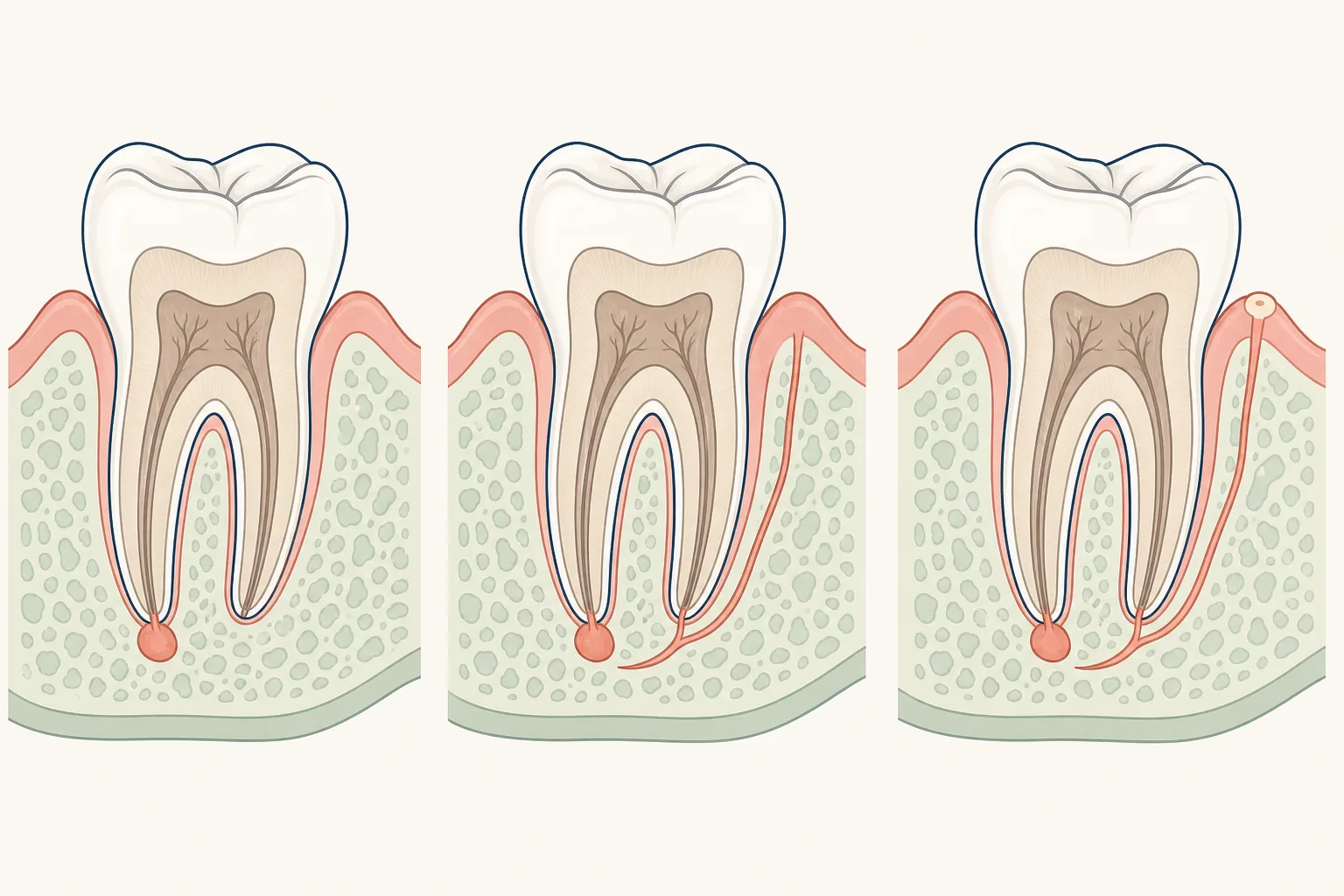
Dental Sinus Tract dental educational illustration

What the change looks like
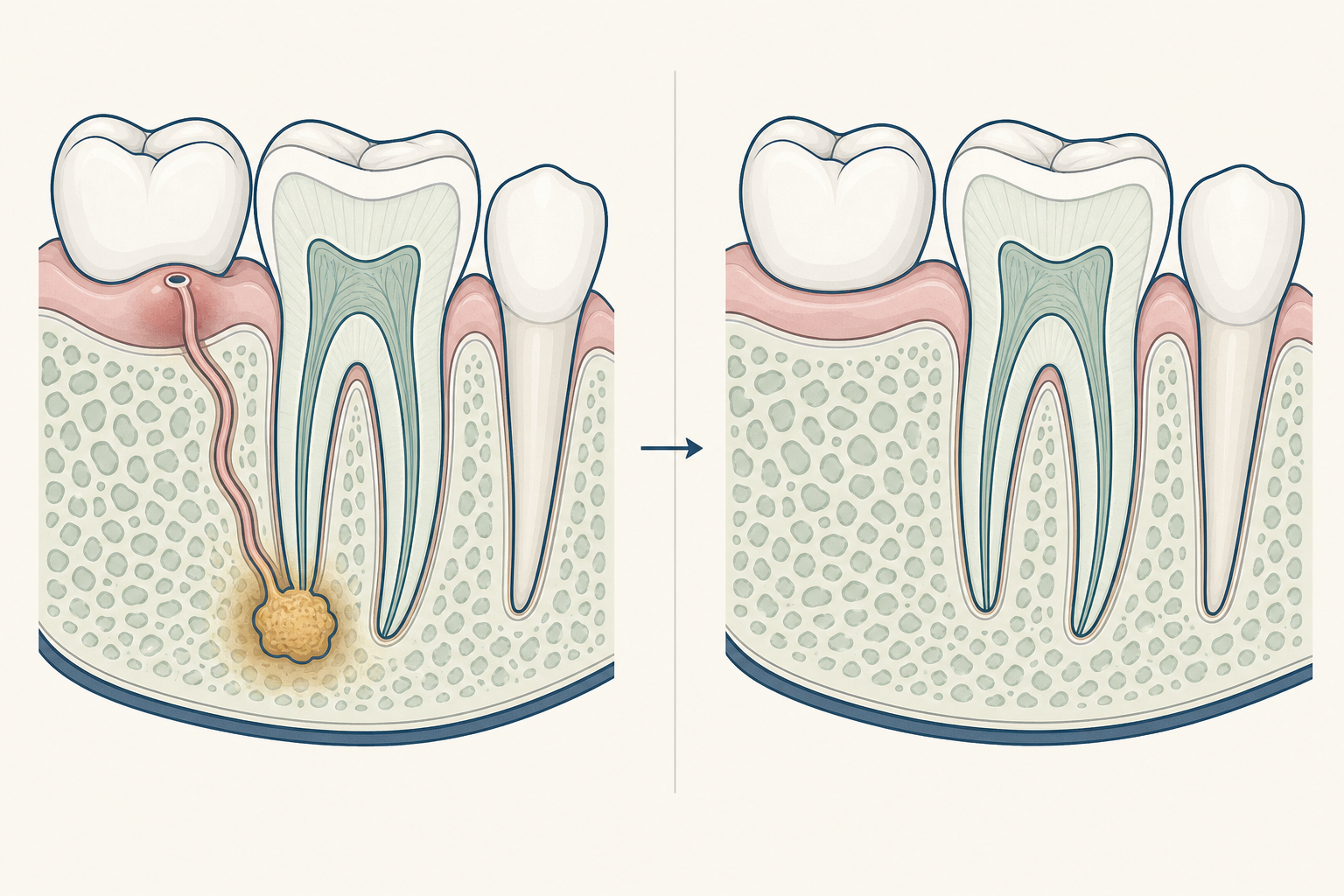
Illustrative diagram: Dental Sinus Tract
Illustration — a representative diagram, not a patient photo.
The DN First Look799 AED
Book The DN First Look

What does a dental sinus tract look and feel like?

You may notice a small gum opening, pus, a bad taste, swelling, tenderness, difficulty chewing, or pain. Facial swelling, tender lymph nodes, fever, malaise, chills, trouble swallowing, altered speech, or difficulty opening the mouth are more concerning signs.

[1][2]
Signs that can accompany a dental infection
SignWhat it may involve
Sinus opening or pusA draining fistula or purulent material in the mouth[1][2]
Facial swelling or feverLocal inflammation or possible systemic spread[1][2]

[1][2]

What causes it?

Untreated decay, a fractured or mobile tooth, a previous procedure, or a recurring infection can leave bacteria around a tooth and create a route for pus to drain. Dental infections commonly begin with caries, and the source must be removed for definitive care.

[1][2]

Can the infection spread?

An early infectious emergency may remain localised and treatable. Without definitive management, bacteria can move into deep spaces of the neck, facial sinuses, mediastinum, or brain, with possible airway compromise.

[1][2]
How the pattern can change
PatternWhat it means
LocalisedThe infection remains near its dental source[1][2]
Deep or systemic spreadNeck, facial, chest, or brain spaces and the airway may be affected[1][2]

[1][2]

Who is at greater risk of complications?

Smoking, diabetes, immunosuppression, previous cellulitis or abscesses, and untreated decay can increase concern when infection is present. Valvular heart disease or a prosthetic heart valve matters because dental infection can rarely cause bloodstream spread and endocarditis.

[1][2]

How is it diagnosed?

Assessment starts with the pain history, swelling, mouth opening, teeth, gums, pus, sinus tract, and lymph nodes. Airway signs such as drooling, a changed voice, stridor, or respiratory distress require urgent attention.

[1][2]

How is a dental sinus tract treated?

Treatment removes the infected source. Depending on whether the tooth can be preserved, care may involve drainage followed by root canal treatment and restoration, or extraction when the tooth cannot be saved. Antibiotics alone do not remove the source and may delay definitive care; they are used when signs such as fever or cellulitis indicate systemic dissemination.

[1][2]
Treatment choices by dental situation
SituationTreatment direction
Tooth can be preservedDrainage, endodontic therapy, and restoration[1][2]
Tooth cannot be preservedDrainage or extraction to eliminate the source[1][2]

[1][2]

What affects the cost in Dubai?

The care pathway changes with the procedure needed to remove the source: drainage, endodontic treatment with restoration, or extraction. The clinical choice is therefore tied to whether the tooth can be preserved, rather than to the draining opening alone.

[1][2]

What can happen if it is ignored?

Untreated infection can become severely painful and extend through nearby tissues. Deep neck infection, facial-sinus or mediastinal infection, airway compromise, bloodstream infection, and rare intracranial complications are described outcomes.

[1][2]

How can dental infection be prevented?

Daily toothbrushing, flossing, regular dental care, smoking cessation, and diabetes control reduce the risks that make infectious dental emergencies more likely. Early treatment of decay and prompt care for a new swelling can prevent progression.

[1][2]

Frequently asked questions

Can a gum opening stop draining and still be linked to infection?

Yes. The dental source can remain even when drainage is not obvious; treatment must eliminate that source.

[1][2]