
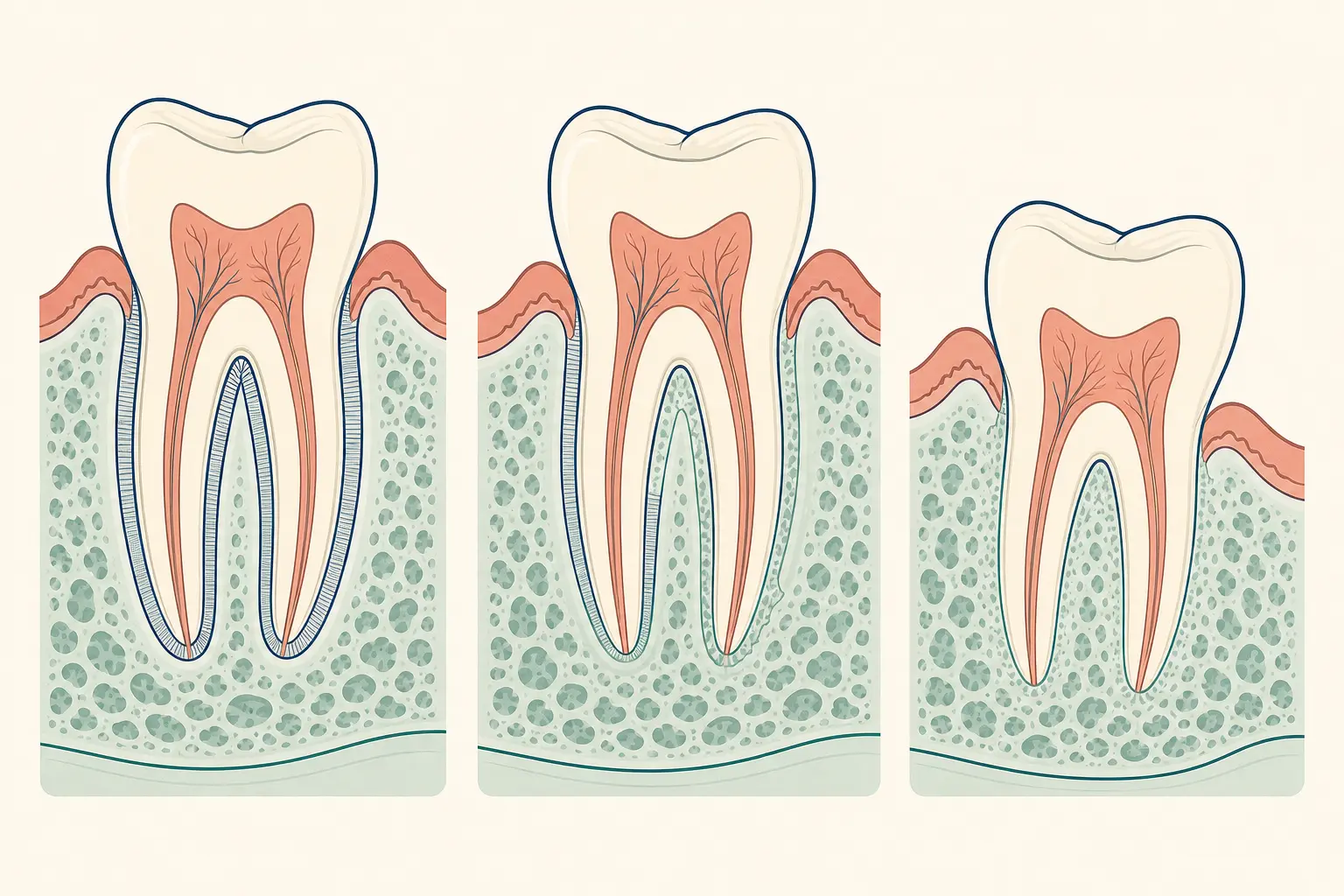
What the change looks like
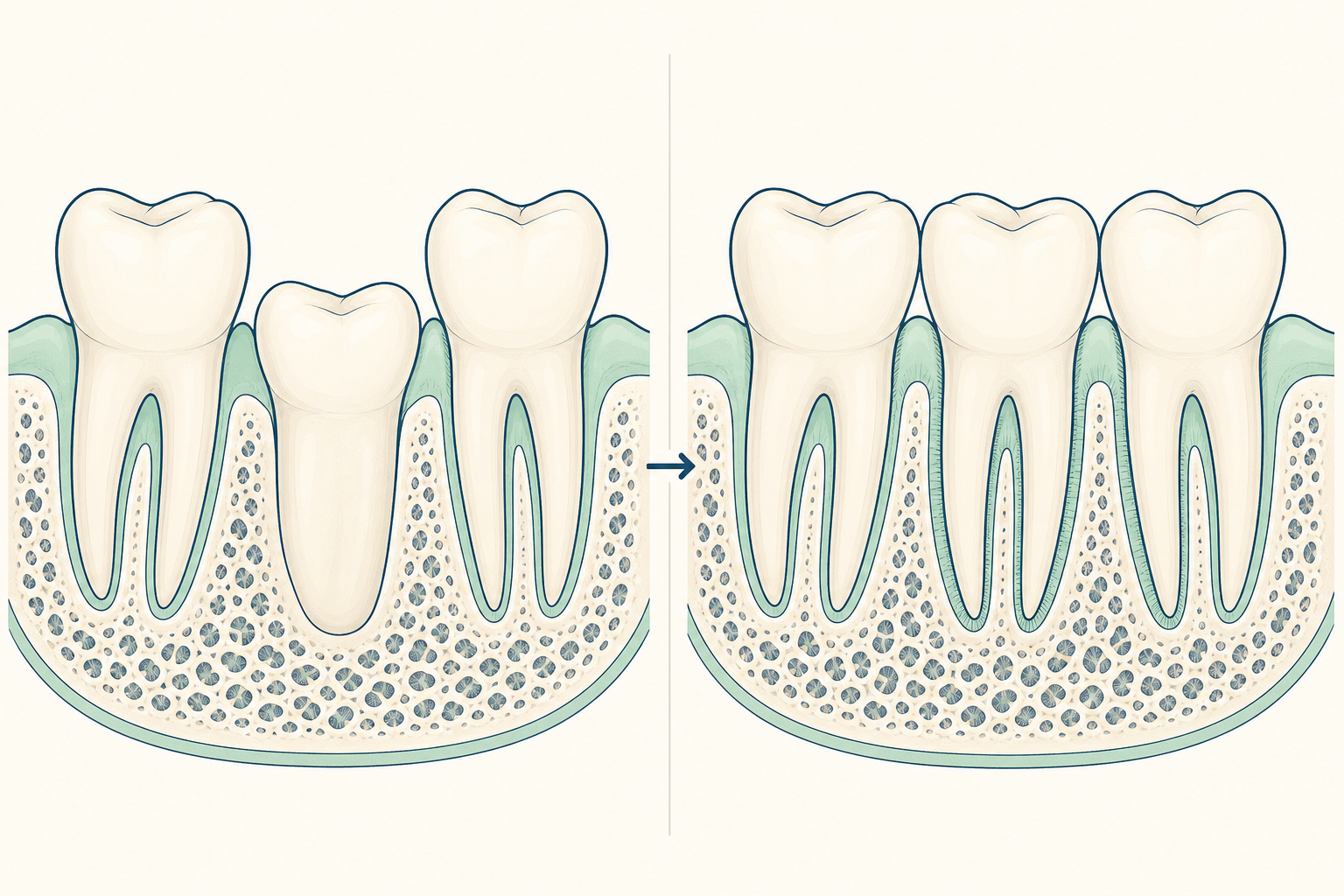
What symptoms might I notice?
| Finding | Patient-facing next step |
|---|---|
| Pain, sensitivity, swelling, or a visible change | Arrange a dental assessment so the tooth and nearby tissues can be examined[1][2] |
| Fever, spreading facial swelling, or difficulty swallowing or breathing | Seek urgent dental or medical care[1][2] |
| No obvious symptom | Keep routine dental review because some findings are discovered during examination or imaging[1][2] |
What can cause it?
How is it described or staged?
Submergence, also called infraocclusion, is the main recognisable sign. Ankylosis can affect a primary molar or an unerupted permanent tooth, and primary failure of eruption is a separate eruption disorder.
[1][2]| Assessment point | What the dentist is checking |
|---|---|
| Limited finding | Whether the change is confined to the tooth or a small area[1][2] |
| Nearby tissue involvement | Whether gums, supporting tissues, or adjacent structures are affected[1][2] |
| Function and progression | Whether the tooth works normally and whether the change is developing[1][2] |
What increases the risk?
How is it diagnosed?
How is it treated at each stage?
Management records the stage of dentition, the tooth affected and the timing of eruption. For an ankylosed primary molar with a successor, maintaining the tooth until appropriate replacement planning may be considered.
[1][2]| Clinical situation | Possible direction of care |
|---|---|
| Limited or stable finding | Observation or a tooth-preserving procedure may be considered after examination[1][2] |
| Active disease or symptoms | Treatment is selected for the diagnosed cause and affected tissues[1][2] |
| Loss of function, spreading infection, or severe damage | Prompt assessment is needed to choose the appropriate procedure[1][2] |
What should I ask about the Dubai cost?
What can happen if it is untreated?
How can I reduce future problems?
Frequently asked questions
Who wrote this page
This library is published by Dental Nation, a licensed dental group practising in the United Arab Emirates. Pages are written and overseen by the same clinical team that treats patients in our clinics, and are held to a fixed editorial standard for safety and accuracy.
This page is patient education, not medical advice, and cannot replace an examination. Anything urgent — facial swelling, trauma, uncontrolled bleeding or severe pain — needs a dentist or emergency care now.