
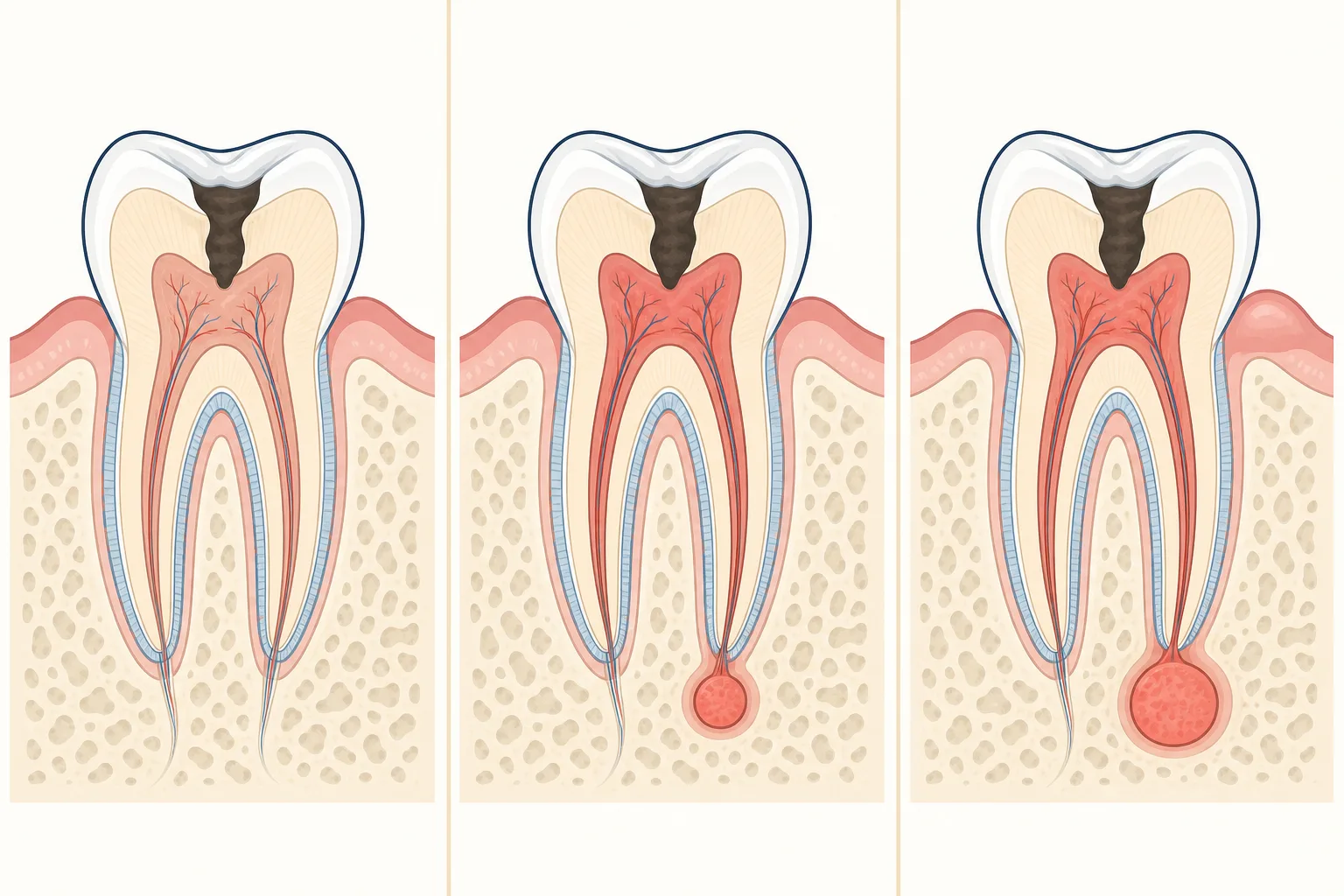
What the change looks like
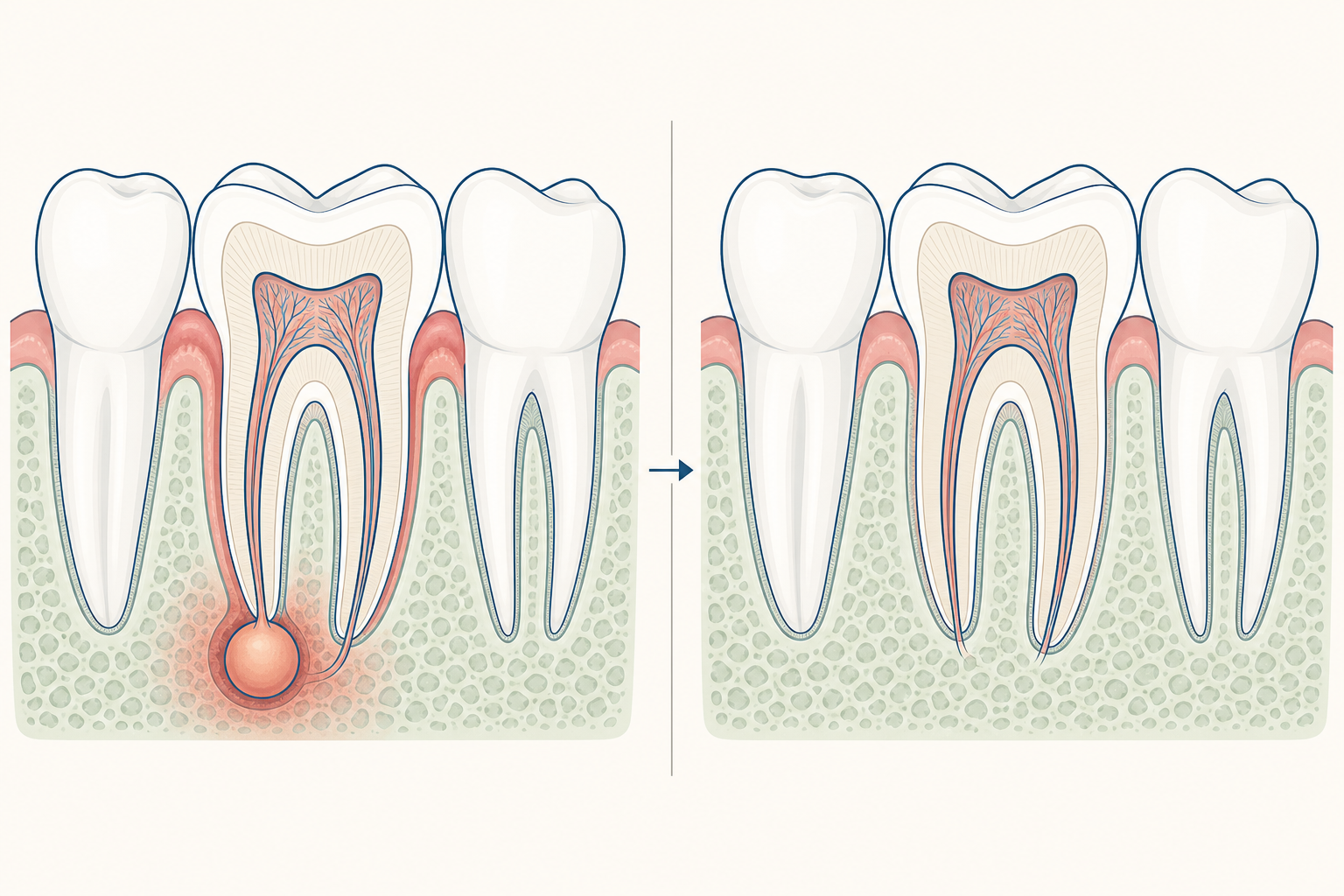
What does a tooth abscess feel like?
Pain may be mild or severe, and the tooth can be very sensitive when touched or tapped. A visible or palpable swelling may appear near the tooth. Fever, facial swelling, difficulty opening the mouth, difficulty swallowing, or changes in the voice signal a more extensive infection.
[1]What causes a dental abscess?
An abscess can begin in the pulp, in the tissues around the tooth, or in both. Pulp infection may follow decay that reaches the pulp and progresses to pulp necrosis; a periodontal source arises in the supporting tissues.
[1]How can the infection progress?
Pulp inflammation can progress to ischaemia and necrosis. An apical abscess may then develop around the root tip, with acute or chronic forms. A spreading infection can reach deep neck spaces and threaten the airway.
[1]When is an abscess an emergency?
Marked difficulty opening the mouth, trouble swallowing, drooling, limited tongue movement, a swollen or firm floor of the mouth, or a muffled hot-potato voice are red flags for advanced infection. Respiratory distress or signs of sepsis require emergency hospital care.
[1]How is a tooth abscess diagnosed?
The initial assessment uses visual inspection and palpation for redness, swelling, or pus. Tooth discolouration and gum necrosis may also be visible. Dental radiographs help show the extent of infection, decay, a periapical abscess, or bone loss that is hidden from view.
[2]What treatment does an abscess need?
Definitive care removes the source of infection. An acute apical abscess may be drained, followed by root canal treatment to remove necrotic pulp and restore the tooth. Extraction is used when the tooth cannot be preserved.
[1]What affects the cost in Dubai?
The treatment route changes with whether the tooth can be restored: drainage and root canal treatment follow one route, while extraction is the alternative when preservation is impossible. Antibiotics are used when fever or cellulitis shows systemic spread, rather than for every local abscess.
[1]What can happen if it spreads?
Dental infection can extend into deep neck spaces and cause airway compromise or sepsis. Rarely, spread has been associated with mediastinitis, cavernous sinus thrombosis, meningitis, or subdural empyema. Bacteria entering the bloodstream may cause endocarditis, particularly in people with valvular heart disease or prosthetic heart valves.
[1]How can dental infections be prevented?
Daily dental hygiene helps prevent dental infections. Regular cleaning removes plaque, while early attention to decay and pulp symptoms can prevent a local problem progressing to an abscess.
[1]Frequently asked questions
Can an abscess be painless?
Pulp necrosis can leave a tooth asymptomatic even while underlying disease remains, and an abscess may then complicate the necrotic pulp.
[1]