
Delayed Tooth Eruption
A delayed tooth may leave a gap because it lacks space, is blocked, is out of position, or has a retained baby tooth ahead of it.
[1][2]The short answer
Delayed tooth eruption means a tooth has not appeared when the surrounding eruption pattern indicates that it should have emerged.
[1][2]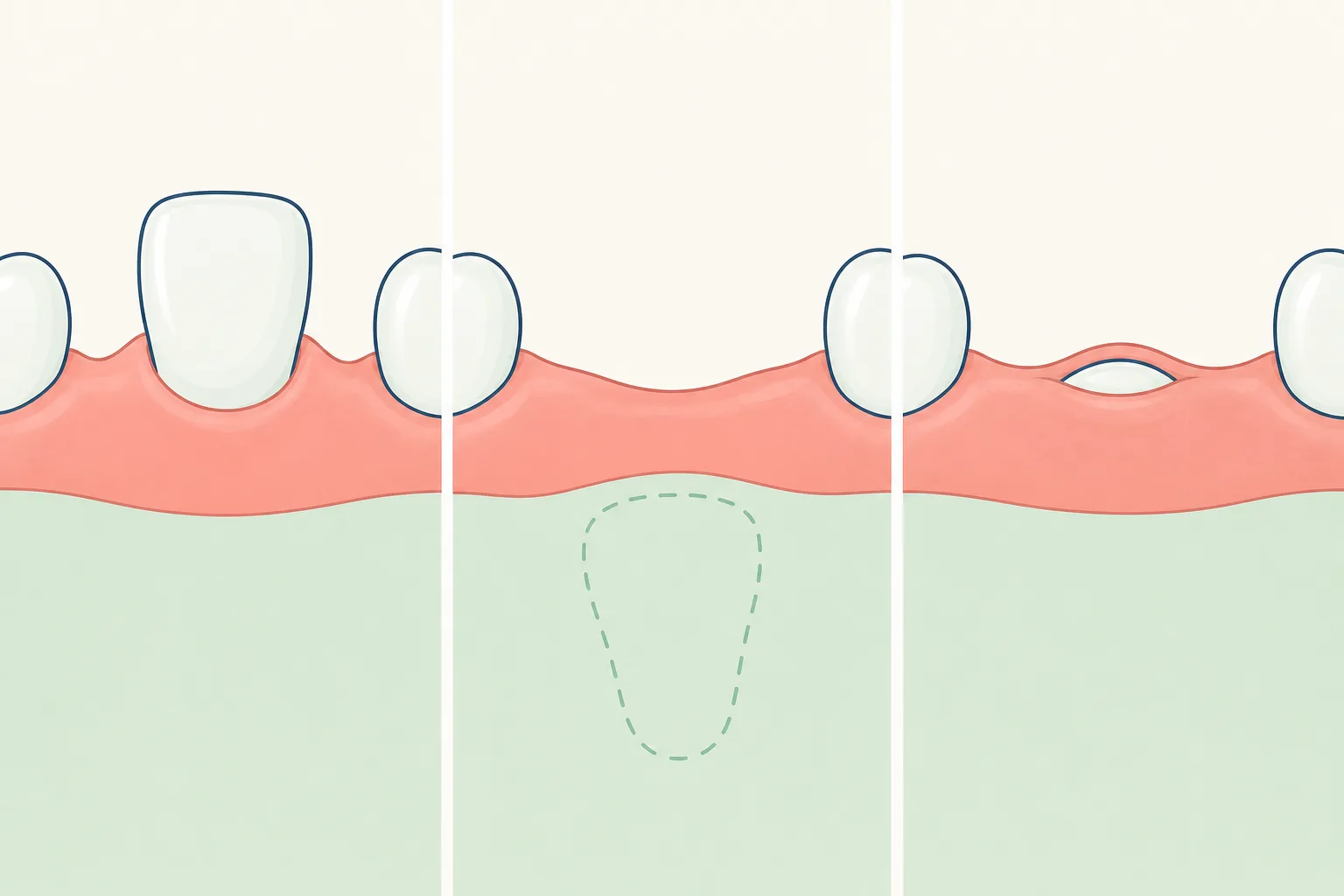
What the change looks like
What does delayed tooth eruption look like?
The main sign is a gap where a tooth is expected, or an adult tooth that has not appeared while neighbouring teeth have erupted. A child may have no pain. An unusual sequence, asymmetry or a baby tooth that remains can be the reason to seek advice.
[1][2]| Clinical question | What this can mean |
|---|---|
| What is assessed? | The main sign is a gap where a tooth is expected, or an adult tooth that has not appeared while neighbouring teeth have erupted. A child may have no pain. An unusual sequence, asymmetry or a baby tooth that remains can be the reason to seek advice.[1][2] |
| What guides the next step? | A gap, an uneven eruption pattern, or a baby tooth that remains while neighbouring adult teeth emerge can signal delayed eruption.[1][2] |
Why might a tooth be late to erupt?
Is the tooth simply late, blocked, or displaced?
A delay may first be observed, then assessed when the eruption pattern differs from neighbouring teeth, and finally managed if a tooth is blocked or displaced. The stage is defined by findings, not by a fixed home timetable.
[1][2]| Clinical question | What this can mean |
|---|---|
| What is assessed? | A delay may first be observed, then assessed when the eruption pattern differs from neighbouring teeth, and finally managed if a tooth is blocked or displaced. The stage is defined by findings, not by a fixed home timetable.[1][2] |
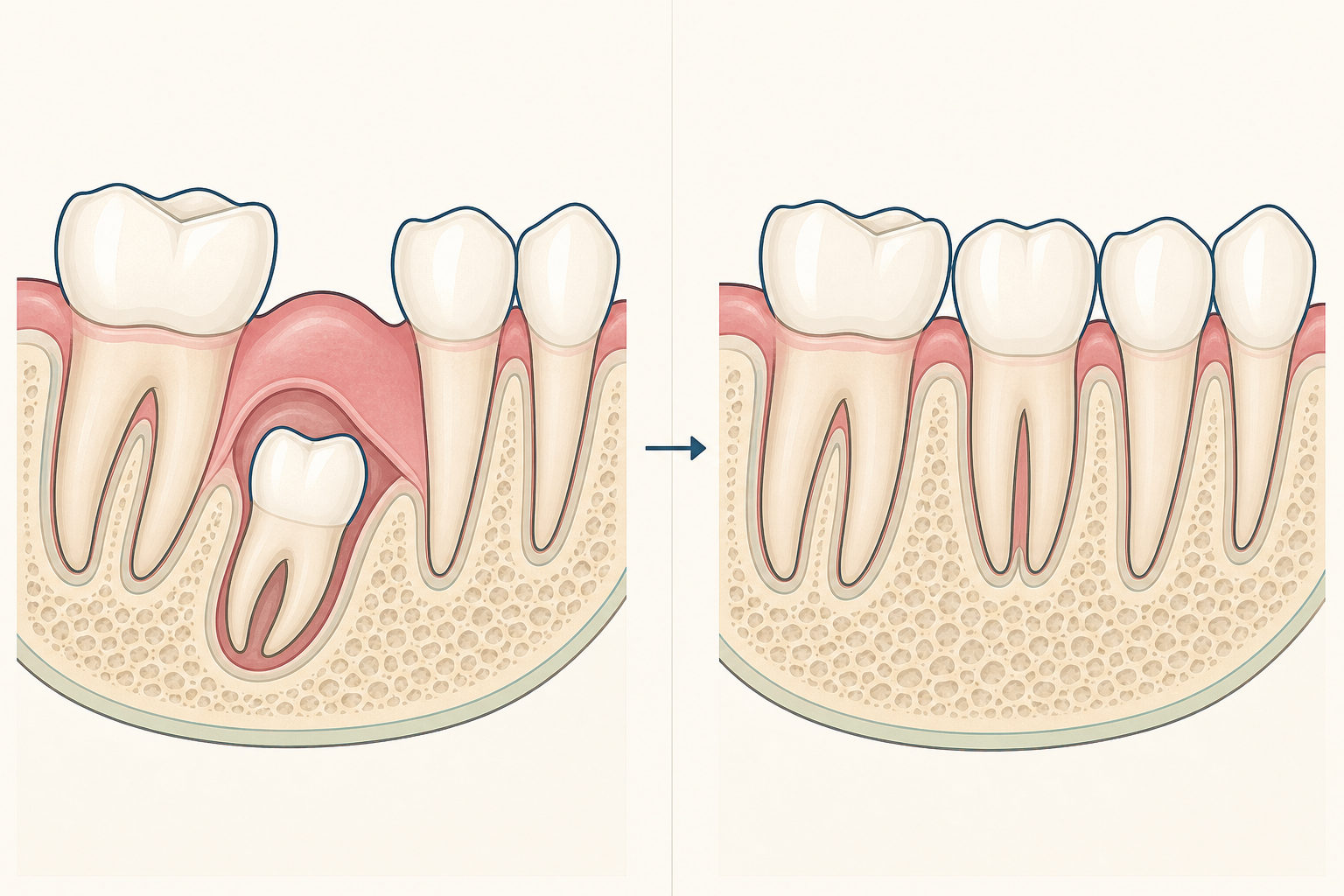
| What guides the next step? | The tooth may be present but blocked, displaced, or short of space; imaging can show its position and any obstruction.[1][2] |
Which eruption patterns need closer assessment?
How is delayed eruption investigated?
What treatment helps a delayed tooth erupt?
Observation may be suitable when the developing pattern is reassuring. If a tooth is blocked, displaced or associated with another problem, treatment may include addressing the obstruction or guiding eruption.
[1][2]| Clinical question | What this can mean |
|---|---|
| What is assessed? | Observation may be suitable when the developing pattern is reassuring. If a tooth is blocked, displaced or associated with another problem, treatment may include addressing the obstruction or guiding eruption.[1][2] |
| What guides the next step? | Care may involve watching a reassuring pattern, removing an obstruction, or guiding a blocked or displaced tooth into position.[1][2] |