
Dental Nation
Condition guide

Crossbite

A crossbite is a misaligned bite that can make chewing uncomfortable and may be linked with tooth crowding, jaw growth, or habits.

[1][2]

The short answer

A crossbite is a malocclusion in which teeth do not meet in their usual upper-over-lower relationship.

[1][2]
Crossbite dental educational illustration

What the change looks like
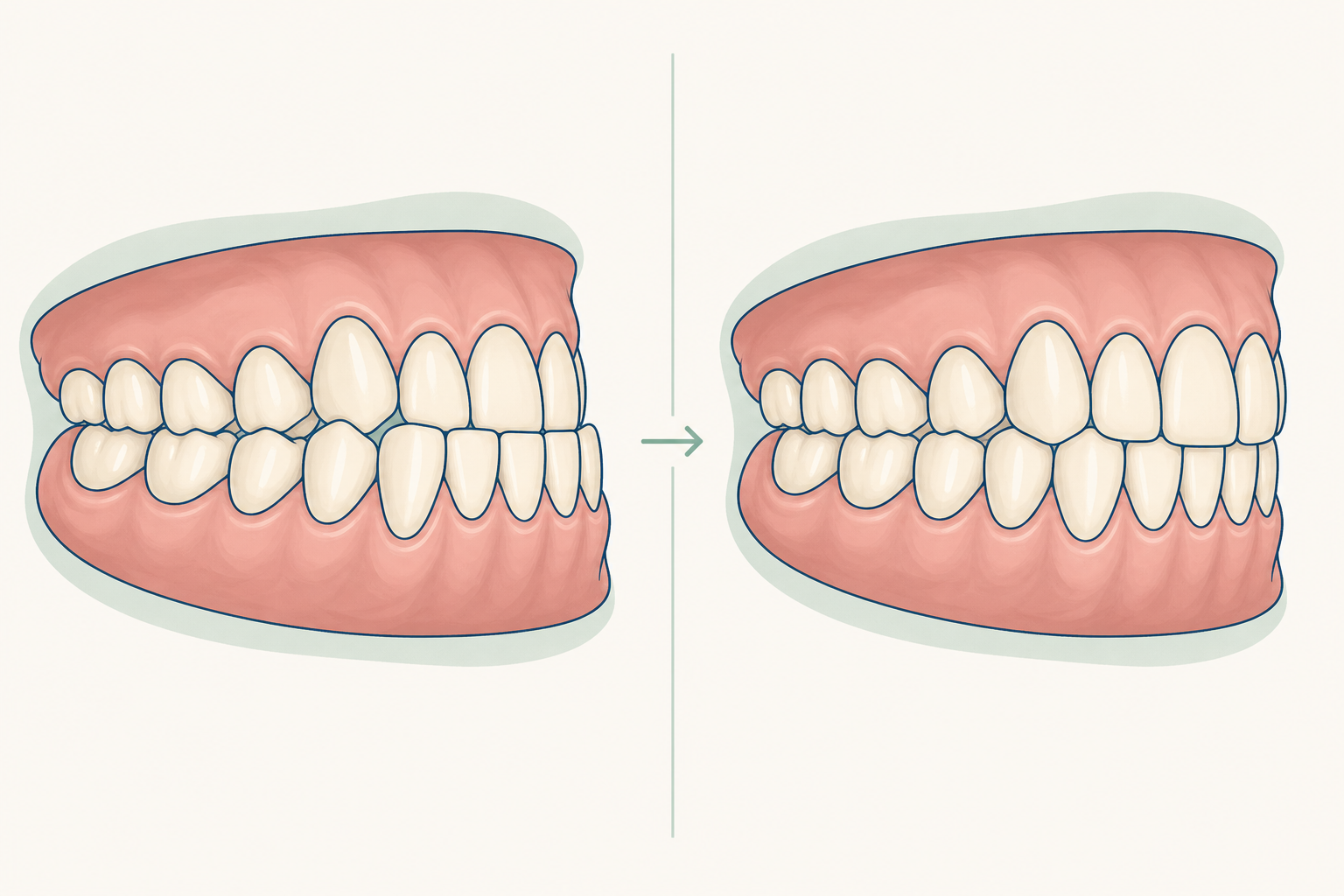
Illustrative diagram: Crossbite
Illustration — a representative diagram, not a patient photo.
The DN First Look799 AED
Book The DN First Look

What can a crossbite affect?

Misaligned teeth can cause discomfort when biting or chewing, an unusual facial appearance, rare speech difficulty, mouth breathing, or trouble biting into food.

[1]
What a misaligned bite may affect
AreaPossible change
BitingBiting into food can be difficult.[1]
ChewingChewing may be uncomfortable.[1]

[1]

What can contribute to a crossbite?

A difference between jaw sizes or between jaw and tooth size can cause an abnormal bite. Crossbites can also be associated with crowding, early tooth loss, ectopic teeth, and adverse skeletal growth.

[1][2]

Why does timing matter for a crossbite?

Evaluation continues through primary, mixed, adolescent, and adult dentitions because eruption and growth can change the bite. Early correction is generally easier while bones are softer and teeth move more readily.

[1][2]
Developmental considerations
PeriodWhat is assessed
Mixed dentitionCrowded incisors, crossbites, tooth loss, and eruption are considered.[1][2]
Adult dentitionOrthodontic treatment can succeed but may need longer appliance use.[1][2]

[1][2]

Which factors raise the chance of a crossbite?

Inherited jaw proportions, cleft lip or palate, thumb sucking, tongue thrusting, prolonged bottle use, impacted teeth, and poorly fitting dental appliances are possible contributors to malocclusion.

[1][2]

How is a crossbite diagnosed?

A dentist checks how the back teeth meet while you bite down. X-rays and diagnostic models may be needed to map tooth position, jaw relationship, and developing teeth.

[1][2]

How is a crossbite corrected?

Braces, wires, springs, and sometimes clear aligners move teeth into position. Where crowding is part of the problem, teeth may be removed; rare jaw discrepancies can require surgery.

[1][2]
Ways malocclusion may be treated
MethodWhat it does
Fixed or clear appliancesApply force to reposition teeth.[1][2]
Jaw surgeryReshapes jaw length in rare cases.[1][2]

[1][2]

What shapes crossbite treatment costs?

The work can range from an orthodontic appliance to extraction or, rarely, jaw surgery. The required correction and treatment duration determine the scope of care.

[1][2]

What can happen with a crossbite?

Malocclusion can make teeth harder to clean and raise the risk of decay and gum disease. Treatment can bring temporary mouth or gum irritation, discomfort, and difficulty chewing or speaking.

[1]

Can a crossbite be prevented?

Many bite problems cannot be prevented. Reducing thumb sucking and tongue thrusting, and addressing early tooth loss or developing bite changes, can limit factors that worsen malocclusion.

[1][2]

Frequently asked questions

Can a crossbite cause chewing problems?

Yes. Difficulty or discomfort when biting or chewing is a listed symptom of malocclusion.

[1]