
Dental Nation
Condition guide

Crooked Teeth

Crooked teeth may crowd or rotate, making the bite meet unevenly and sometimes making biting or chewing uncomfortable.

[1]

The short answer

Crooked teeth are teeth that sit out of line, crowd or rotate and may meet the opposing teeth unevenly when you bite.

[1]
Crooked Teeth dental educational illustration

What the change looks like
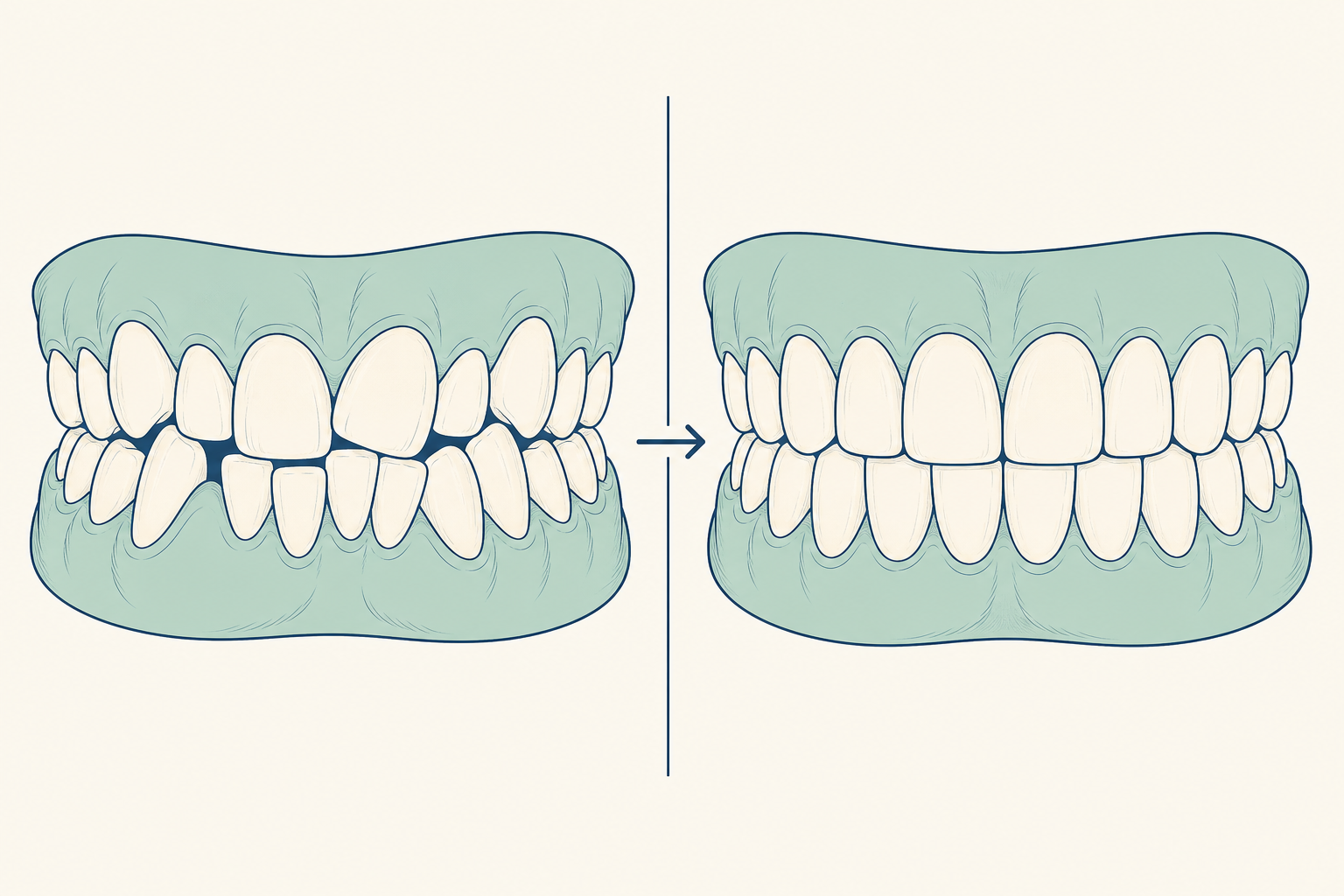
Illustrative diagram: Crooked Teeth
Illustration — a representative diagram, not a patient photo.
The DN First Look799 AED
Book The DN First Look

What are the signs of crooked teeth?

A crowded or uneven bite can make biting into food difficult or uncomfortable. Teeth may look out of line, and some people have mouth breathing or a speech difficulty such as a lisp.

[1]
Ways misalignment can appear
SignWhat you may notice
Crowding or rotationTeeth look uneven or overlap[1]
Uneven biteBiting or chewing feels difficult or uncomfortable[1]

[1]

Why do teeth become crooked?

Crooked teeth often run in families because jaw size and tooth size are inherited. A mismatch between them can leave too little room for teeth, while extra, missing, impacted or unusually shaped teeth can also disrupt alignment.

[1][2]

What happens as children grow?

Crowding can become clearer as permanent teeth erupt. Losing a baby tooth early can reduce arch space and contribute to rotations, ectopic eruption and further crowding as the remaining teeth move into the gap.

[1][2]
Changes during tooth development
EventPossible alignment effect
Early baby-tooth lossArch space can be lost[1][2]
Permanent-tooth eruptionCrowding or rotation can become visible[1][2]

[1][2]

What increases the chance of crooked teeth?

Thumb sucking, tongue thrusting, pacifier use beyond age three and prolonged bottle use can affect tooth position. Cleft lip and palate, jaw fractures, poorly fitting crowns or appliances, and premature tooth loss can also change alignment.

[1][2]

How are crooked teeth assessed?

The assessment checks how upper and lower teeth meet when you close together. Dental X-rays, facial or skull X-rays and models of the teeth may be used to measure the position of the teeth and jaws.

[1][2]

What can straighten crooked teeth?

Braces and other orthodontic devices move teeth into a better position. Treatment is generally quicker in children and adolescents because their bones are still soft, although orthodontic treatment in adults can also be successful and may take longer.

[1][2]
Treatment timing
Age groupWhat may differ
Children and adolescentsTeeth are generally easier to move[1][2]
AdultsTreatment can work but may require longer appliance use[1][2]

[1][2]

What affects the price in Dubai?

The amount of movement required and the length of treatment shape the work involved. Orthodontic treatment may take six months to two years or more, and adult correction can need longer use of braces or other devices.

[1][2]

What problems can crooked teeth cause?

Misaligned teeth can make chewing difficult and can affect appearance, speech or mouth breathing. During orthodontic correction, appliances can cause mouth and gum irritation, and tooth decay or gingivitis are possible complications.

[1]

Can crooked teeth be avoided?

Inherited jaw and tooth proportions cannot be prevented. Limiting thumb sucking and tongue thrusting may help, while restoring baby teeth and maintaining space after early tooth loss can reduce the crowding that follows loss of arch length.

[1][2]

Frequently asked questions

Do crooked teeth always need braces?

Orthodontic devices are used to move teeth and improve alignment, but the amount of correction and the timing depend on the tooth and jaw positions found during assessment.

[1][2]