Dental Nation
Condition guide

Concrescence of Teeth

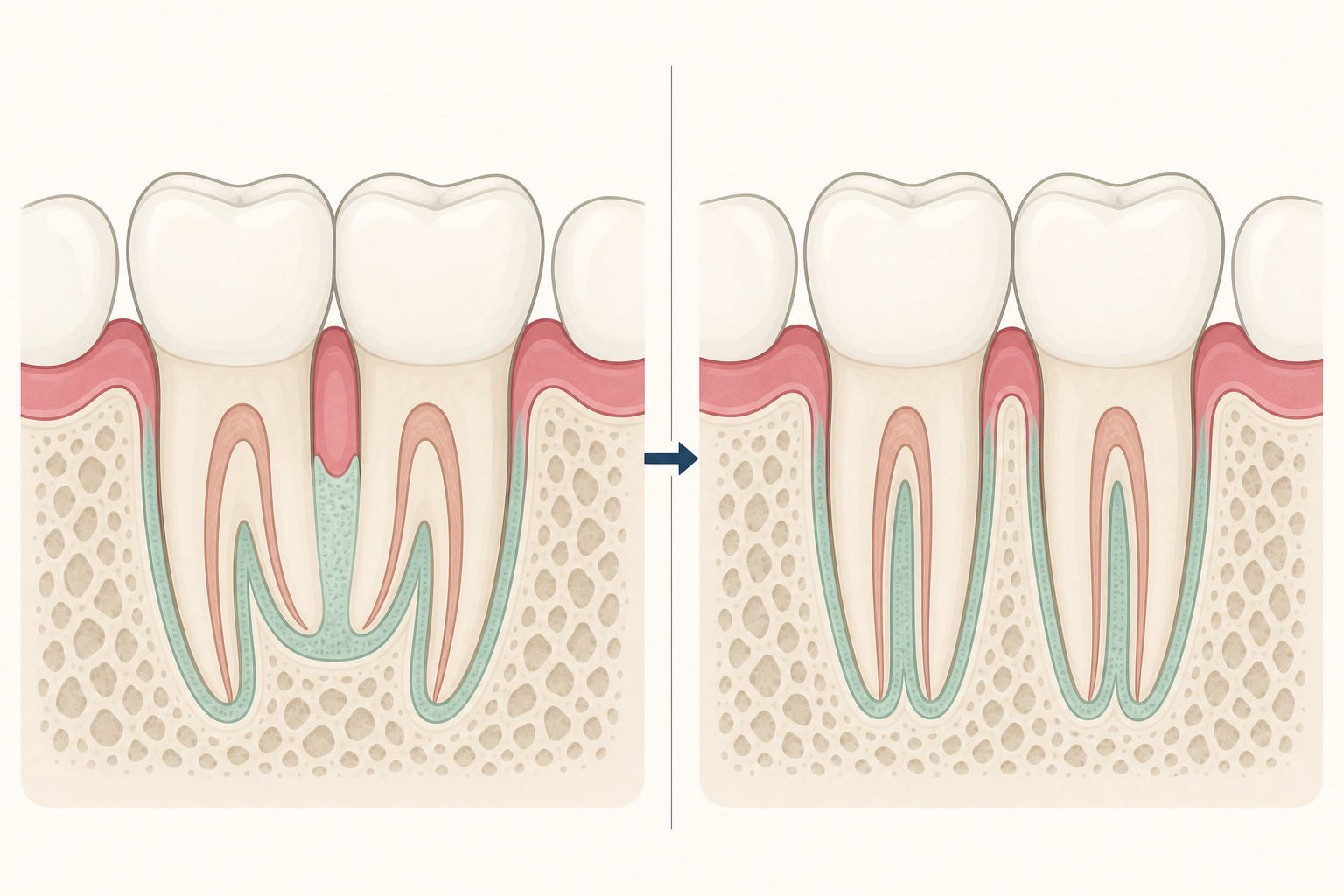
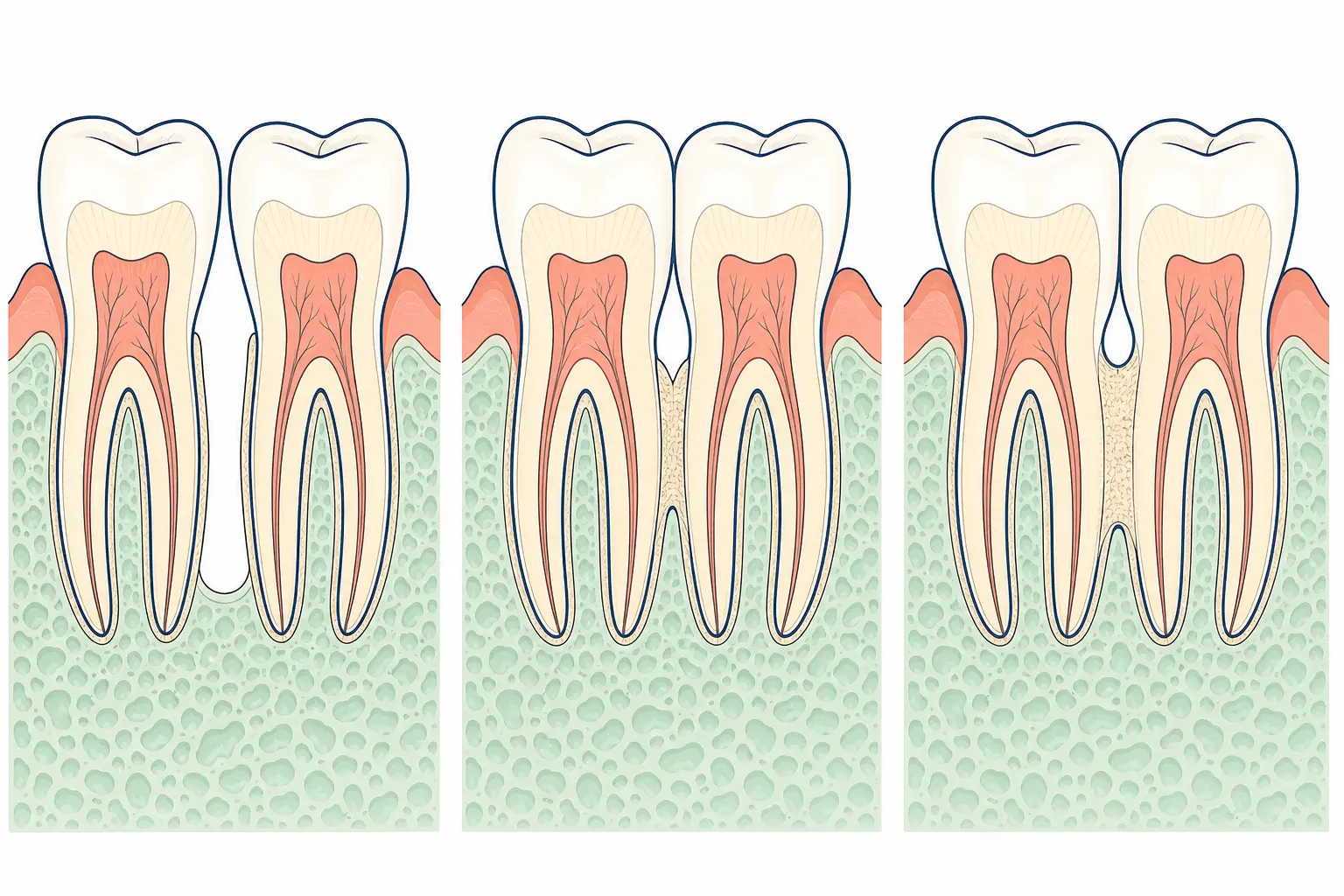
Concrescence joins the cementum of two adjacent tooth roots and is often discovered when extraction or imaging is needed.

[3][1]

The short answer

Concrescence is a rare tooth anomaly in which cementum joins the roots of two adjacent teeth, most often upper molars.

[3][1]
Concrescence of Teeth dental educational illustration

What the change looks like

Illustrative diagram: Concrescence of Teeth
Illustration — a representative diagram, not a patient photo.
The DN First Look799 AED
Book The DN First Look

What is concrescence of teeth?

How concrescence may come to light
SituationWhat may be found
Routine clinical examinationThe joined roots are difficult to diagnose by examination alone[1][4]
Planned extractionMany cases are discovered accidentally during removal[1][4]

[1][4]

Why do tooth roots join?

Concrescence can be developmental or acquired. Loss of inter-dental bone and lack of periodontal functional stimulation can allow layers of cementum to unite between tooth roots.

[3]

Where does concrescence usually occur?

The union involves cementum rather than enamel or dentine. It occurs almost always in the upper molar region and may involve an upper second and third molar.

[3][1]
Anatomy of concrescence
FeatureDescription
Tissue joinedCementum joins two tooth roots[3][1]
Common locationUpper molars, including the second and third molars[3][1]

[3][1]

When does concrescence matter most?

Concrescence is most important when removal, orthodontic movement, or root-canal access is being considered. Joined roots can make these procedures more difficult and alter the surgical plan.

[3][1]

How is concrescence diagnosed?

Two-dimensional images may not show the anomaly clearly. Panoramic radiography and cone-beam CT can show an unclear boundary between roots and help plan treatment before extraction.

[1][4][5]

How is concrescence managed?

If separation is biologically possible, one tooth may be sectioned and removed or moved away orthodontically; simply separating adjacent roots without changing their proximity can allow concrescence to recur. Extraction may be used when the union impairs appearance, hygiene, or causes disease.

[1][4][5]
Management options described
SituationManagement
Roots can be separated and one tooth remainsThe teeth may need to be moved apart after separation to prevent a new union[1][4][5]
Appearance, hygiene, or disease is compromisedExtraction may be advisable[1][4][5]

[1][4][5]

What can affect the cost of management?

Imaging, surgical complexity, and whether teeth are separated, moved orthodontically, or extracted can all shape the amount of clinical work needed. Cone-beam CT may be used for diagnosis and planning.

[1][4][5]

What are the extraction risks?

Removing concrescent upper teeth can fracture the maxillary tuberosity or the floor of the maxillary sinus. Sectioning before extraction may reduce this risk in suitable cases.

[3][1]

Can concrescence be prevented?

A developmental union cannot be prevented. Before extraction, thorough assessment and cone-beam CT in justified cases can identify joined roots and help avoid serious complications.

[2][3]

Frequently asked questions

Why can a joined-root extraction be more difficult?

The joined roots can lead to complications such as fracture of the maxillary tuberosity or sinus floor, so imaging and planning are important before removal.

[3][1]