
Cold Sores (Oral Herpes)
Tingling can come before a blister, which remains contagious until the cold sore has completely healed.
[1][2]The short answer
Cold sores are recurring oral herpes blisters that usually begin with tingling or soreness before blisters appear and heal over time.
[1][2]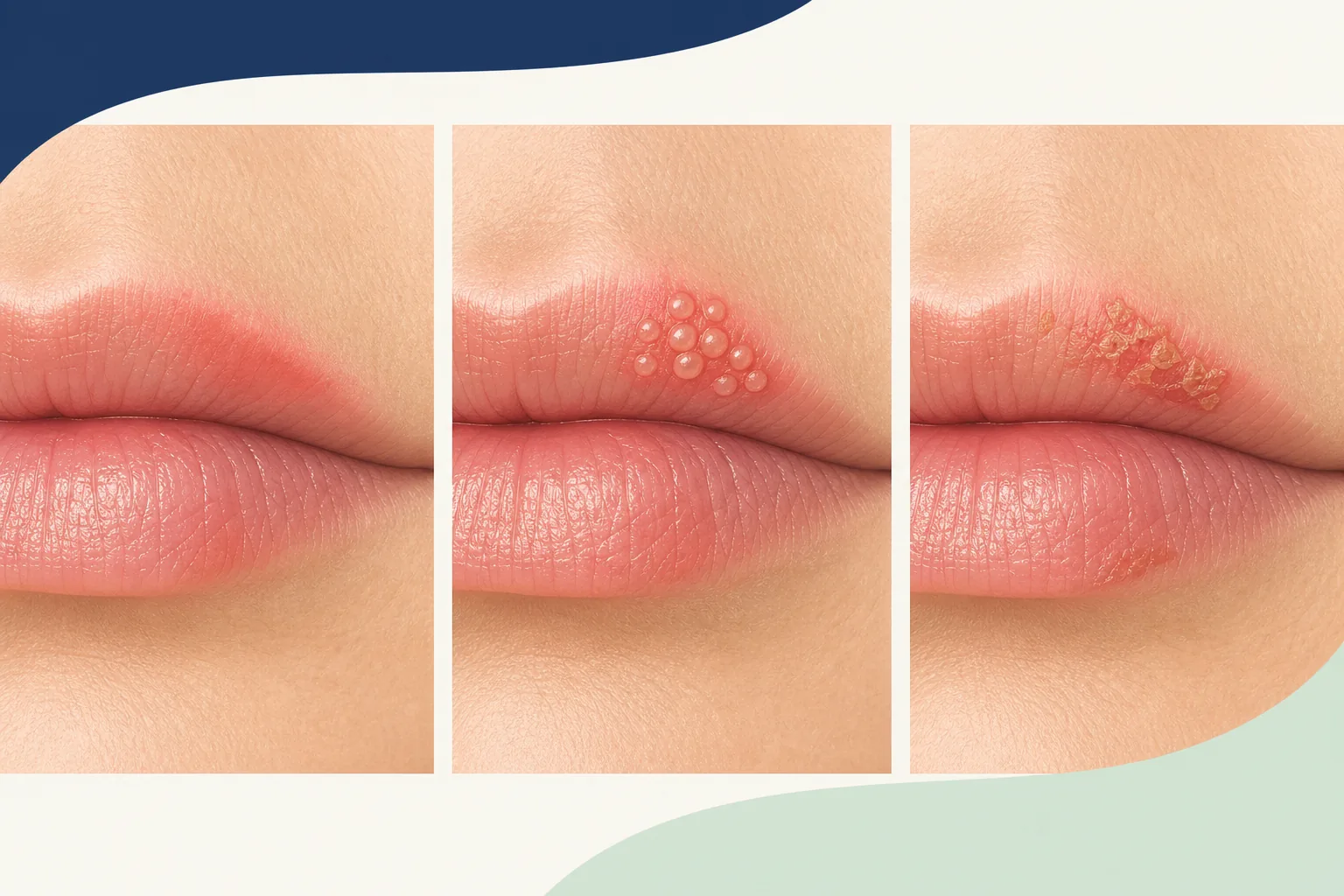
What the change looks like
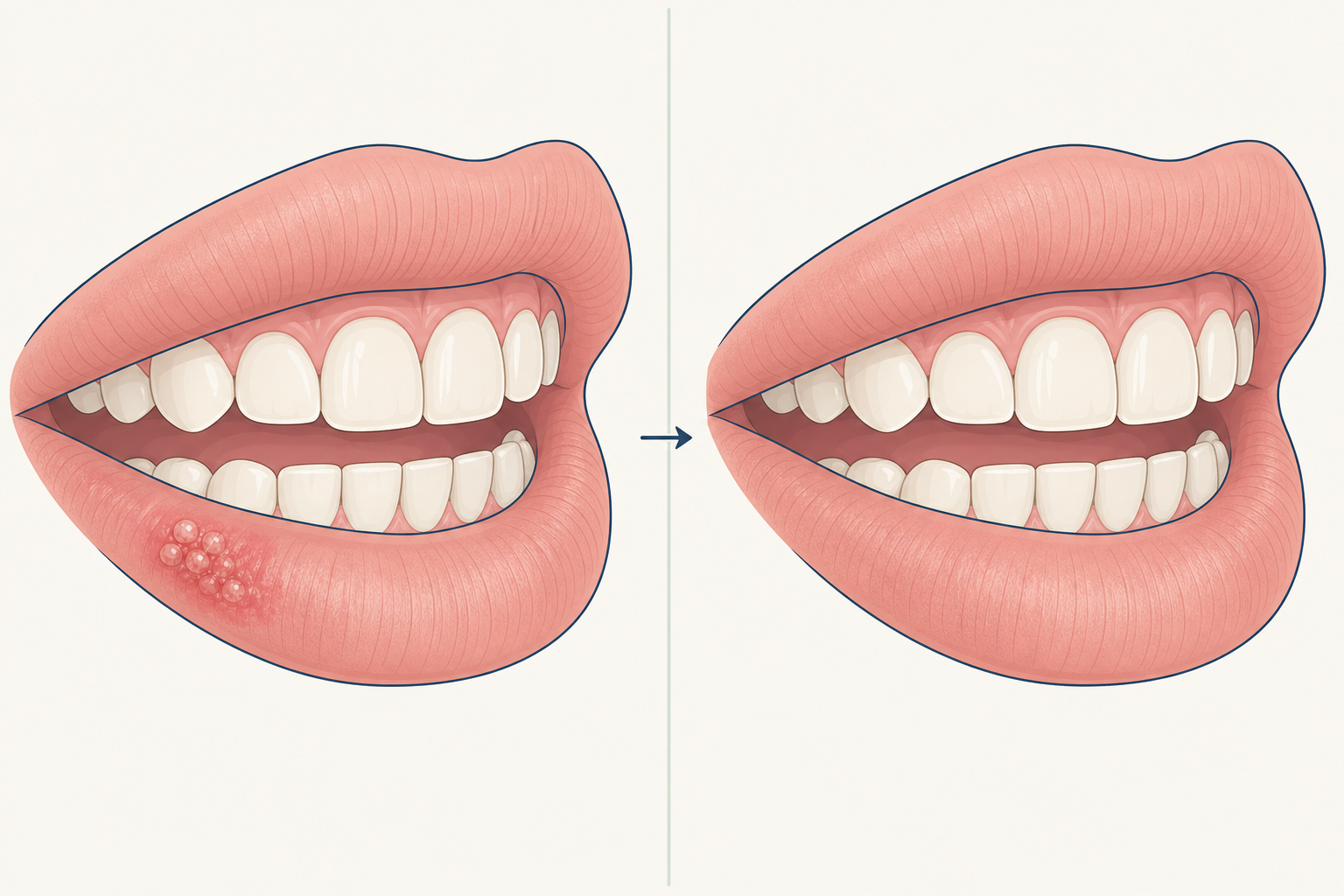
What do cold sores feel and look like?
What causes cold sores?
Cold sores are caused by oral herpes infection. After the first infection, the virus remains in the body and a sore can return. Recurrences differ from person to person. The presence of a blister matters for contact precautions because the infection can spread through close contact, including contact with a sore.
[1][2]How does a cold sore change over time?
When should a cold sore be checked?
Arrange an assessment when the sore is unusually severe, does not follow a familiar pattern, keeps recurring, or causes concern about another mouth condition. Medical advice is also appropriate when the sore affects eating or drinking, or when infection may have spread through close contact. These features do not identify the cause by themselves, but they help set the need for review.
[1][2]How is a cold sore diagnosed?
A clinician usually considers the sore’s appearance, its location, the symptoms that came before it, and whether similar episodes have happened before. If the presentation is unclear, examination helps separate a cold sore from other lip or mouth lesions. Share when the sore started, how it changed, and whether close contact could have exposed another person.
[1][2]What treatment is used for cold sores?
Treatment depends on the episode and the person’s circumstances. Advice may focus on comfort, protecting the sore while it heals, and avoiding contact that could spread infection. Antiviral treatment may be discussed in appropriate cases, particularly when episodes are severe or recurrent. Use a clinician or pharmacist’s advice for a treatment choice rather than applying an unconfirmed product to a mouth lesion.
[1][2]What should I ask about the cost of an assessment in Dubai?
Can cold sores cause problems?
A cold sore can be painful and can spread through close contact. A changed, persistent, or unusually severe sore should be assessed because appearance and symptoms can overlap with other mouth conditions. Prompt advice is sensible when eating or drinking becomes difficult or when the sore causes repeated concern.
[1][2]How can I reduce spread and recurrence concerns?
Avoid close contact with another person while a cold sore is present, and avoid touching the sore before touching another person. Hand hygiene after contact helps reduce transfer. Do not share items that touch the mouth during an episode. Ask for medical advice if episodes are frequent or difficult to manage.
[1][2]