
Dental Nation
Condition guide

Cleft Lip & Palate

A cleft lip or palate can affect feeding, speech, tooth development, and the bite from infancy through growth.

[1][2]

The short answer

Cleft lip and palate can affect feeding, speech, tooth development, and the bite as a child grows.

[1][2]
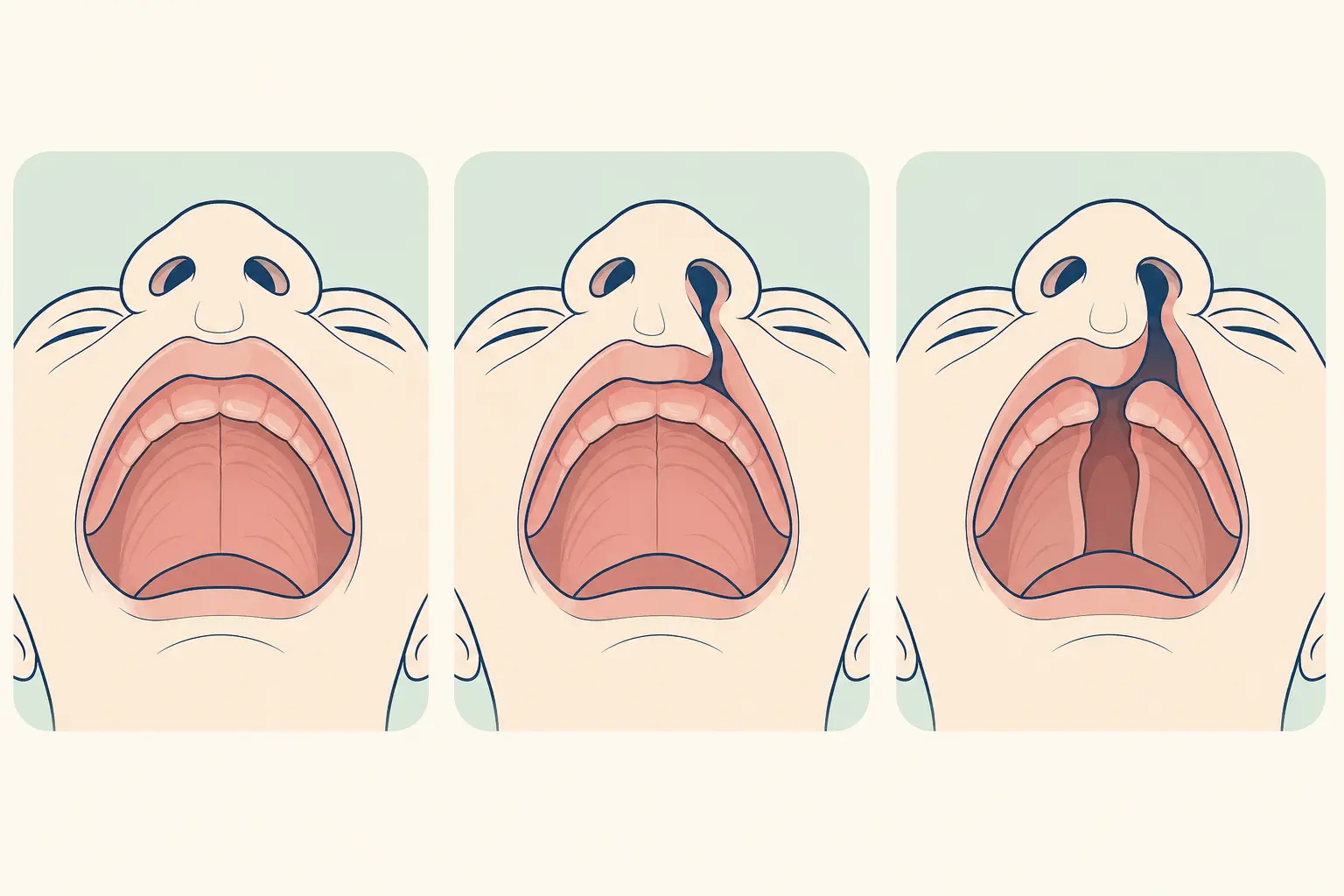
Cleft Lip & Palate dental educational illustration

What the change looks like
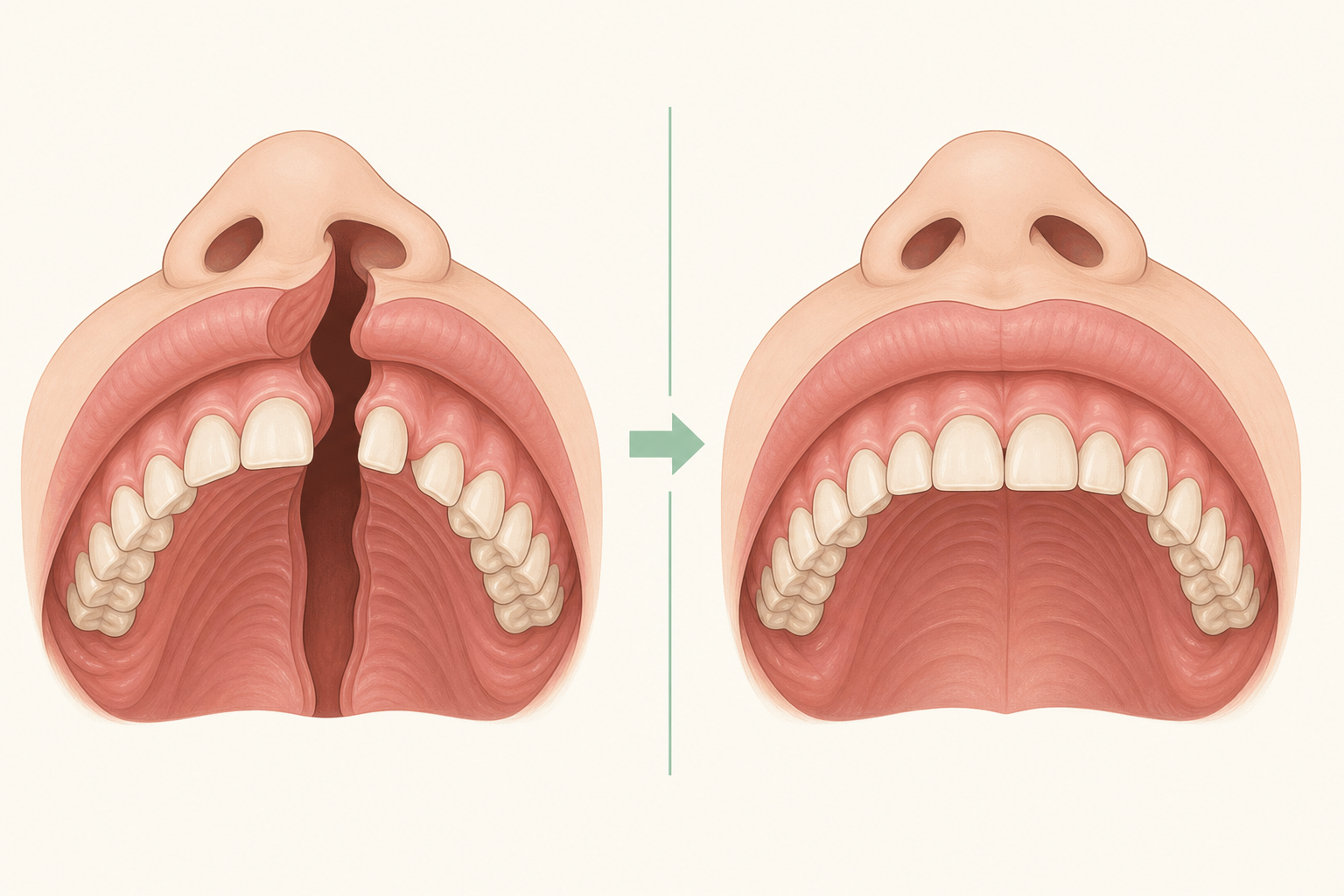
Illustrative diagram: Cleft Lip & Palate
Illustration — a representative diagram, not a patient photo.
The DN First Look799 AED
Book The DN First Look

What might you notice?

Findings that can prompt an assessment
FindingWhy it matters
A change in eruption, spacing, colour, or shapeIt can show that development or tooth position needs review[1][2]
Pain, sensitivity, swelling, or difficulty cleaningThese symptoms help the dentist decide what needs examination[1][2]

[1][2]

Why can it develop?

A cleft develops early in pregnancy when facial structures do not join completely. Genetic and environmental factors can contribute, and the cause is not always identified for an individual child.

[1][2]

What stage is it at?

The useful clinical stage is based on whether the relevant teeth are visible, partly erupted, or still within the jaw, and whether nearby teeth or the bite are affected. Imaging can clarify position when the finding cannot be seen directly.

[1][2]
Clinical position and the question it raises
Current findingAssessment question
Visible or partly erupted findingIs it affecting cleaning, comfort, or the bite?[1][2]
Finding beneath gum or within the jawWhere is it, and what is its relationship to nearby teeth?[1][2]

[1][2]

What can make assessment more important?

Feeding or speech concerns, dental crowding, missing or displaced teeth, and changes in jaw growth can make coordinated review important. The concerns are individual and should be assessed within the child’s care plan.

[1][2]

How is it diagnosed?

Diagnosis combines dental history, examination, and imaging when needed. The clinician assesses tooth development, spacing, gums, bite, and the relationship between the affected area and nearby teeth before discussing a plan.

[1][2]

What treatment may fit the stage?

Care may involve surgery, speech and feeding support, dental prevention, orthodontics, and restorative treatment at different times. The sequence depends on the cleft, growth, and the needs identified by the team.

[1][2]
Management direction based on assessment
Assessment resultPossible direction
No current harm to teeth or functionPlanned monitoring may be discussed[1][2]
Effect on eruption, structure, comfort, or biteTreatment and follow-up can be planned around the finding[1][2]

[1][2]

What should you ask about the cost?

Dental costs can arise from monitoring tooth development, managing the bite, and supporting care alongside cleft treatment as the child grows.

[1][2]

What can happen without assessment?

Without assessment, the issue may affect eruption, tooth position, tooth structure, comfort, or the bite, depending on the condition. A planned review makes it possible to act if those findings change.

[1][2]

Can it be prevented?

Many clefts cannot be prevented because their cause is complex or unknown. Pregnancy health advice and early connection with a cleft-care team support planning after diagnosis.

[1]

Frequently asked questions

What is the next step for cleft lip & palate?

Cleft lip and palate can affect feeding, speech, tooth development, and the bite, so dental care is planned with the wider cleft-care team.

[1][2]