
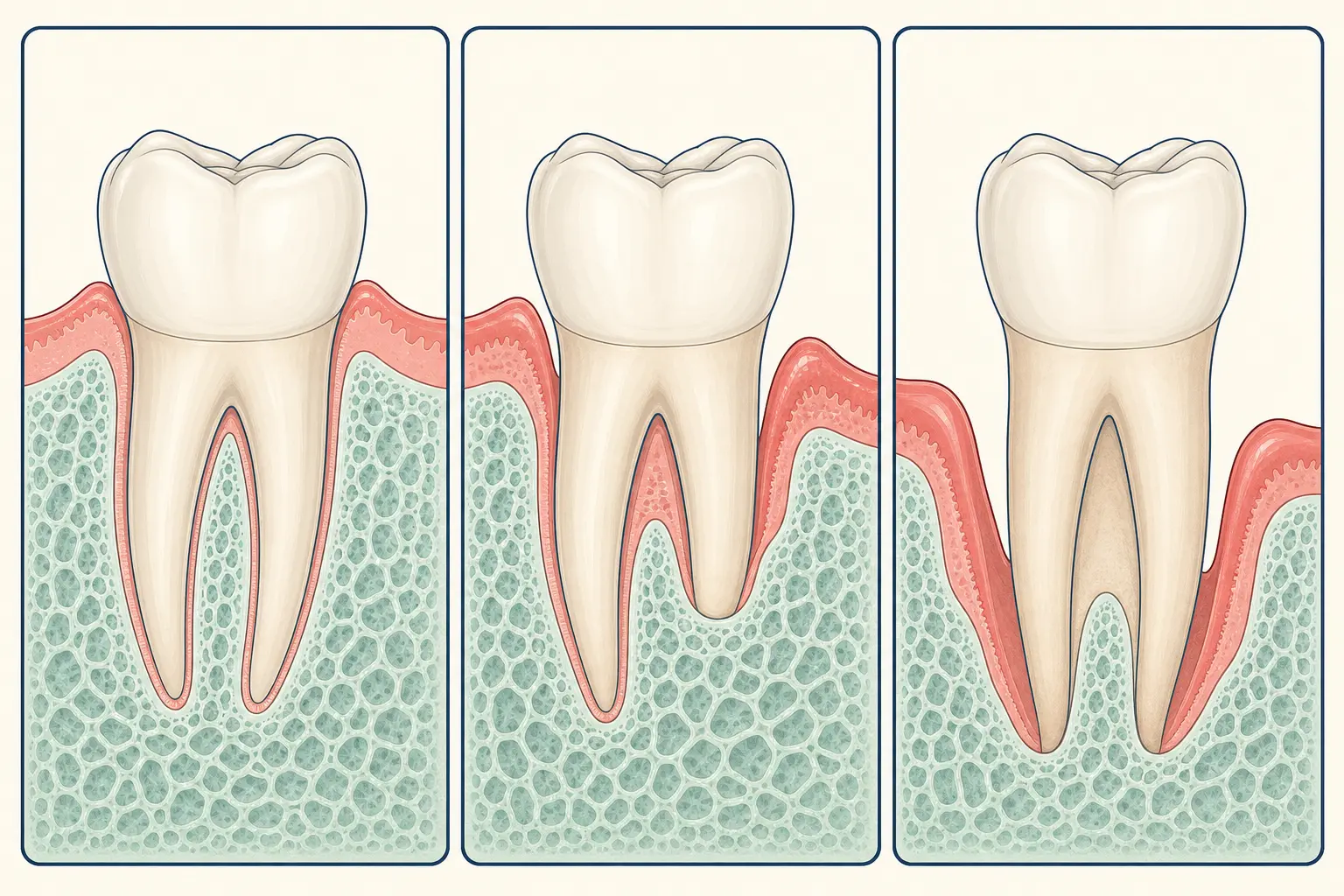
What the change looks like
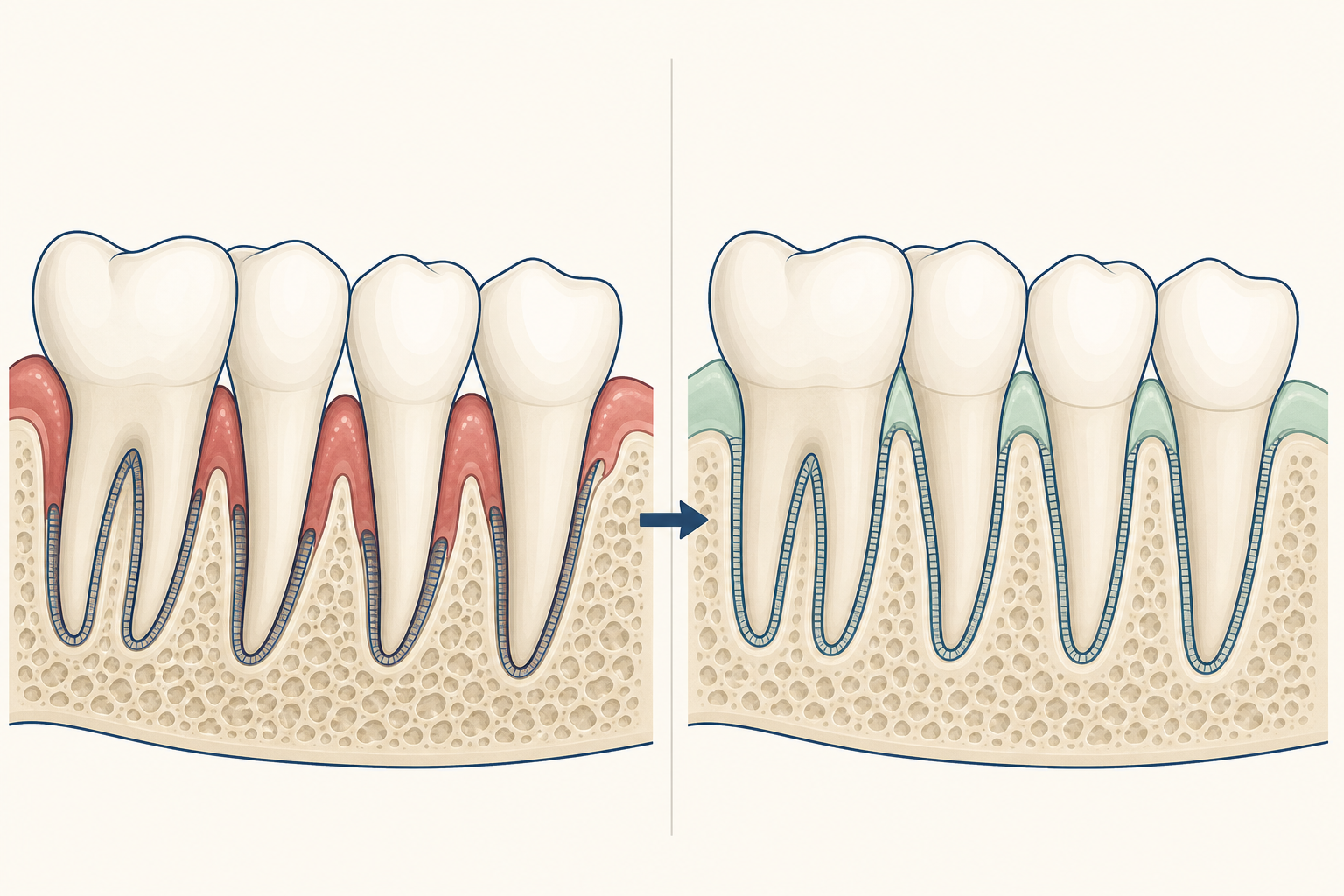
What might you notice first?
What can trigger it?
The condition belongs to the periodontitis category, while endodontic-periodontal lesions involve a pathological communication between pulpal and periodontal tissues.
[2]How is severity described?
Stage records severity at presentation and the complexity of disease management. Grade adds the history of progression, risk of further progression and risk of poor outcomes.
[2]What raises the risk of progression?
A history of progression, biological features, the possibility of further progression and the risk of poor treatment outcomes all contribute to grading.
[2]How is it diagnosed?
Lesions are classified according to signs and symptoms that directly affect prognosis and treatment, including whether the presentation is acute or chronic.
[2]How is treatment chosen?
Periodontal treatment is selected around the severity and complexity recorded at presentation, with care aimed at controlling gum disease and its consequences.
[1]What affects the cost in Dubai?
The extent and complexity of periodontal care affect the work involved, so treatment costs follow the clinical management required.
[1]What can happen without control?
Periodontitis can carry a risk of further progression, poor treatment outcomes and a negative effect on general health. Periodontal abscesses can spread systemically.
[2]How is gum health maintained?
Maintenance is part of periodontal treatment because controlling gum disease requires continuing care after the active problem has been managed.
[1]Frequently asked questions
Does chronic periodontitis mean the disease cannot be treated?
No. Periodontal treatment is used to control gum disease, with planning based on severity and management complexity.
[1]