
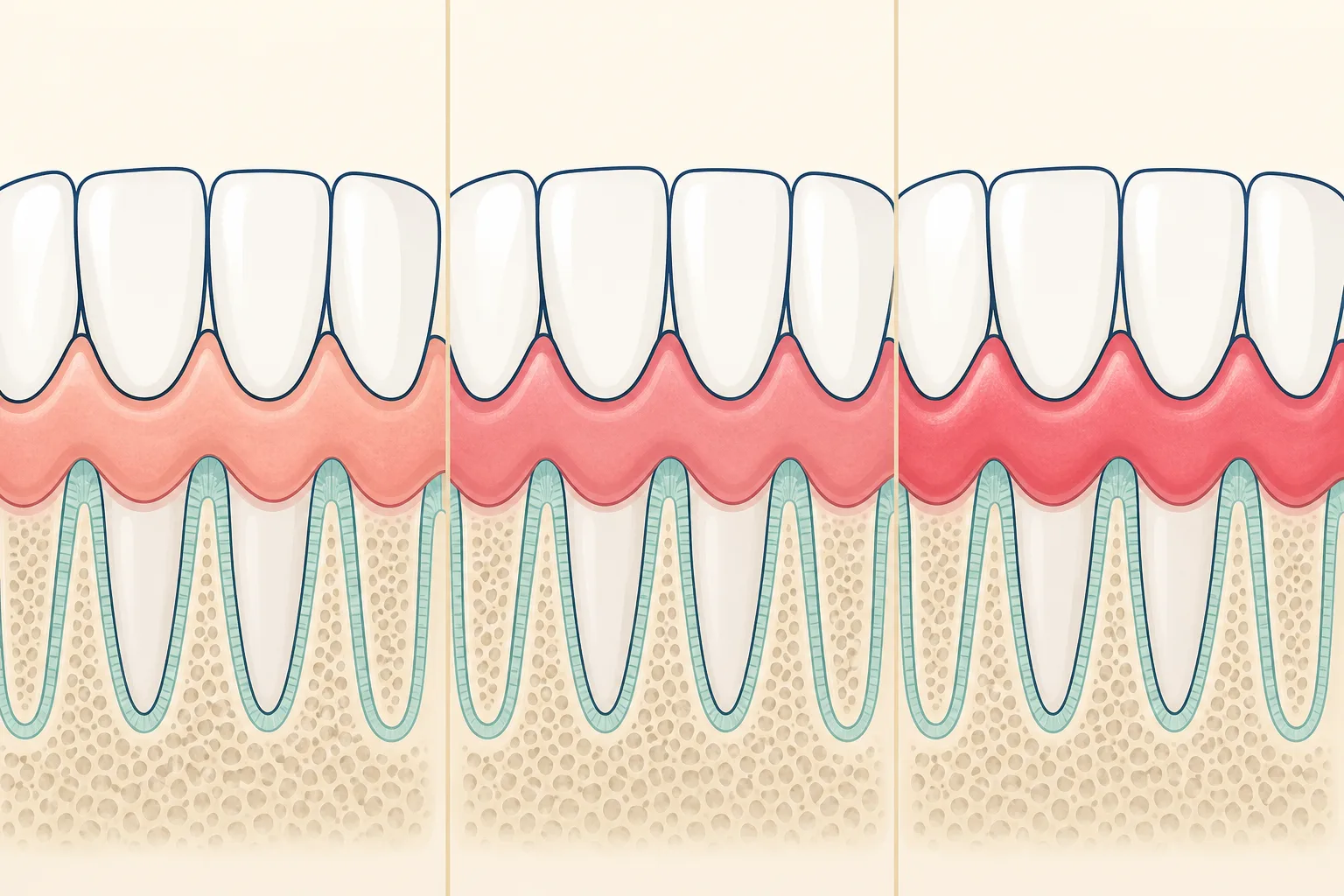
What the change looks like
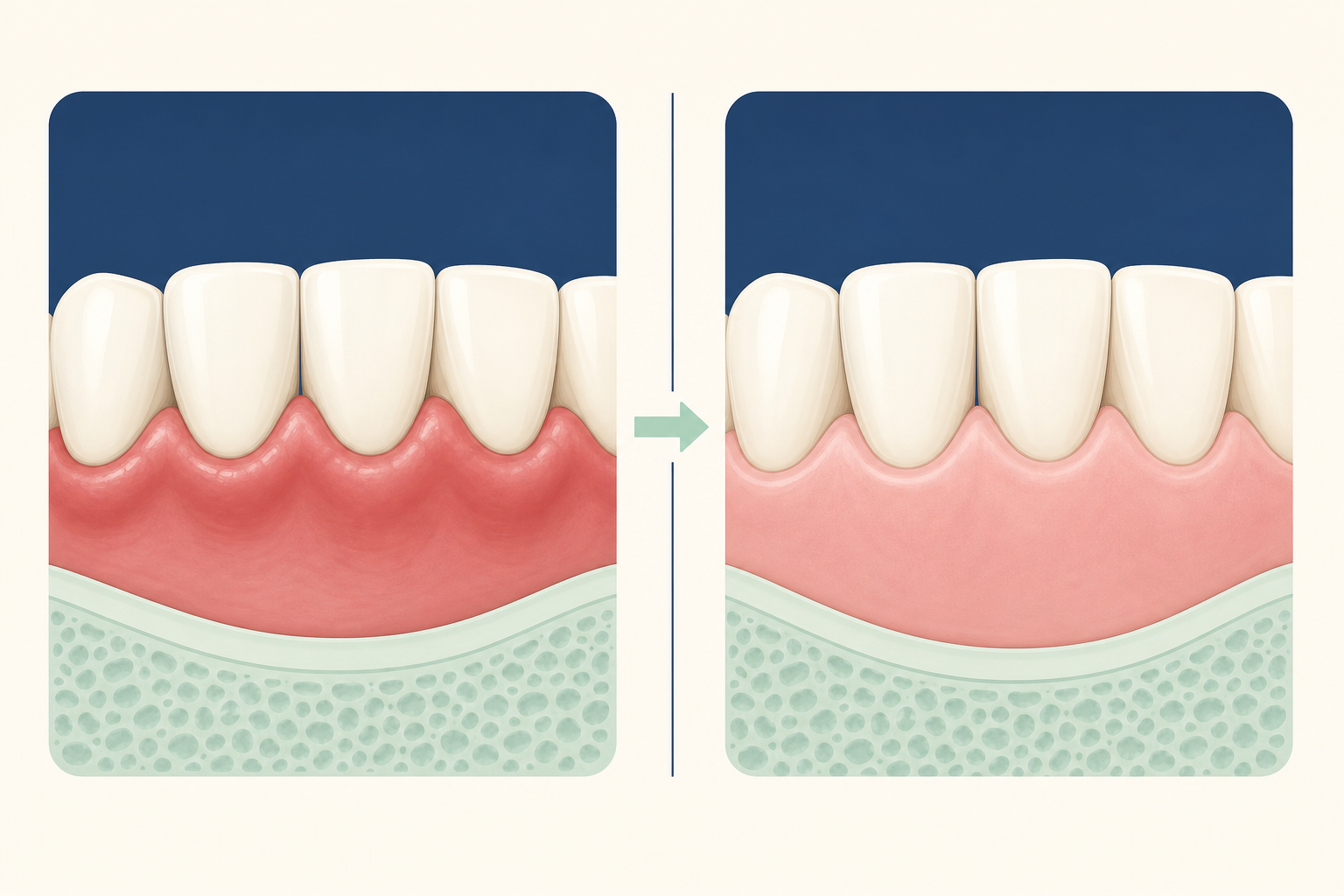
What does chronic gingivitis look like?
The inflammation may occur around teeth supported by an intact periodontium or around a reduced periodontium. Bleeding on probing is the central clinical feature used in the case definition.
[2]Why can it keep returning?
Dental plaque biofilm is a common trigger for plaque-induced gingivitis. Other gingival conditions are not caused by plaque and may reflect a local oral lesion or systemic disease, so plaque removal alone may not resolve them.
[2]What changes when the periodontium is reduced?
A person successfully treated for periodontitis can still have a reduced periodontium. If gingival inflammation returns in that setting, the person remains a periodontitis patient and requires attention to recurrent or progressive disease.
[2]What factors influence severity?
Local predisposing factors and systemic modifying factors affect the extent, severity, and progression of gingivitis. Smoking, hormonal changes, systemic illness, and plaque-retaining local factors are recognised categories.
[2]How is it confirmed?
Diagnosis uses bleeding on probing and a classification of the gingival condition. The assessment also separates plaque-induced gingivitis from non-plaque-induced disease and records whether the periodontium is intact or reduced.
[2]How is chronic gingivitis treated?
Treatment aims to eliminate bacterial plaque and establish effective daily cleaning. Oral-hygiene instruction, management of risk factors, and professional treatment reduce the bacterial load and level of inflammation; local anaesthesia can be used for gum treatment.
[1]What affects the cost in Dubai?
Cost follows the amount of professional gum treatment, instruction, risk-factor management, and follow-up required. The extent of inflammation and the condition of supporting tissues affect the care pathway.
[1]What are the long-term concerns?
Continuing inflammation in a reduced periodontium can represent recurrent or progressive periodontitis. Professional cleaning may also cause gum-line shrinkage, open black triangles, and sensitivity to cold or acidic foods that usually settles after a few months.
[2]How is recurrence limited?
Keep plaque under control with careful daily oral hygiene, address recognised risk factors, and attend regular follow-up. Review visits commonly occur every three to six months, with frequency linked to disease severity and progression risk.
[1]Frequently asked questions
How often are follow-up visits usually scheduled after gum treatment?
Follow-up visits are usually scheduled every three to six months, with the interval linked to disease severity and progression risk.
[1]