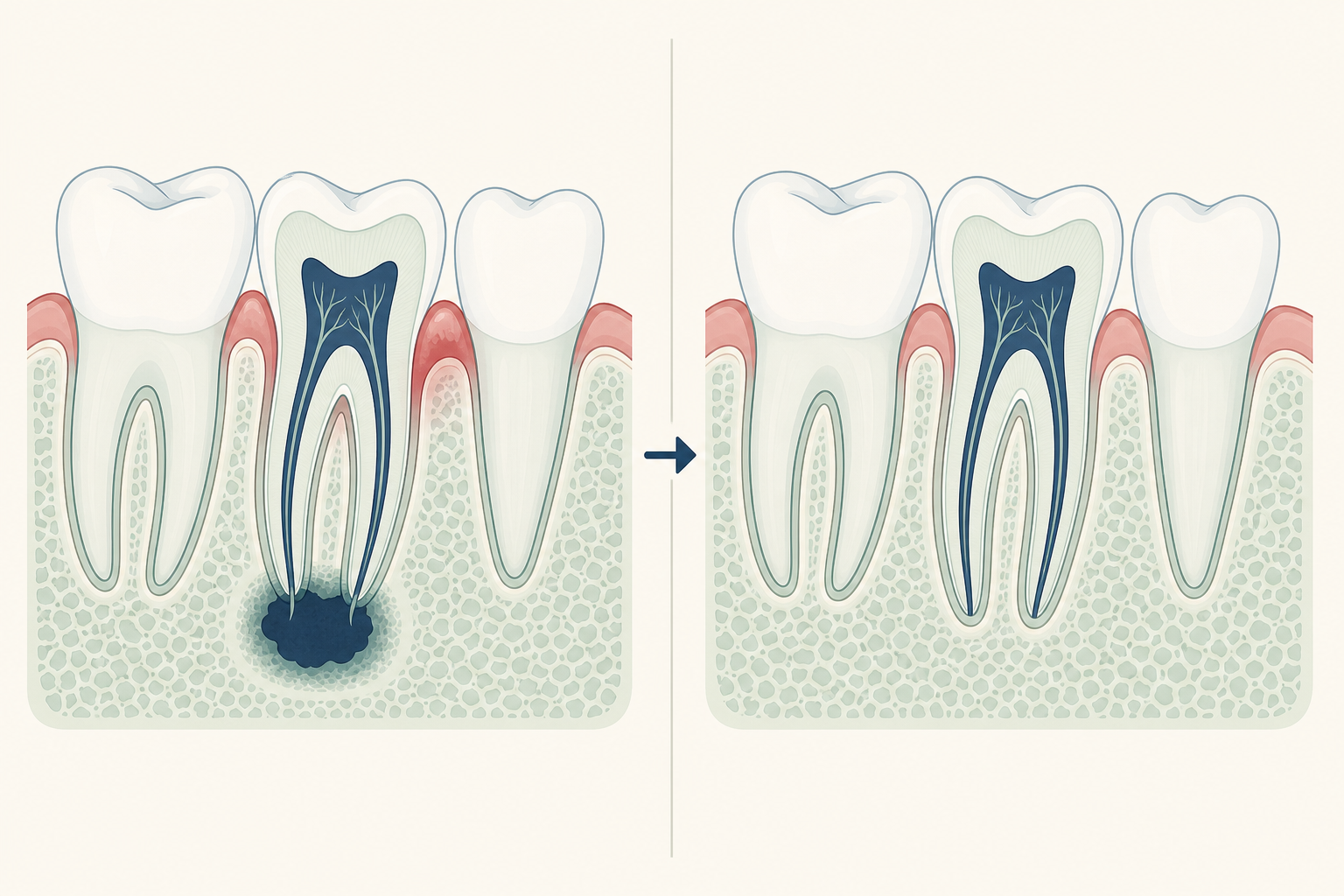
Dental Nation
Condition guide

Chronic Apical Periodontitis

A tooth can have underlying pulp necrosis without pain, while infection later forms an abscess around its root.

[1][2]

The short answer

Irreversible pulpitis can progress to pulp necrosis, leaving a tooth without symptoms despite underlying disease around the root.

[1][2]
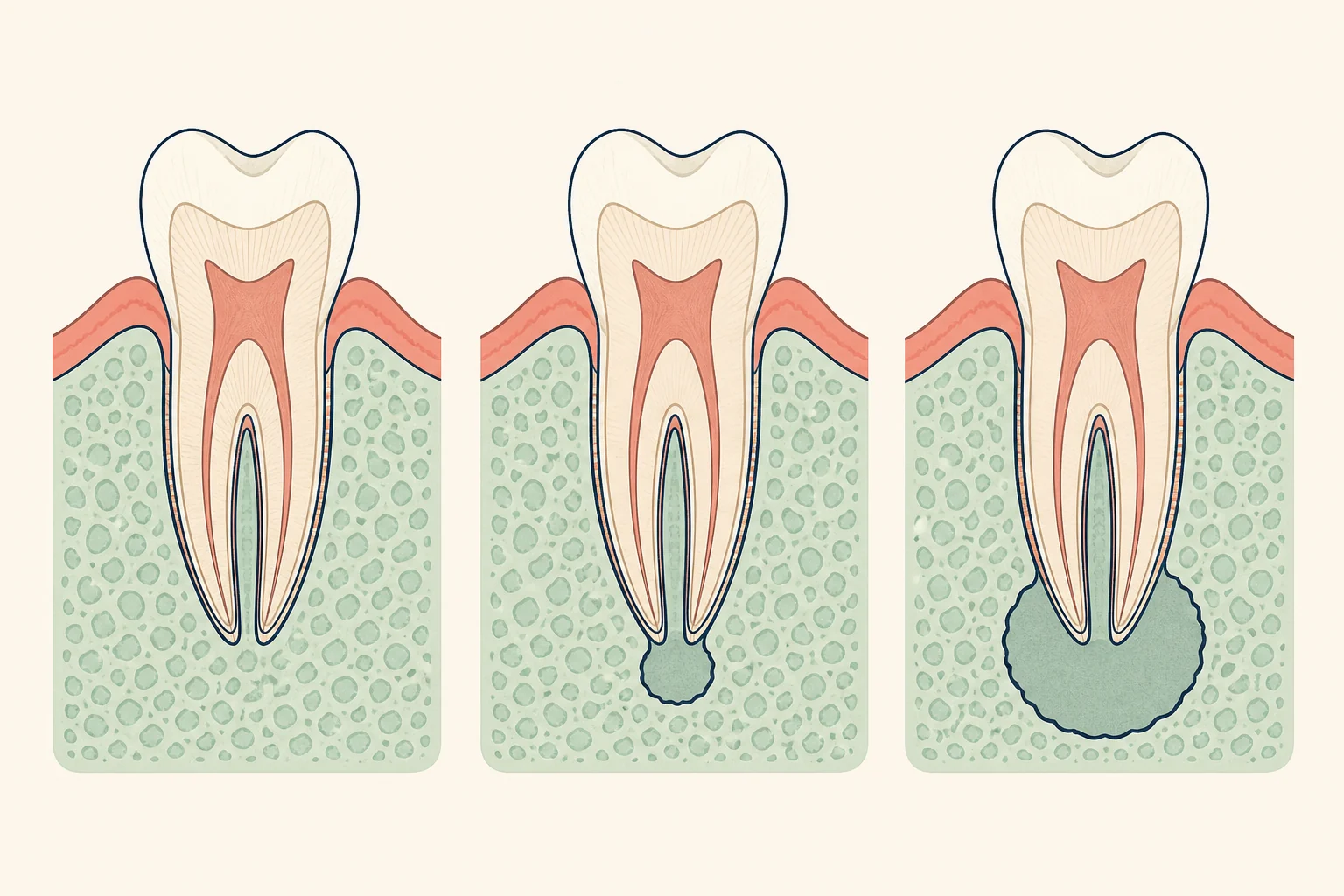
Chronic Apical Periodontitis dental educational illustration

What the change looks like

Illustrative diagram: Chronic Apical Periodontitis
Illustration — a representative diagram, not a patient photo.
The DN First Look799 AED
Book The DN First Look

Can an ongoing root-area problem be painless?

An apical abscess can complicate pulp necrosis. Acute or chronic forms can develop, and an acute abscess may cause mild to severe pain, swelling and marked tenderness to touch.

[1][2]
Findings described as pulp disease progresses
FindingWhat can follow
Pulp necrosisThe affected tooth may be asymptomatic despite underlying pathology[1][2]
Apical abscessA chronic or acute form can develop after pulp necrosis[1][2]

[1][2]

What starts infection around a root?

Almost all dental infections begin with dental caries. Bacteria can leave the oral cavity and enter previously sterile spaces, producing conditions that include pulp necrosis and periapical abscesses.

[1][2]

How can a tooth problem become a root problem?

Irreversible pulpitis may progress through ischaemia to necrosis of the dental pulp. Infection from the root canal can then create a local collection of pus around the periapex.

[1][2]
The sequence described for pulp and apical disease
StepRecorded change
Irreversible pulpitisMay progress to ischaemia and pulp necrosis[1][2]
Root-canal infectionCan form a local collection of pus around the periapex[1][2]

[1][2]

What can raise the chance of an apical abscess?

Diabetes, periodontal disease, obesity, older age, poor oral hygiene and barriers to dental care are associated with a higher risk of dental abscesses or poorer infection outcomes.

[1][2]

How is infection around the root identified?

Examination looks for redness, swelling or pus extrusion. Dental radiographs can reveal a periapical abscess and areas of disease that visual inspection cannot show.

[1][2]

What treats an apical abscess?

Periapical abscesses require incision and drainage when extraction is not the selected option. The infection source is treated with a dental procedure, rather than relying on antibiotics alone.

[1][2]
Treatment points recorded for periapical abscesses
SituationTreatment point
Periapical abscessIncision and drainage are required when extraction is not selected[1][2]
Surrounding cellulitis or immunocompromiseOral antibiotics are also given in these settings[1][2]

[1][2]

What can make an infection harder to manage?

A large abscess or deep-space infection can require hospital admission, parenteral antibiotics and operative intervention. The extent of infection changes the level of care needed.

[1][2]

What are the serious complications?

Dental infection can spread into the deep neck spaces and cause airway compromise. Fever, facial oedema, trismus, dysphagia or dysphonia can accompany deeper spread.

[1][2]

What lowers the risk of dental infection?

Good oral hygiene, reducing sugar-containing foods and early identification and treatment reduce the prevalence of dental infections. Managing tobacco use and diabetes is also part of infection risk reduction.

[1][2]

Frequently asked questions

Can an infected tooth have no pain?

Yes. After irreversible pulpitis progresses to pulp necrosis, the affected tooth can be asymptomatic despite underlying pathology.

[1][2]
When are antibiotics used with a periapical abscess?

Oral antibiotics are given when there is surrounding cellulitis or the person is immunocompromised; large abscesses and deep-space infections require hospital treatment.

[1][2]