
Cheek and Lip Biting
Repeated cheek or lip biting can injure salivary tissue and leave soreness or a mucus-filled swelling that may need treatment.
[1]The short answer
Repeated cheek or lip biting damages soft tissue and can injure a minor salivary gland, leaving soreness or a mucus-filled swelling.
[1]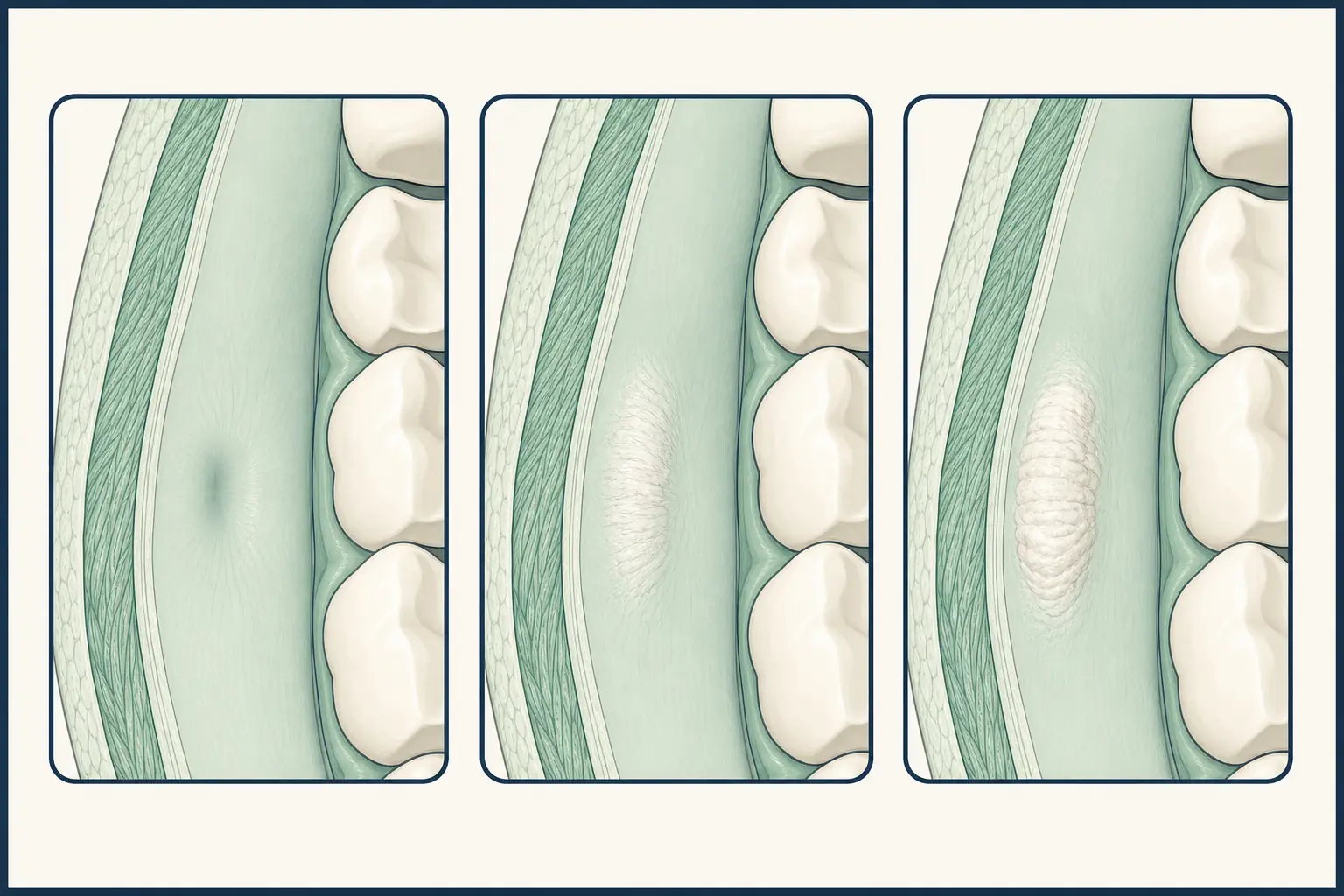
What the change looks like
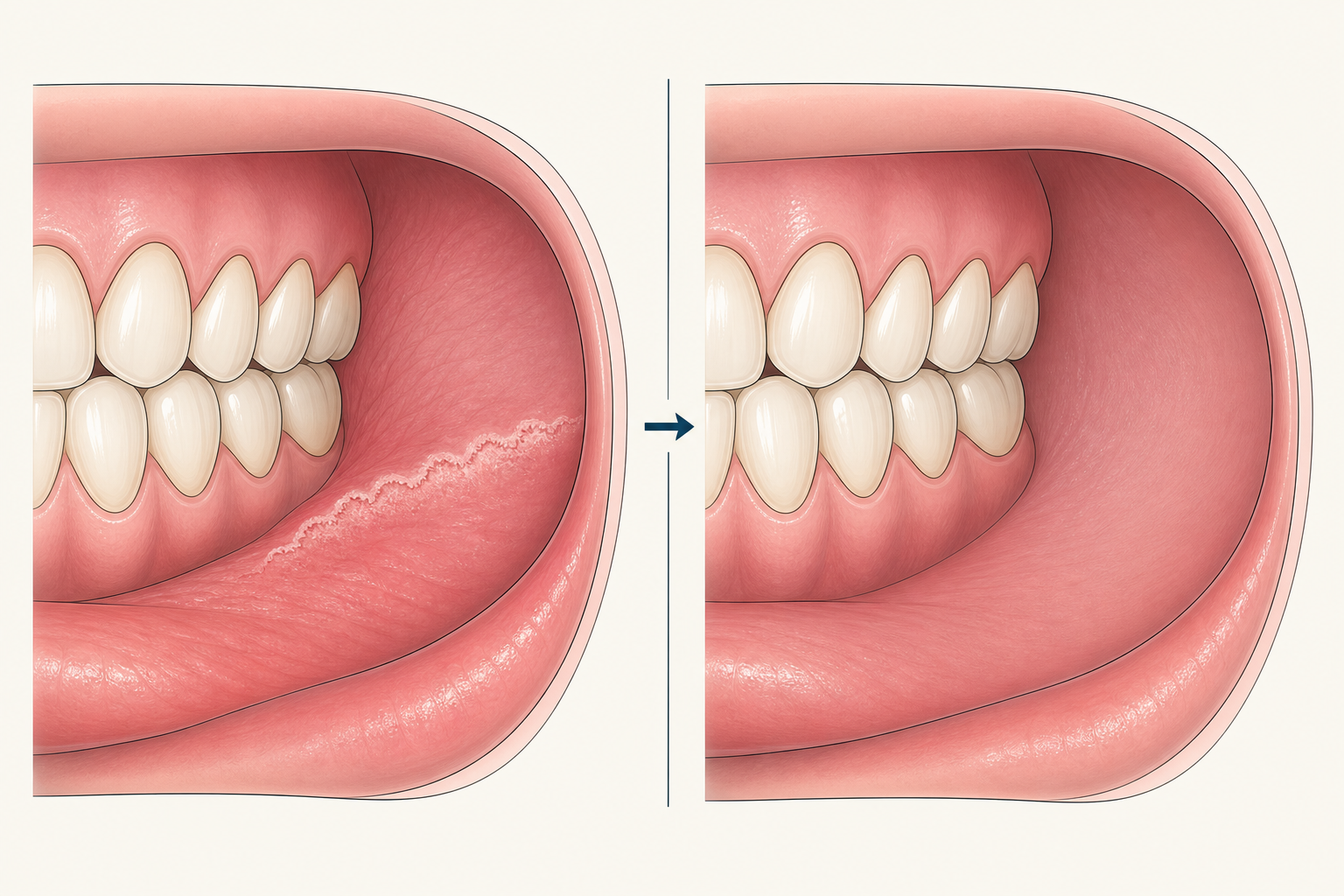
What does cheek and lip biting cause?
The result may be a local sore area or a visible swelling. If a mucus lesion develops, its size can affect eating, speech, or appearance.
[1]Why can biting create a lesion?
Trauma from biting can disturb a salivary duct or gland and lead to a mucocele or related mucus-filled swelling.
[1]How can the injury develop?
A repeated local injury may remain sore, or it may be followed by a persistent swelling whose size and extension determine its functional effect.
[1]When is biting more troublesome?
Biting is more troublesome when it keeps reopening the same area or produces a swelling that interferes with eating, speech, or appearance.
[1]How is a biting-related lesion assessed?
Assessment considers the lesion's position, surface, size, and extension. Imaging helps define boundaries when a mucus lesion is extensive and surgery is being considered.
[1]How is it treated?
Treatment depends on whether the problem is an irritated area or a persistent mucus lesion. More extensive lesions may be marsupialised to reduce tissue loss and complications.
[1]What affects treatment cost?
The cost depends on whether care involves a simple examination, imaging for lesion boundaries, or a procedure such as marsupialisation or excision.
[1]What problems can persist?
Repeated trauma can keep the area sore, while a larger mucus lesion can interfere with eating, speech, or appearance and may create surgical complications if it extends widely.
[1]How can repeated injury be limited?
The useful prevention goal is to stop repeated trauma to the same cheek or lip area before irritation develops into a persistent swelling.
[1]Frequently asked questions
Can biting cause a mucocele?
Yes. Trauma can disturb a salivary duct or gland and produce a mucus-filled mucocele.
[1]