
Dental Nation
Condition guide

Cementum Caries

Cementum caries affects exposed root surfaces, which soften early and are often linked with periodontal support loss.

[2]

The short answer

Cementum caries affects a root surface, which can soften early and is often exposed after periodontal support loss.

[2]
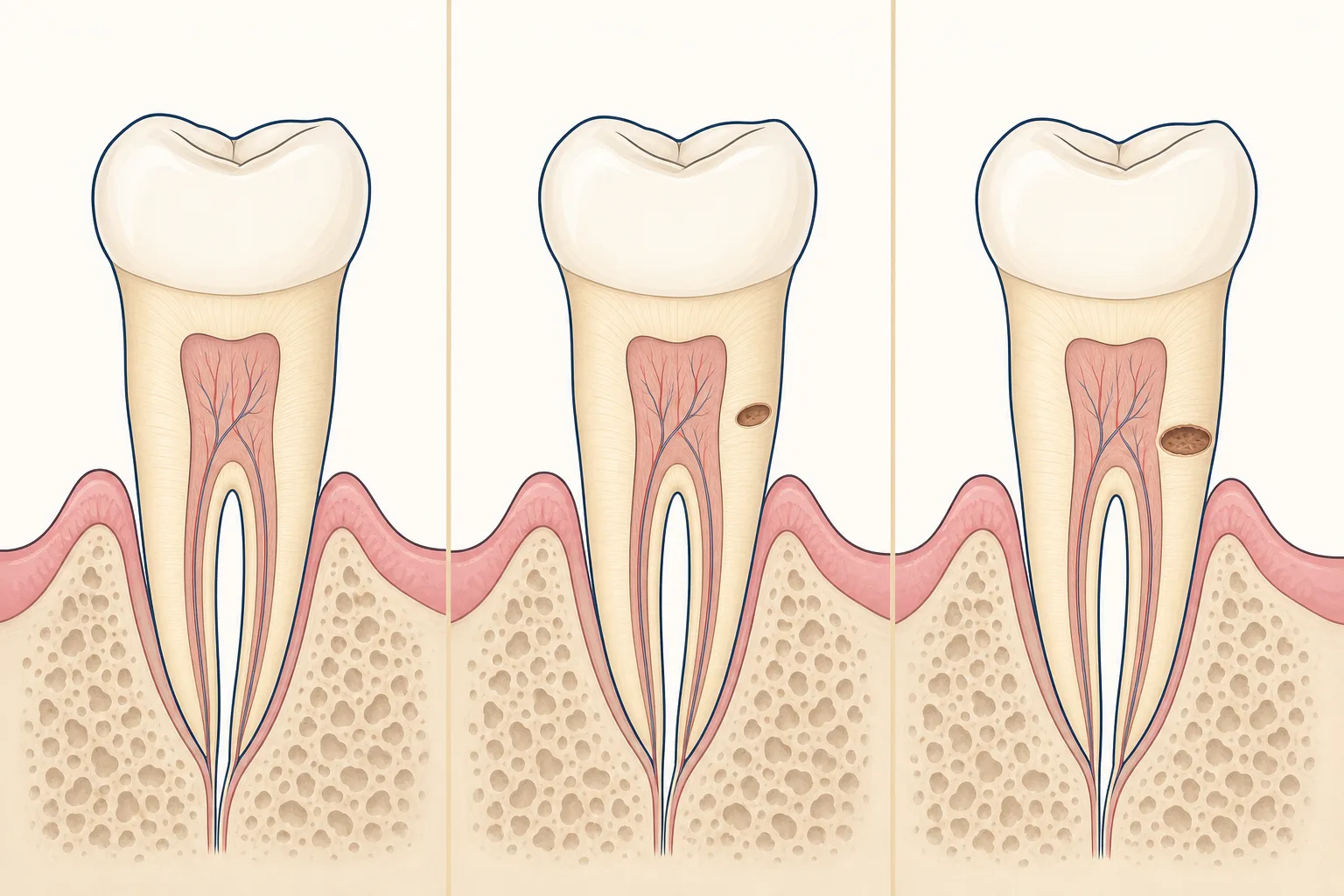
Cementum Caries dental educational illustration

What the change looks like
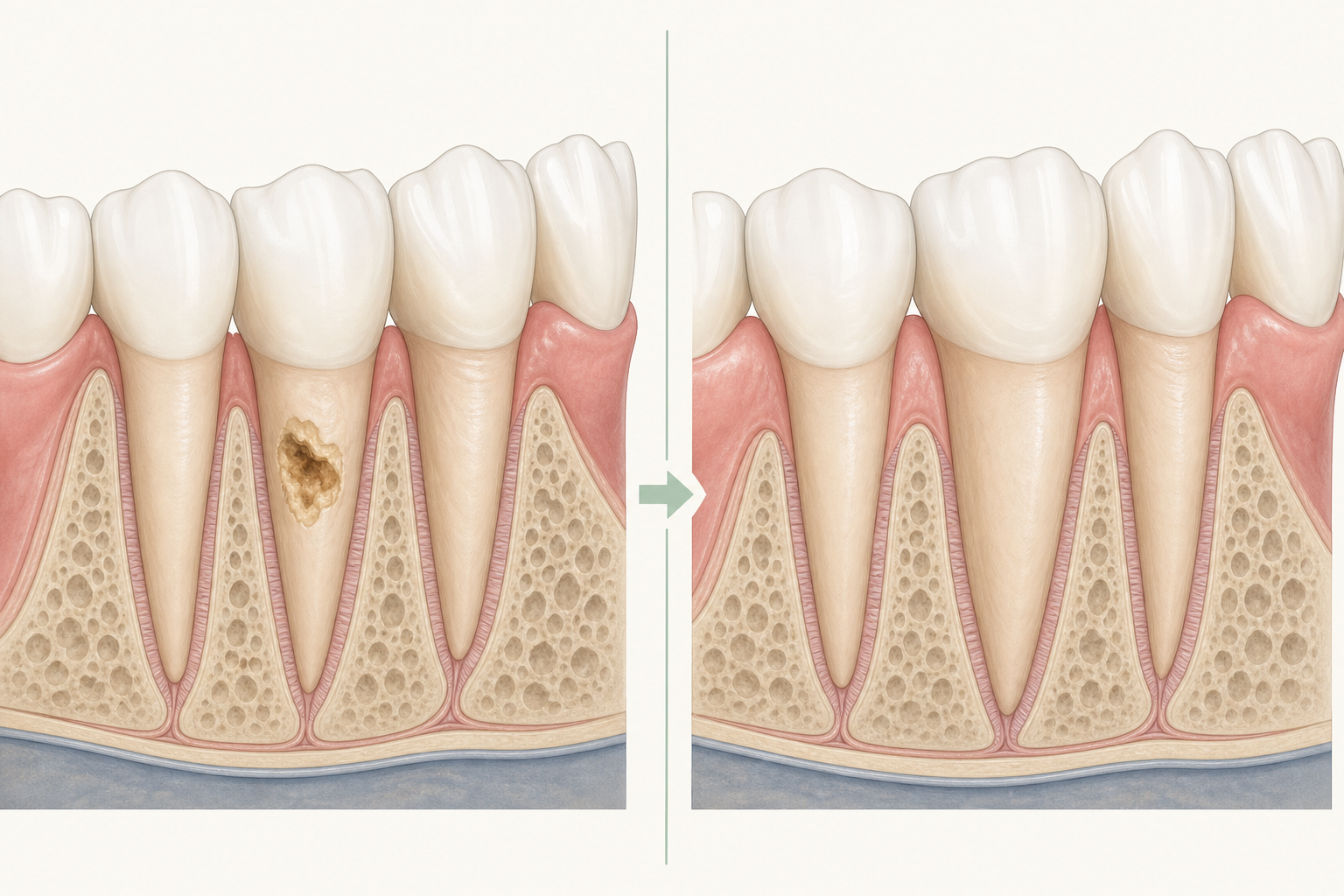
Illustrative diagram: Cementum Caries
Illustration — a representative diagram, not a patient photo.
The DN First Look799 AED
Book The DN First Look

What is cementum caries?

Root caries starts as subsurface mineral loss like enamel caries, but the surface becomes soft at an earlier stage. These lesions can look extensive while remaining only 0.5 to 1 mm deep.

[2]
What is distinctive about root-surface caries
FeatureWhat it means
Early softeningRoot caries becomes soft earlier than enamel caries.[2]
Large-looking lesionThe lesion may appear extensive but rarely exceeds 0.5 to 1 mm in depth.[2]

[2]

Why do exposed roots develop caries?

Frequent sugar intake can shift the biofilm toward acid-producing bacteria and cause mineral loss. Root surfaces exposed by periodontal support loss are more susceptible to plaque accumulation, which can be difficult to remove.

[2]

What does a root-surface lesion tell you?

Root caries progresses slowly enough to allow plaque-control measures aimed at arresting it. Both cavitated and non-cavitated root lesions can be reached with cleaning implements.

[2]
Surface access guides management
Lesion featureWhy it matters
Cavitated or non-cavitated root lesionBoth can be reached by cleaning implements.[2]
Slow microbial penetrationThere may be time to use plaque-control measures to arrest the lesion.[2]

[2]

Who has a higher risk of cementum caries?

Older adults can have exposed root surfaces after periodontal support loss. Dry mouth, radiation therapy, frailty, cognitive impairment and limited manual dexterity are risk indicators or barriers to plaque removal.

[1][2][3]

How is cementum caries assessed?

Visual-tactile examination, radiographs and fibreoptic illumination can be used to identify caries. ICDAS records lesions in six categories, and higher scores correspond with more advanced disease.

[2]

How is a root-surface lesion managed?

Management begins by assessing activity, caries risk and the ability to keep the lesion clean. Remineralisation, biofilm removal and sealing are non-invasive approaches that can preserve tooth tissue.

[2][4]
Management options by lesion access
Clinical situationCare focus
Cleanable root-surface lesionBiofilm control can be used to try to arrest it.[2][4]
Cavitated lesion needing controlA minimally invasive approach can control the lesion while preserving tooth tissue.[2][4]

[2][4]

What determines the care needed for cementum caries?

The needed care depends on lesion activity, whether the root surface can be cleaned, and whether tooth structure has been lost. Conservative care aims to preserve the tooth for as long as possible.

[2][4]

What happens when root caries keeps progressing?

Progressing caries can lead to loss of tooth structure and a need to fill and rebuild the tooth. Reported complications include apical periodontitis, periapical abscess, cellulitis and osteomyelitis.

[1][2][3]

How can root surfaces be protected?

Daily brushing and flossing remove the plaque microorganisms needed for caries to progress. Fluoride inhibits mineral loss and supports remineralisation, while plaque control can arrest a root lesion.

[2][4]

Frequently asked questions

Can root caries be treated without a filling?

A root-surface lesion that can be reached by cleaning measures may be managed conservatively with plaque control and non-invasive care.

[2][4]