
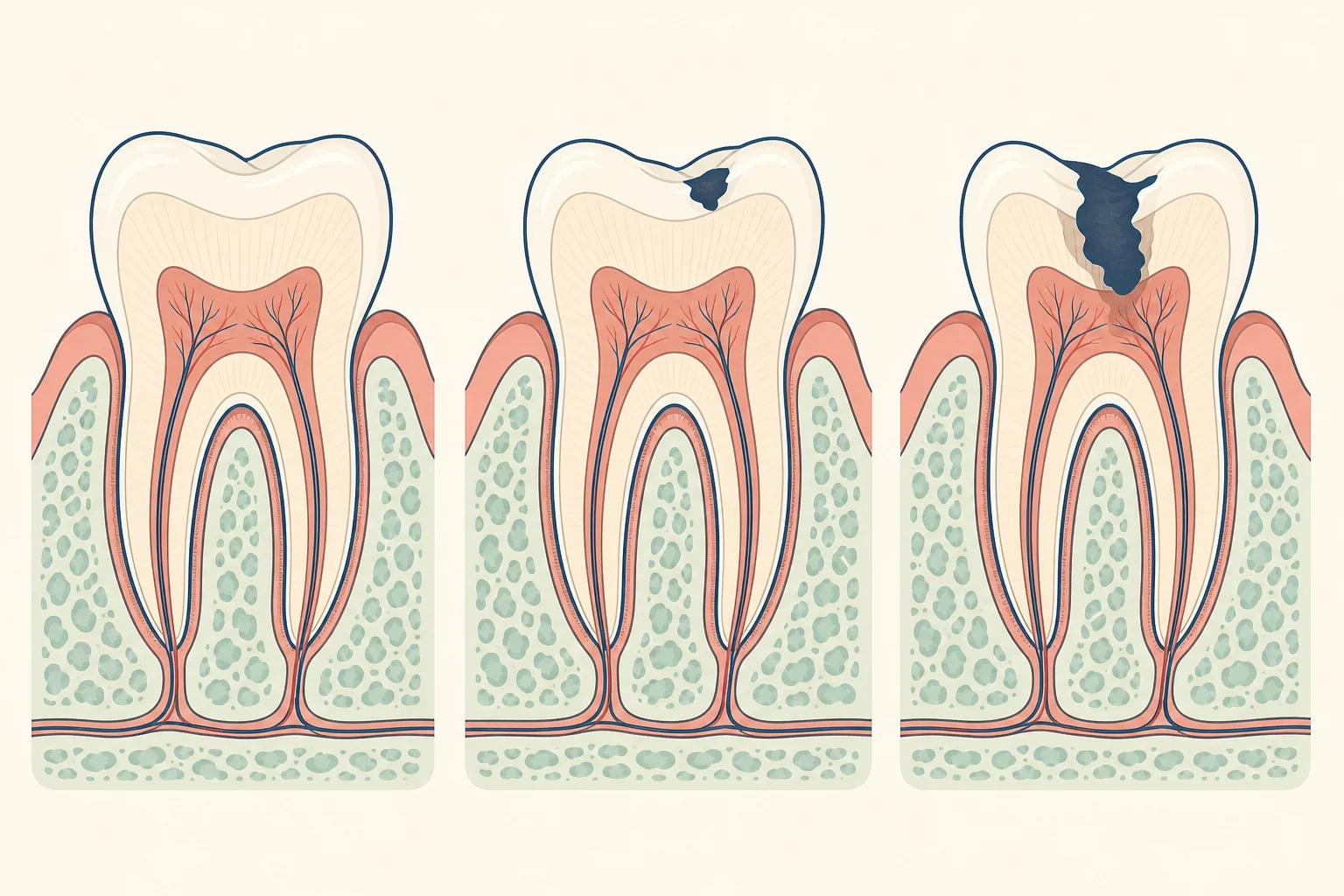
What the change looks like
What do cavities feel like?
Early decay can be clinically invisible. A first visible sign may be a white spot from mineral loss beneath the enamel. As a cavity grows, it can cause pain or sensitivity, particularly when it is close to the nerve. Children may have difficulty eating, speaking, playing or learning when decay is painful.
[2]What causes tooth decay?
Plaque bacteria use fermentable carbohydrates such as glucose, fructose, maltose and sucrose to make organic acids. Repeated acid attacks lower the biofilm pH, soften the tooth surface and drive demineralisation. Frequent sugar exposure and too little fluoride make this process more likely.
[2]What are the stages of a cavity?
Decay may begin as mineral loss without a hole. If the process continues, the enamel surface can soften and a visible cavity can form. Progression into deeper tooth structure brings the nerve closer to the infection and changes the treatment needed.
[2]Who is more likely to develop cavities?
Risk rises when plaque remains on teeth, sugary foods or drinks are consumed frequently, or fluoride exposure is insufficient. Behavioural, psychological and social factors also affect the disease process.
[2]How are cavities diagnosed?
A check-up can identify white, brown or black staining, a hole, or soft and sticky tooth areas. An X-ray can reveal decay that is not visible on the surface.
[2]How are cavities treated at each stage?
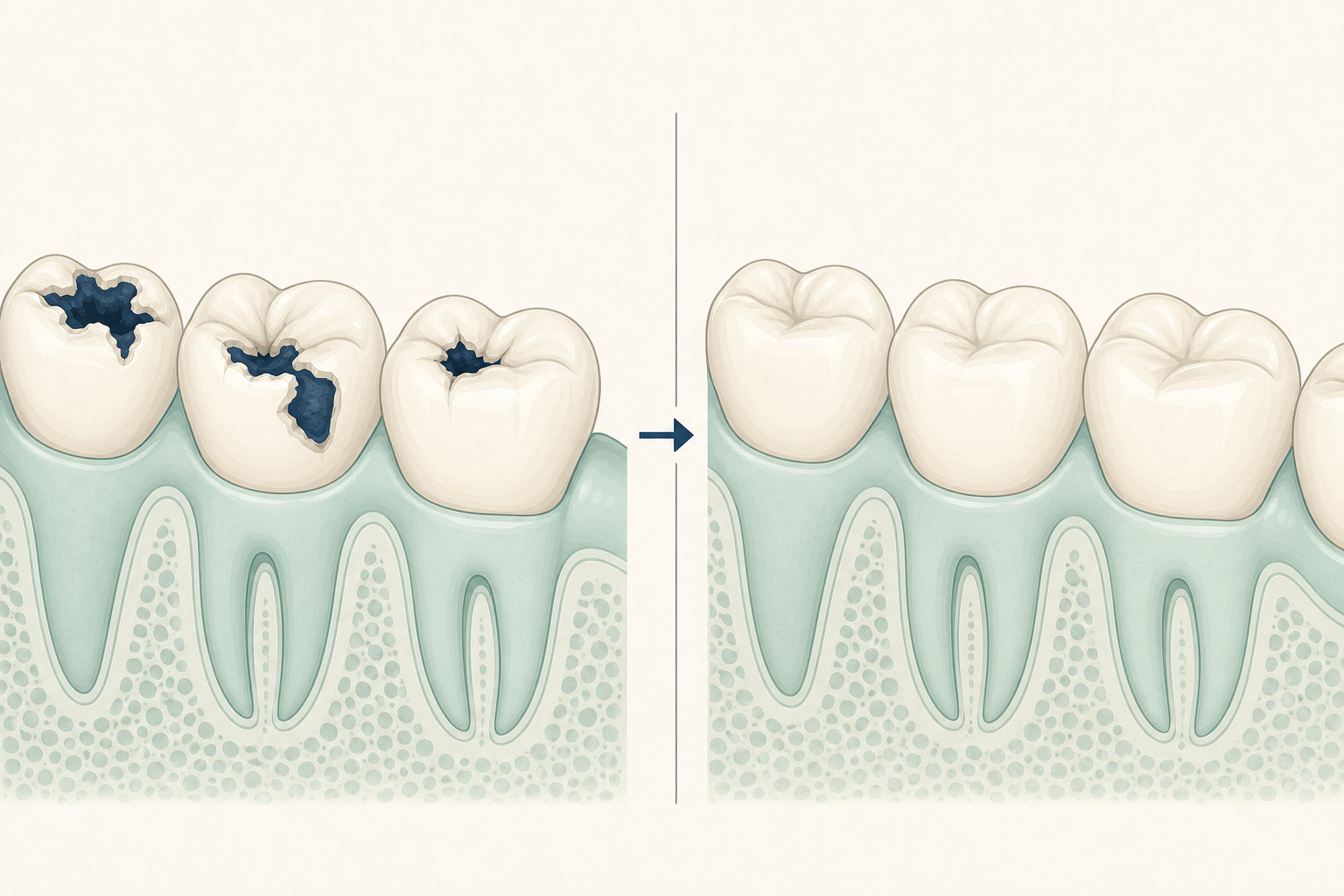
Before a hole forms, fluoride may reverse early decay. Non-invasive care can include remineralisation, plaque removal and sealing. Once a cavity has formed, decayed tissue is removed and the tooth is restored with a filling; conservative repair is preferred where possible.
[2]What affects the cost of treating a cavity?
Care ranges from fluoride and other non-invasive measures for early mineral loss to a filling after tooth structure has been lost. Greater loss of structure changes the procedure required.
[2]What happens if a cavity is left untreated?
How can you prevent tooth decay?
Frequently asked questions
Can an early cavity be reversed?
Early decay before a hole forms may be reversed with fluoride and other non-invasive measures.
[2]