
Condition guide
Dental Caries With Pulp Exposure
A cavity that reaches the pulp can cause hot or cold pain, then unprovoked pain and swelling when an abscess develops.
[1][2]The short answer
Dental caries with pulp exposure can cause hot or cold pain, then unprovoked pain and swelling when an abscess develops.
[1][2]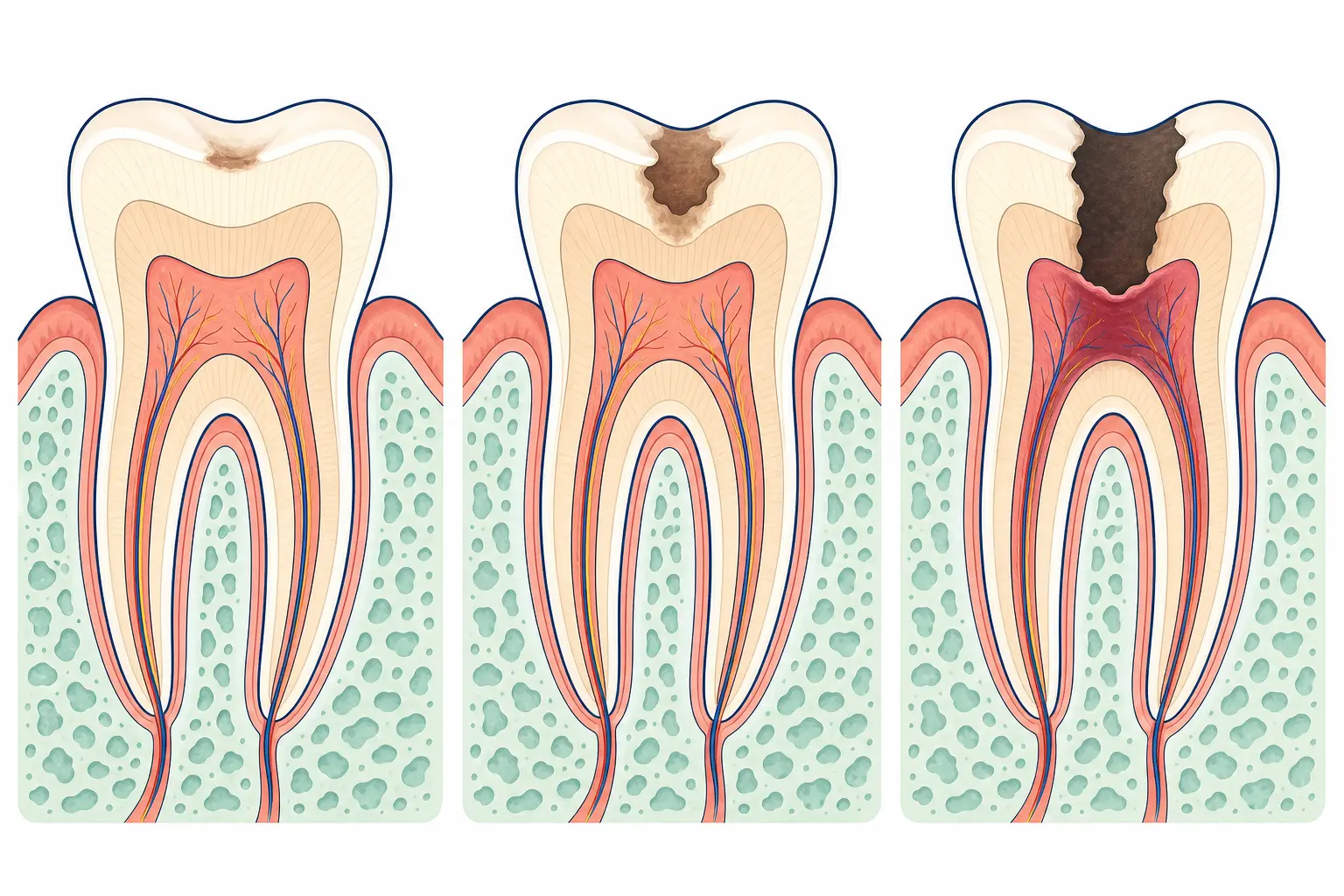
What the change looks like
The DN First Look799 AED
Book The DN First LookWhat symptoms might I notice?
| Finding | Patient-facing next step |
|---|---|
| Pain, sensitivity, swelling, or a visible change | Arrange a dental assessment so the tooth and nearby tissues can be examined[1][2] |
| Fever, spreading facial swelling, or difficulty swallowing or breathing | Seek urgent dental or medical care[1][2] |
| No obvious symptom | Keep routine dental review because some findings are discovered during examination or imaging[1][2] |
What can cause it?
How is it described or staged?
Early pulp inflammation may cause mild, intermittent pain with cold drinks and no spontaneous pain. Persistent inflammation can irreversibly damage the pulp and bring unprovoked pain, often worse overnight.
[1][2]| Assessment point | What the dentist is checking |
|---|---|
| Limited finding | Whether the change is confined to the tooth or a small area[1][2] |
| Nearby tissue involvement | Whether gums, supporting tissues, or adjacent structures are affected[1][2] |
| Function and progression | Whether the tooth works normally and whether the change is developing[1][2] |
What increases the risk?
How is it diagnosed?
How is it treated at each stage?
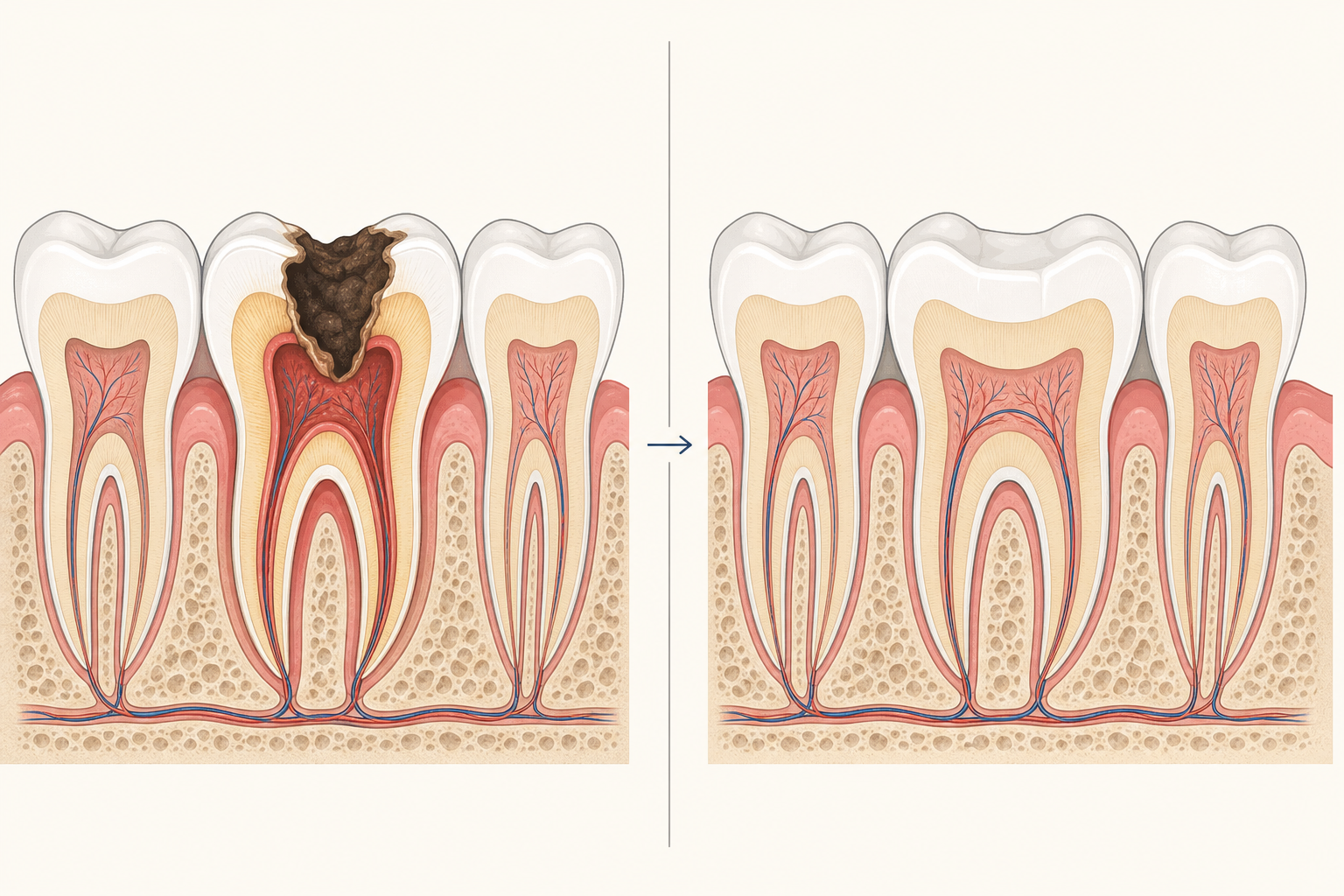
When pulp inflammation is reversible, treatment removes the carious tissue and places a restoration. Once persistent inflammation has irreversibly damaged the pulp, the tooth needs definitive treatment for the pulp condition.
[1][2]| Clinical situation | Possible direction of care |
|---|---|
| Limited or stable finding | Observation or a tooth-preserving procedure may be considered after examination[1][2] |
| Active disease or symptoms | Treatment is selected for the diagnosed cause and affected tissues[1][2] |
| Loss of function, spreading infection, or severe damage | Prompt assessment is needed to choose the appropriate procedure[1][2] |