Dental Nation
Condition guide

Burning Mouth Syndrome

Burning mouth syndrome can cause burning, scalding or tingling pain for months or years, with dry mouth or changed taste.

[1][2]

The short answer

Burning mouth syndrome causes burning, scalding or tingling mouth pain that may persist for months or years despite normal-looking tissue.

[1][2]
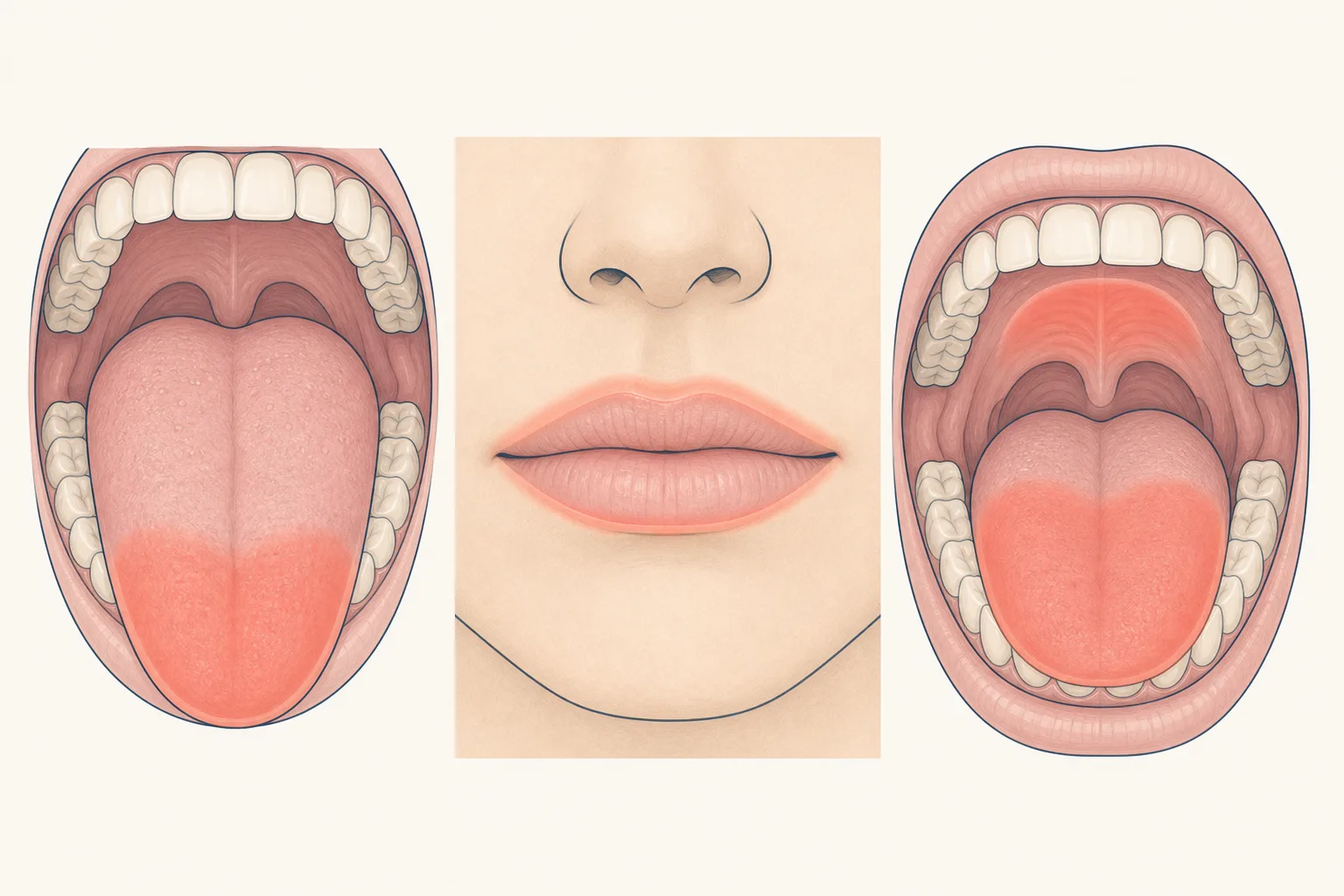
Burning Mouth Syndrome dental educational illustration

What the change looks like

Illustrative diagram: Burning Mouth Syndrome
Illustration — a representative diagram, not a patient photo.
The DN First Look799 AED
Book The DN First Look

What does burning mouth syndrome feel like?

Symptoms that can occur together
SymptomHow it may present
Mouth painPain may feel burning, scalding, tingling or numb.[1][2]
Dryness or tasteDry mouth and altered taste can occur with the pain.[1][2]
LocationThe tongue is often affected, but pain may involve the lips, roof of the mouth or the whole mouth.[1][2]

[1][2]

What can cause burning mouth symptoms?

Primary burning mouth syndrome is thought to involve nerves that control pain and taste. Secondary burning mouth symptoms can be linked with grinding or clenching, dry mouth, nutritional deficiency, infection, acid reflux, hormonal changes, allergies or certain medicines.

[1][2]

How can the pain change through the day?

The pain can be constant each day or build as the day goes on. Many people find that eating or drinking reduces the pain, even though the condition itself may last months or years.

[1][2]
Patterns of burning mouth pain
PatternWhat happens
Daily painSome people experience constant pain every day.[1][2]
Later-day worseningPain can increase as the day continues.[1][2]

[1][2]

What can contribute to secondary burning mouth syndrome?

Secondary symptoms are associated with jaw clenching or tooth grinding, depression, diabetes or thyroid-related hormonal change, dry mouth, blood-pressure medicines, low vitamin B or iron, yeast infection and acid reflux.

[1][2]

How is burning mouth syndrome investigated?

Diagnosis includes a review of medical history and an examination of the mouth. Blood tests, oral swabs, allergy tests, salivary-flow testing, biopsy or imaging may help identify other causes of mouth burning.

[1][2]

What treatment can help burning mouth symptoms?

When there is a secondary cause, treating that cause can resolve the symptoms. Pain control and dry-mouth relief may also be used, while a medicine that triggers the problem may be changed.

[1][2]
Treatment depends on the cause
SituationTreatment focus
Secondary burning mouth symptomsTreating the underlying condition can make symptoms go away.[1][2]
Grinding or clenchingManaging the oral habit can address a contributing factor.[1][2]

[1][2]

What practical relief can help?

Cold drinks, ice chips and sugar-free gum can ease pain. Tobacco, hot or spicy foods, alcohol, alcohol-containing mouthwash and acidic citrus products can irritate the mouth.

[1][2]

Why should persistent mouth burning be assessed?

Burning mouth syndrome can be difficult to diagnose because the mouth may look normal. Its symptoms may continue for months or years, and another condition can cause secondary burning symptoms.

[1][2]

What can reduce mouth irritation?

Sip a cold beverage, suck ice chips or chew sugar-free gum for relief. Avoid tobacco, hot or spicy food, alcohol, alcohol-containing mouthwash and acidic citrus products when they irritate the mouth.

[1][2]

Frequently asked questions

Can burning mouth syndrome affect taste?

Yes. Altered taste and dry mouth can accompany burning, scalding or tingling pain.

[1][2]
Can mouth burning be caused by another condition?

Yes. Dry mouth, yeast infection, acid reflux, nutritional deficiency, medicines and several other conditions can cause secondary symptoms.

[1][2]