
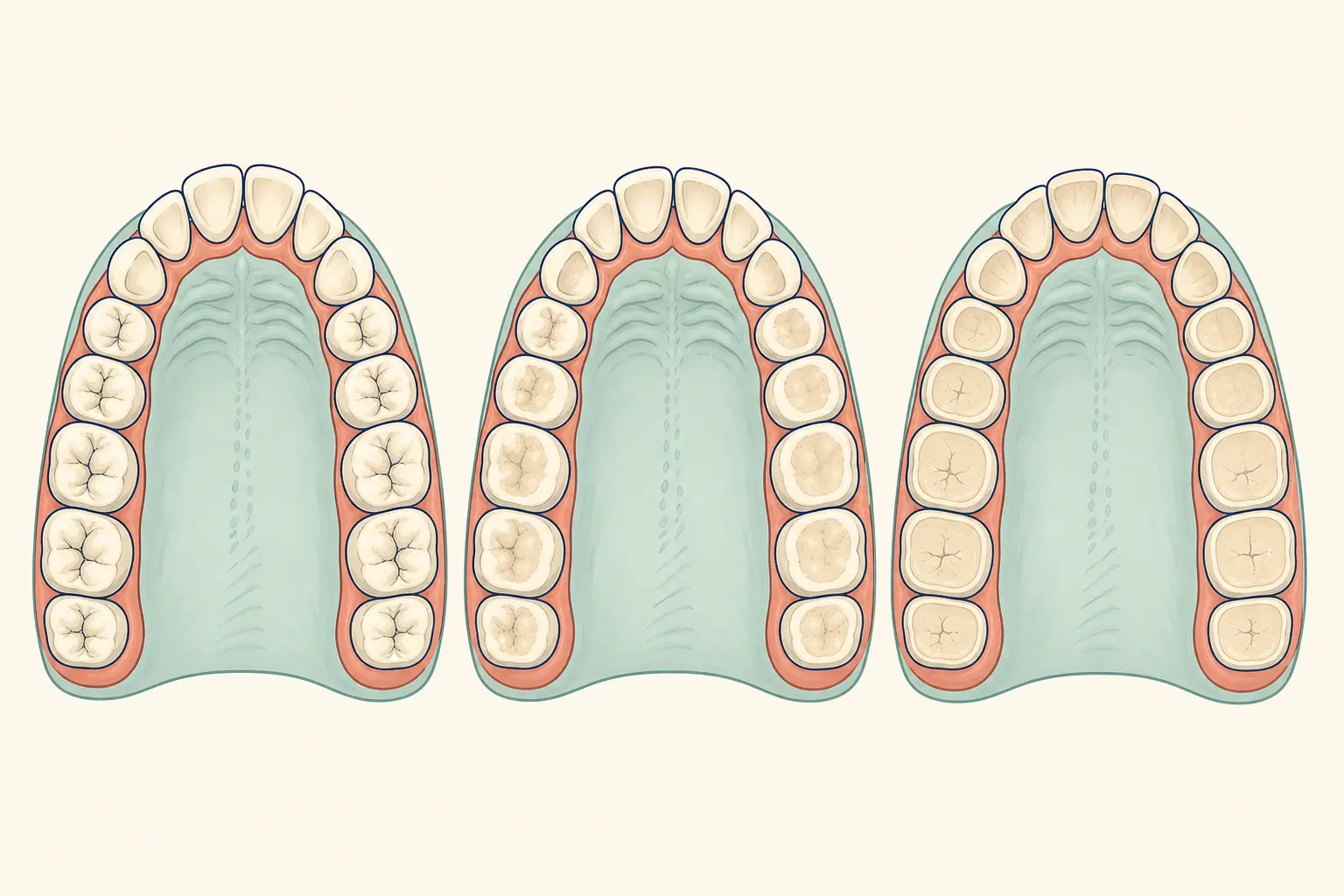
What the change looks like
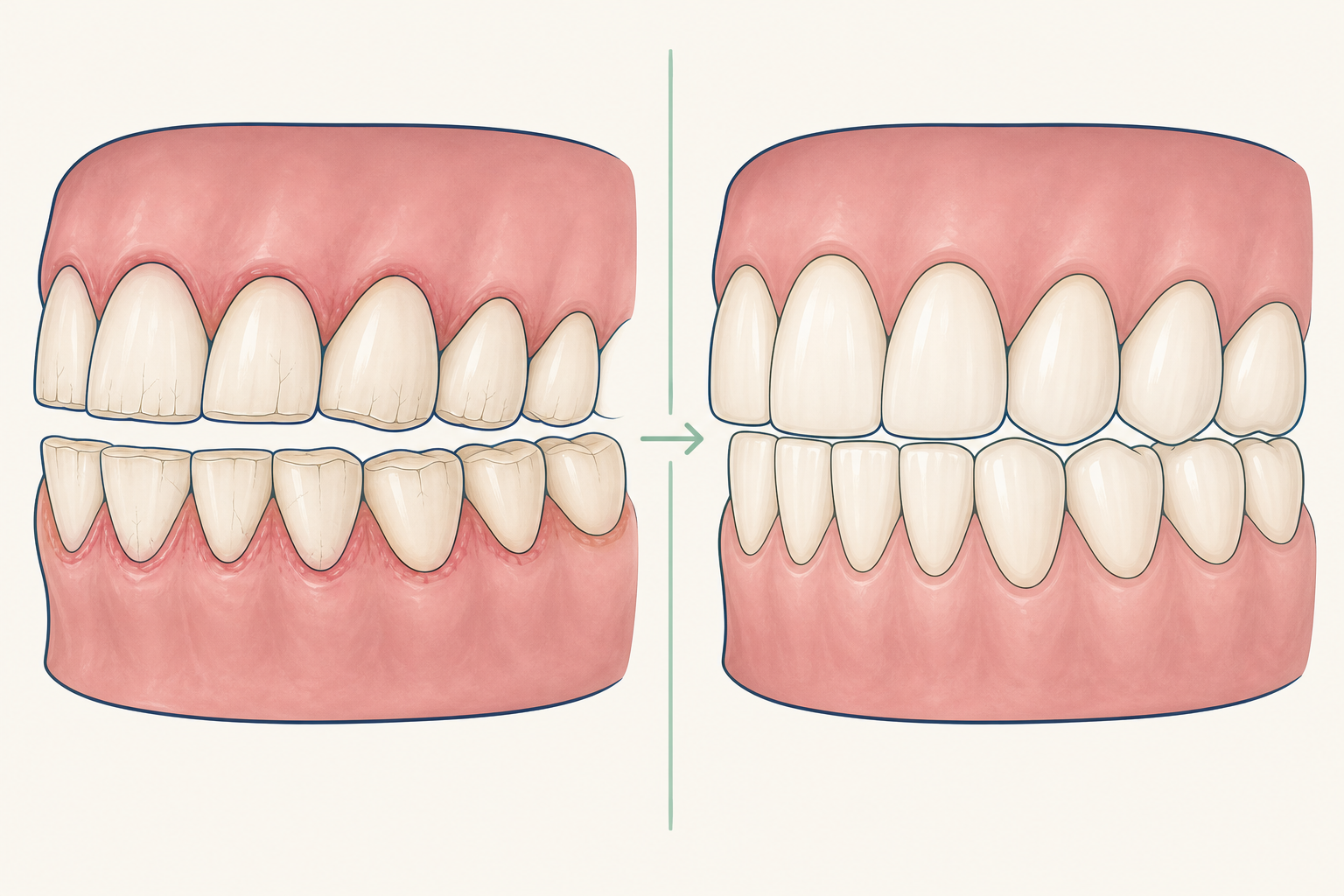
What symptoms can this cause?
| Finding | Possible effect |
|---|---|
| jaw muscle soreness, tooth wear, tooth sensitivity, headaches, or waking with a tired jaw may occur | The effect depends on the person and the underlying condition[1][2] |
| Change noticed over time | A clinician can compare the finding with function and development[1][2] |
What can cause it?
Bruxism can have more than one contributing factor. Sleep, stress, medicines, and other health or dental factors may be relevant, so the cause should not be guessed from tooth wear alone. The label describes a clinical pattern, not a complete explanation of every symptom. Related habits, development, sleep, infection, or jaw function may matter depending on the condition. A patient should bring the timing and circumstances to the appointment: when the symptom is most noticeable, what makes it better or worse, and whether other symptoms appeared at the same time. This information helps the clinician decide which parts of the examination deserve attention.
[1][2]How can it change over time?
The course is best described by what is happening to function rather than by a universal numbered scale. An early or mild finding may be noticed without much disruption. A persistent or more active finding may affect comfort, feeding, speech, bite, sleep, drinking, chewing, or mouth opening, depending on the condition. Some findings settle or remain stable; others need review when their effect increases. A clinician can explain which pattern applies after examining the patient and hearing the history.
[1][2]Who is more likely to be affected?
Risk depends on the condition and the person’s circumstances. The relevant factors may include age, dentition and jaw development, repeated habits, sleep pattern, recent illness, or the duration and force of a behaviour. These factors do not predict the outcome on their own. They help a clinician frame questions and decide what to examine. A patient should avoid treating a risk factor as a diagnosis, especially when a similar sign can have several explanations.
[1][2]How will a dentist or clinician check it?
A dentist asks about grinding and symptoms, examines the teeth and jaw muscles, and considers information from a sleep partner or a sleep assessment when relevant. The assessment may include questions about onset, frequency, triggers, function, pain, and changes noticed by a parent or sleep partner. The clinician matches the examination to the problem rather than assuming that a visible sign explains everything. If the findings point to another condition or a need for additional assessment, that next step can be discussed. Bring a list of medicines and relevant health details when they may affect the symptoms or treatment choice.
[1][2]What treatment is used at each stage?
Management may include dental protection, changes that reduce strain, and treatment of contributing problems. The appropriate approach depends on the pattern and examination findings. Treatment should follow the finding and its effect, not the name alone. Observation can be reasonable when the condition causes little functional difficulty and the clinician recommends review. Active care becomes more relevant when symptoms persist, development is affected, drinking is difficult, pain limits activity, or examination shows a problem that needs treatment. Ask what the proposed treatment is intended to change, what alternatives exist, and how progress will be checked.
[1][2]What does treatment cost in Dubai?
What can happen if it is left untreated?
Repeated force can contribute to tooth wear, fractures, sensitivity, and jaw muscle or joint symptoms. The findings differ between people. The possibility of a complication does not mean that it will happen, and a symptom alone cannot predict it. Arrange a review when the problem is persistent, worsening, affecting eating or drinking, changing the bite, limiting jaw movement, or causing repeated pain. Seek prompt medical advice when a person cannot drink adequately, has severe illness, or has symptoms that need urgent assessment.
[1][2]Can it be prevented?
Regular dental checks, attention to sleep and stress factors, and following advice about any prescribed appliance can help manage the effects. Prevention advice has to fit the condition. Keep appointments when review is recommended, follow the clinician’s instructions, and seek advice when function changes. For infectious illness, hygiene and reducing spread are relevant. For habits or jaw symptoms, practical changes should be individualised. A general internet checklist cannot replace advice based on the patient’s age, examination, and symptoms.
[1][2]