
Dental Nation
Condition guide

Black Hairy Tongue

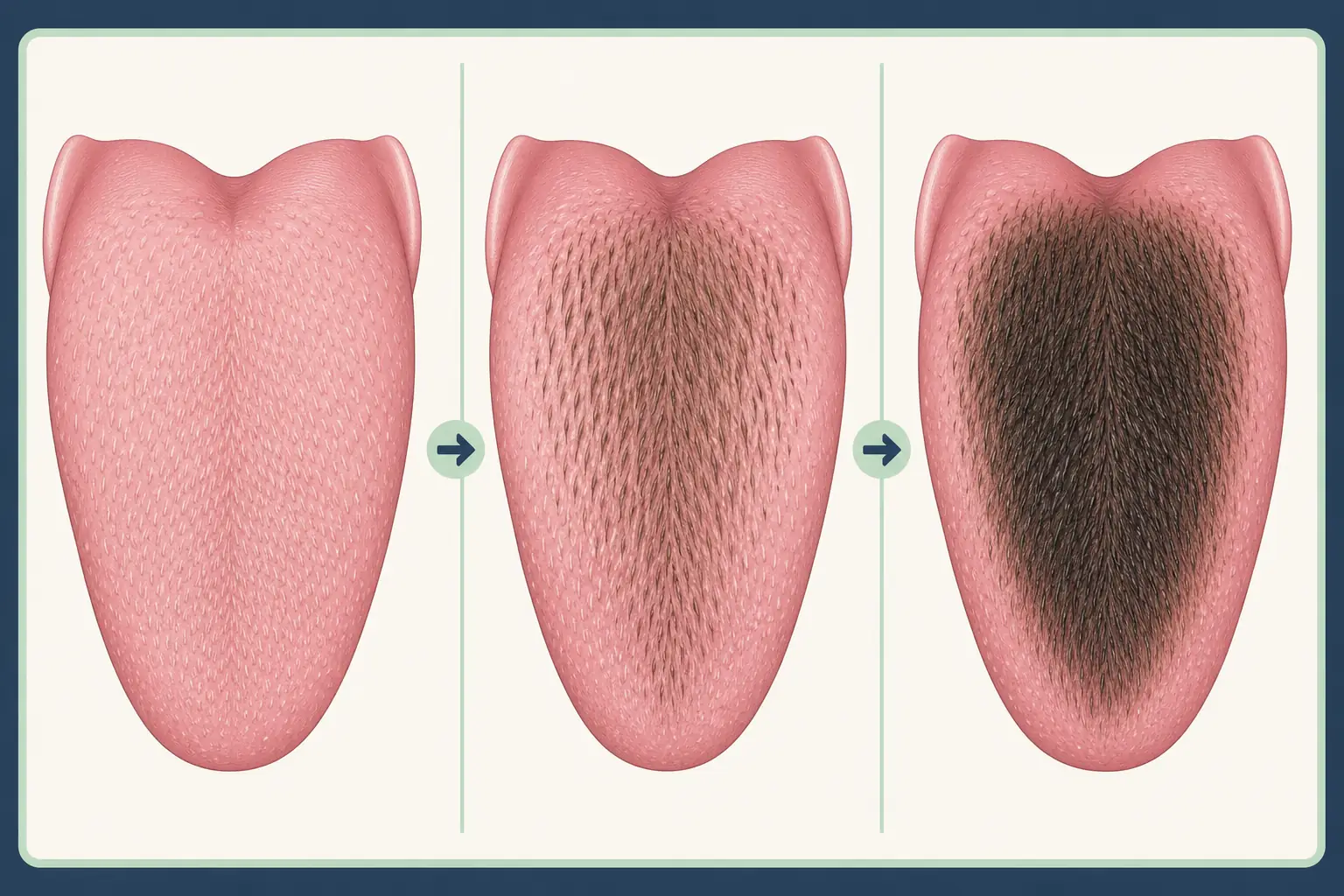
Black hairy tongue is a change in the tongue surface that can make it look dark and hairy.

[1][2]

The short answer

Black hairy tongue is a usually temporary tongue-surface change in which the papillae become elongated and may look dark or hairy.

[1][2]
Black Hairy Tongue dental educational illustration

What the change looks like
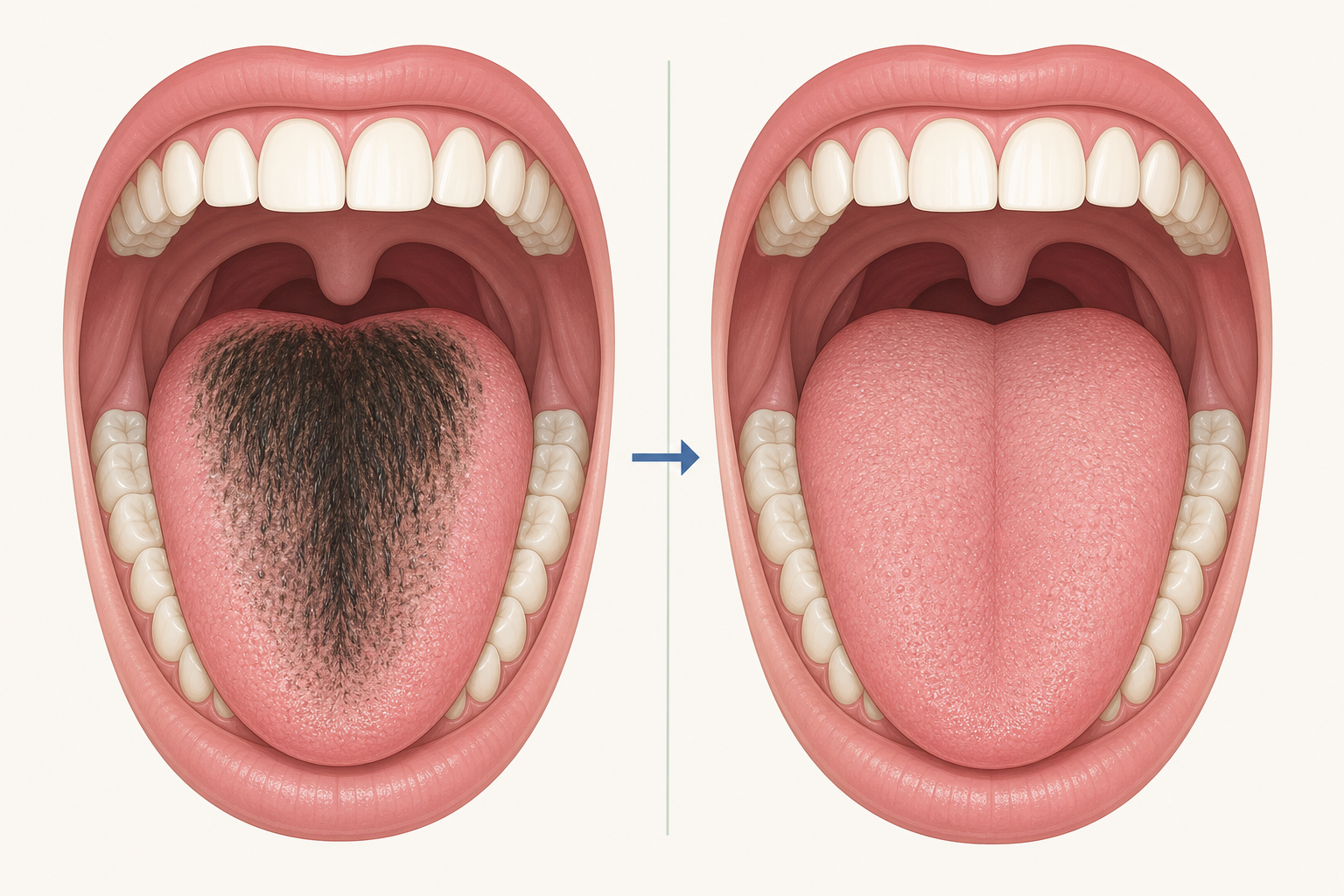
Illustrative diagram: Black Hairy Tongue
Illustration — a representative diagram, not a patient photo.
The DN First Look799 AED
Book The DN First Look

What does black hairy tongue look and feel like?

Reported tongue changes
ChangeWhat may be noticed
SurfaceElongated papillae can create a dark or hairy appearance.[1][2]
SensationAltered taste or bad breath may occur.[1][2]

[1][2]

What can contribute to black hairy tongue?

Black hairy tongue has recognised contributing factors, but the appearance alone does not show which factor applies. A clinician can review oral habits, medicines, smoking, and other relevant history. Avoid treating a persistent change as a cosmetic issue before its cause has been considered.

[1][2]

How does the tongue change?

The papillae on the tongue surface become elongated and collect material, creating the characteristic appearance. Colour and severity can change. Improvement depends on addressing contributing factors and maintaining appropriate tongue care, while an unusual or persistent lesion should be assessed.

[1][2]
Change over time
FindingPatient question
New coating or colourWhen did the change begin and what changed at the same time?[1][2]
Persistent changeHas a clinician checked the tongue and possible contributing factors?[1][2]

[1][2]

When should a changed tongue be checked?

Arrange an assessment when the change persists, causes pain, bleeds, affects eating, or comes with other mouth symptoms. Review is also sensible when the surface change does not improve with ordinary oral care. These features do not identify the diagnosis alone, so examination matters.

[1][2]

How is black hairy tongue diagnosed?

Diagnosis is usually based on examination of the tongue and a review of the history. The clinician considers the surface appearance, symptoms, oral habits, and possible contributing factors. A changed tongue that is firm, ulcerated, or otherwise atypical may need a different assessment.

[1][2]

What treatment helps black hairy tongue?

Management focuses on oral care and addressing contributing factors identified during assessment. Gentle cleaning of the tongue may be discussed, while harsh scraping can irritate tissue. Treatment should follow an examination when the change is persistent, painful, or unclear. Improvement is not a reason to ignore a recurring unusual finding.

[1][2]
Management discussion
SituationNext discussion
Mild familiar changeReview oral care and possible contributing factors.[1][2]
Persistent or atypical changeArrange examination before trying repeated self-treatment.[1][2]

[1][2]

What should I ask about assessment cost in Dubai?

Management commonly starts with cleaning the tongue and removing contributing factors; the dark coating often improves when the underlying trigger is addressed.

[1][2]

Can black hairy tongue cause problems?

The appearance can cause concern, and some people report altered taste or bad breath. Pain, bleeding, ulceration, or a persistent atypical change needs review because those features may point beyond the usual presentation.

[1][2]

How can I reduce the chance of recurrence?

Follow the oral-care advice given after the contributing factors have been reviewed. Gentle tongue care may help, but aggressive scraping can irritate the surface. Seek advice when the change returns or fails to improve rather than repeatedly treating an uncertain lesion.

[1][2]

Frequently asked questions

Is black hairy tongue permanent?

It is often temporary, but a persistent or unusual tongue change should be examined.

[1][2]