
Baby Bottle Tooth Decay (Early Childhood Caries)
This childhood decay pattern can damage upper front teeth and molars while the lower incisors remain relatively spared.
[1][2]The short answer
Baby bottle tooth decay can severely affect a young child’s upper incisors and molars while leaving the lower incisors less affected.
[1][2]
What the change looks like
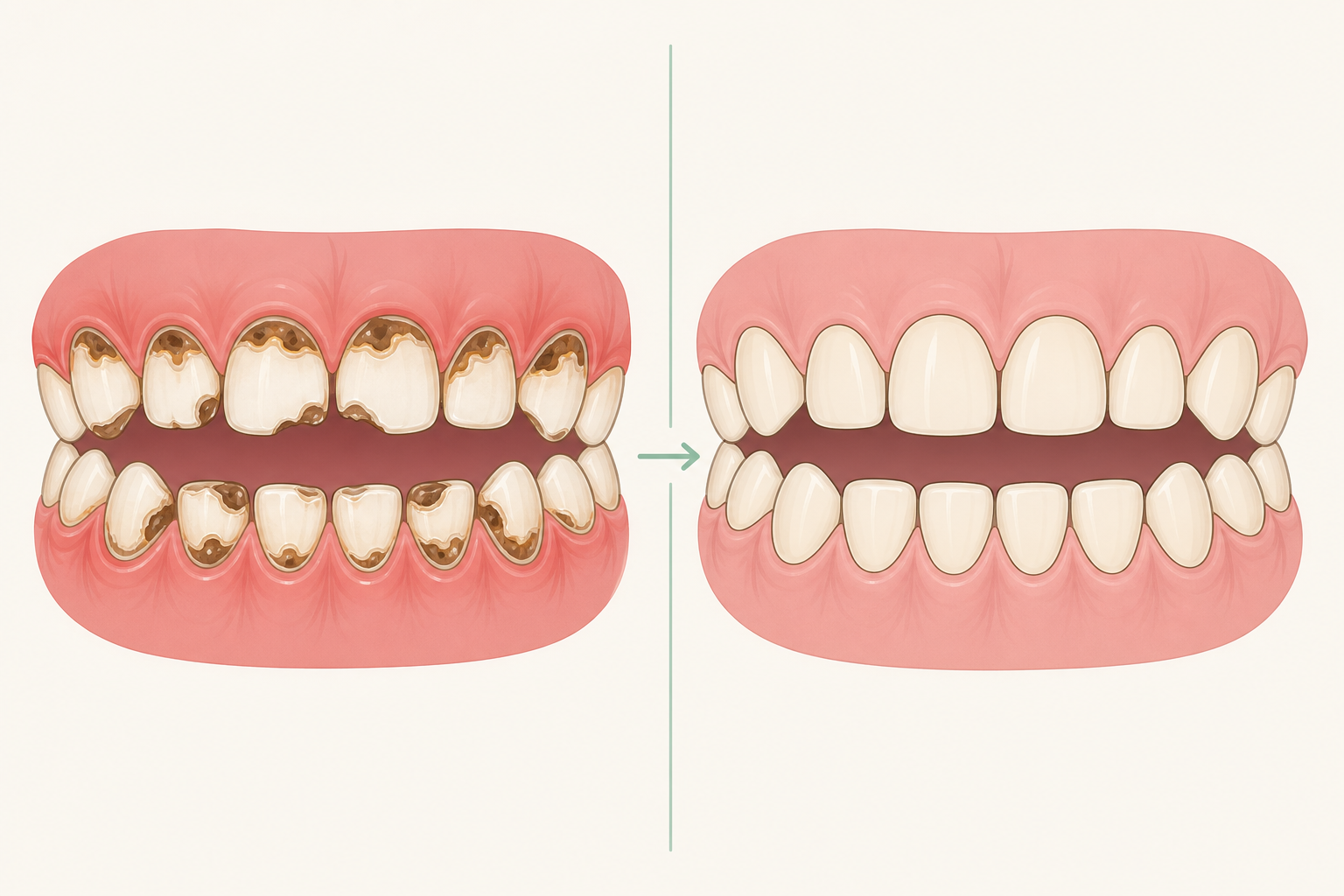
What does baby bottle tooth decay look like?
Children may develop visible decay, pain that makes eating or talking difficult, and problems affecting nutrition or general development when severe disease remains untreated.
[1]What causes baby bottle tooth decay?
How does early childhood caries progress?
Which feeding habits increase risk?
How is early childhood caries diagnosed?
Diagnosis uses the child's clinical pattern together with medical, demographic and dietary history. Developmental defects such as fluorosis or inherited enamel disorders can resemble caries, and a child may have both conditions.
[1]How is baby bottle tooth decay treated?
Preventive care and active monitoring are central. Moderate to advanced disease may require pulp treatment, extensive restoration or extraction. Prefabricated stainless steel crowns are preferred for many carious primary teeth, while severe treatment may require deep sedation or general anaesthesia because young children may not cooperate.
[1]What affects the cost of treating early childhood caries?
Early disease may be managed with prevention and monitoring, whereas moderate or advanced disease can require pulp treatment, restoration, crowns or extraction. The amount of care needed rises with severity.
[1]