Dental Nation
Condition guide

Arrested Dental Caries

An early caries lesion can regress when plaque is controlled, before it becomes a cavity that needs rebuilding.

[1][2]

The short answer

Arrested caries is a lesion whose progression has been stopped through plaque control and preventive, tooth-preserving care.

[1][2]
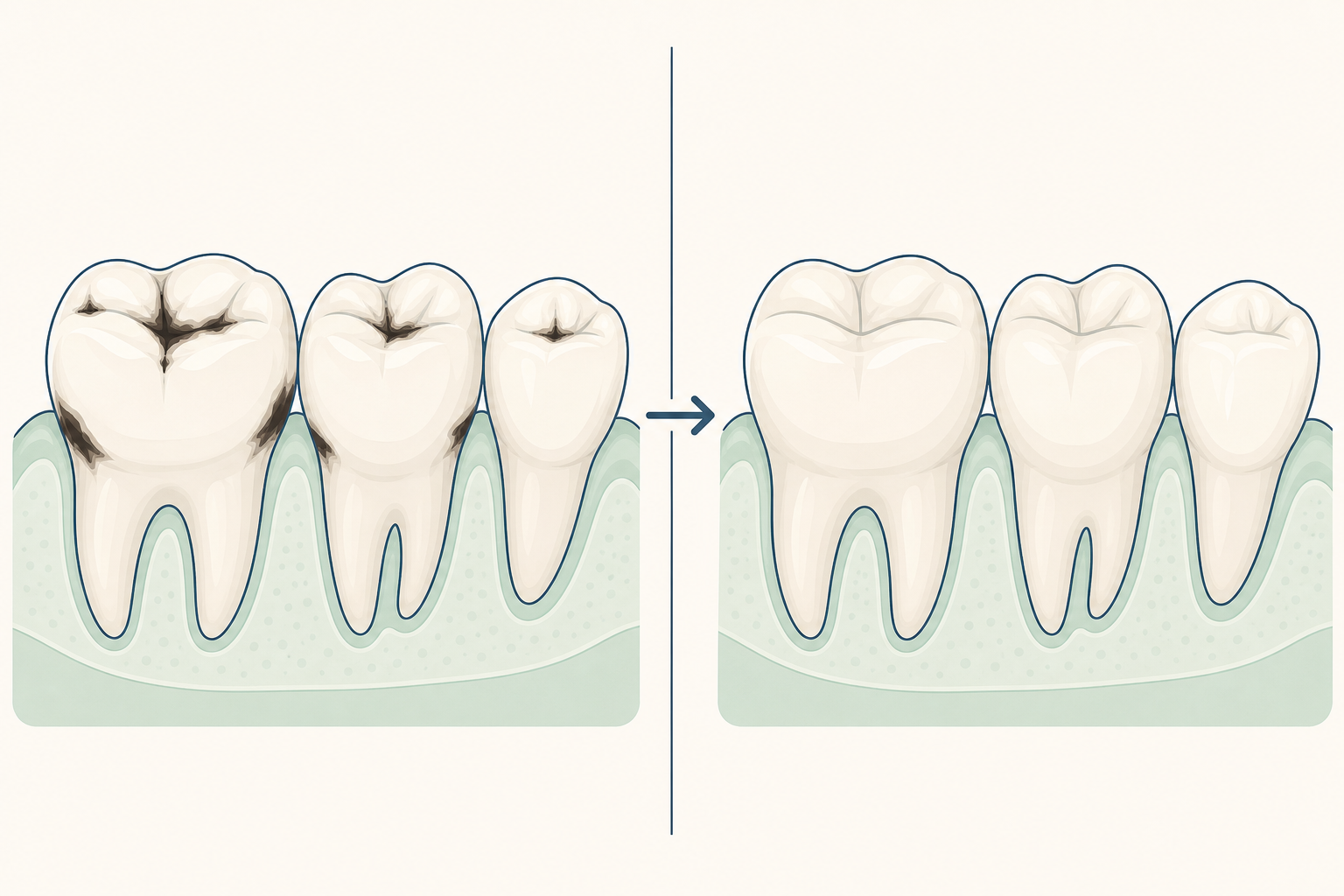
Arrested Dental Caries dental educational illustration

What the change looks like

Illustrative diagram: Arrested Dental Caries
Illustration — a representative diagram, not a patient photo.
The DN First Look799 AED
Book The DN First Look

What is arrested dental caries?

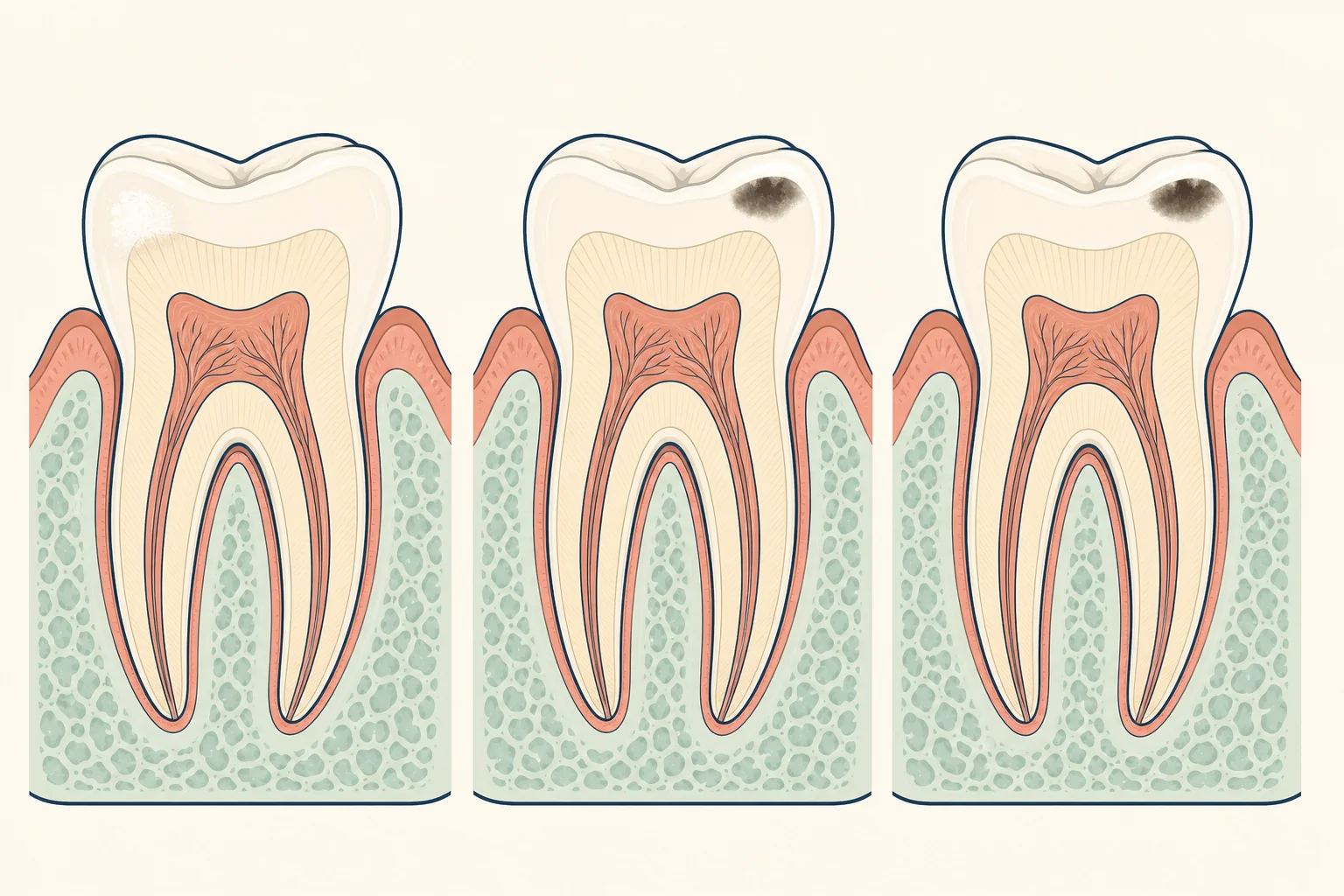
Caries can exist before there is a visible lesion. A white spot can mark mineral loss in the tooth and may regress when plaque-control measures interrupt the process.

[1][2]
Changes seen in early caries
ChangeMeaning
White spotIt can reflect mineral loss within a tooth's hard tissues.[1][2]
No surface cavityThe caries process can be present before a visible cavity forms.[1][2]

[1][2]

What starts caries before it is arrested?

Frequent sugar consumption changes the biofilm toward acid-producing, acid-tolerant bacteria. Regular exposure to fermentable carbohydrates and a cariogenic biofilm drive mineral loss in the tooth.

[1][2]

When can a caries lesion be arrested?

White spot lesions, including initial occlusal lesions, can be managed conservatively. Approximal lesions limited to enamel or only just into dentin on a bitewing image are also often non-cavitated.

[1][2]
Early lesions that may be managed conservatively
FindingWhy it may be suitable
White spot lesionIt can be managed without placing a filling when it is accessible to cleaning.[1][2]
Approximal lesion confined to enamel or just into dentinIt is unlikely to be cavitated in modern populations.[1][2]

[1][2]

What can restart caries activity?

A lesion can progress if the acid challenge continues. Frequent sugars, plaque left on teeth and insufficient fluoride exposure support the conditions in which caries advances.

[1][2]

How is an arrested lesion assessed?

Assessment considers whether the lesion is active or inactive, including its location, colour and surface appearance. Bitewing radiographs can show dentin extension that may not be apparent on a non-cavitated surface.

[1][2]

What care keeps caries arrested?

Existing caries is first managed with non-invasive care such as remineralisation, biofilm removal and sealing rather than removing dental tissue. A cavitated lesion is controlled with a minimally invasive approach, including repair of a defective restoration rather than automatic replacement.

[1][2]
Care matched to the lesion
SituationCare approach
Accessible early lesionCleaning measures and fluoride toothpaste can disturb the biofilm without a filling.[1][2]
Defective restoration with a cavitated lesionRepair can be used instead of replacing the whole restoration.[1][2]

[1][2]

What affects the amount of treatment needed?

The difference between an early lesion and one with lost tooth structure changes the work needed. Prevention and minor intervention can reverse an early lesion, while moderate disease requires the tooth to be filled and rebuilt.

[1][2]

What happens if caries is no longer arrested?

Progressing caries can lead to pain, infection and tooth loss. Complications can include apical periodontitis, periapical abscess, cellulitis and osteomyelitis; infection spreading through facial spaces can threaten the airway.

[1][2]

How can an arrested lesion stay stable?

Daily brushing and flossing remove the plaque microorganisms that caries needs to progress. Fluoride slows demineralisation and supports remineralisation; fluoride toothpaste, rinses, gels and varnishes are available ways to apply it.

[1][2]

Frequently asked questions

Does arrested caries always need a filling?

No. A lesion that can be reached by cleaning measures may be managed without a filling through biofilm control and fluoride toothpaste.

[1][2]

Sources used for this guide

  1. Dental CariesNational Library of Medicine, National Institutes of Health · 2026-07-21
  2. Physiology, ToothNational Library of Medicine, National Institutes of Health · 2026-07-21