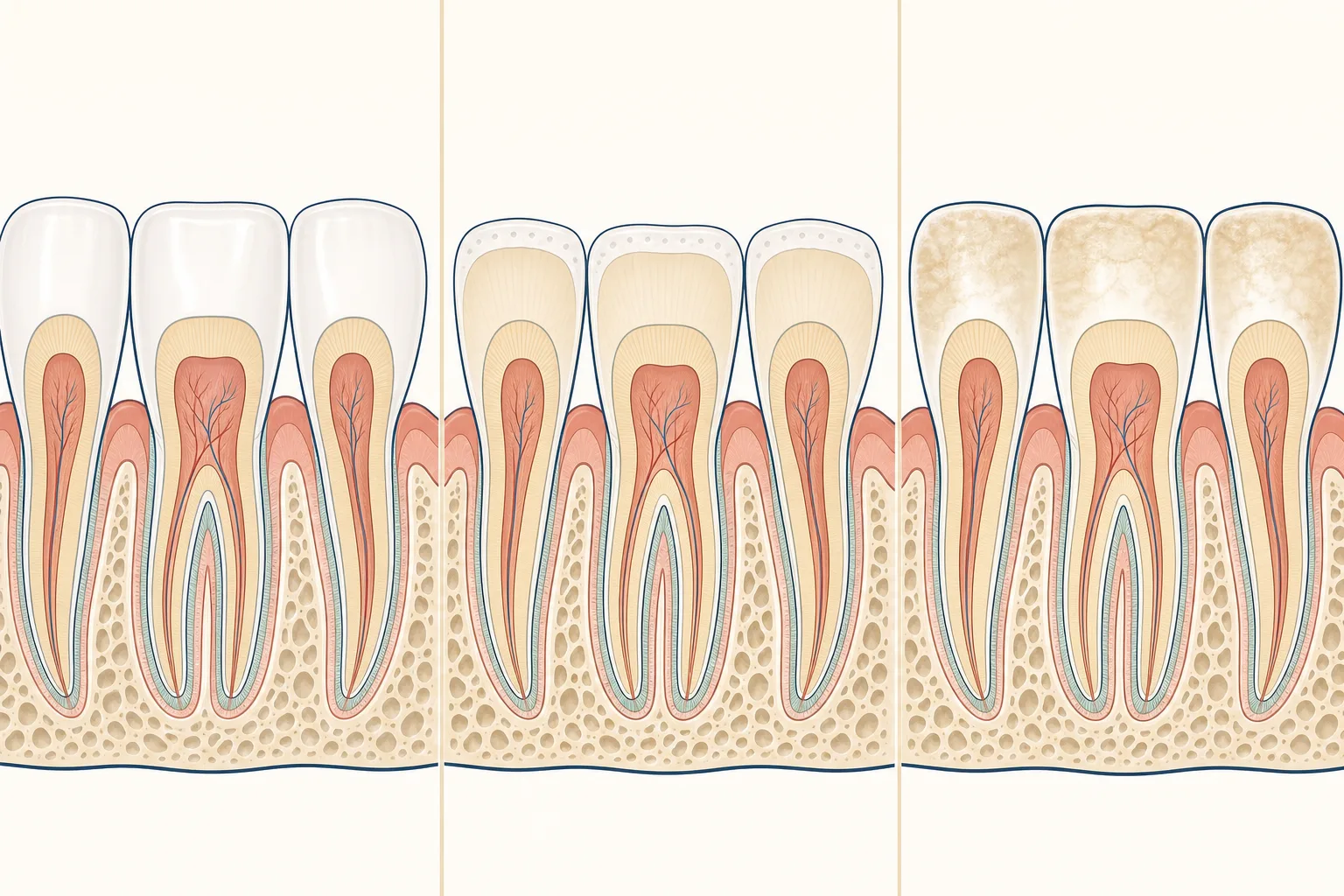
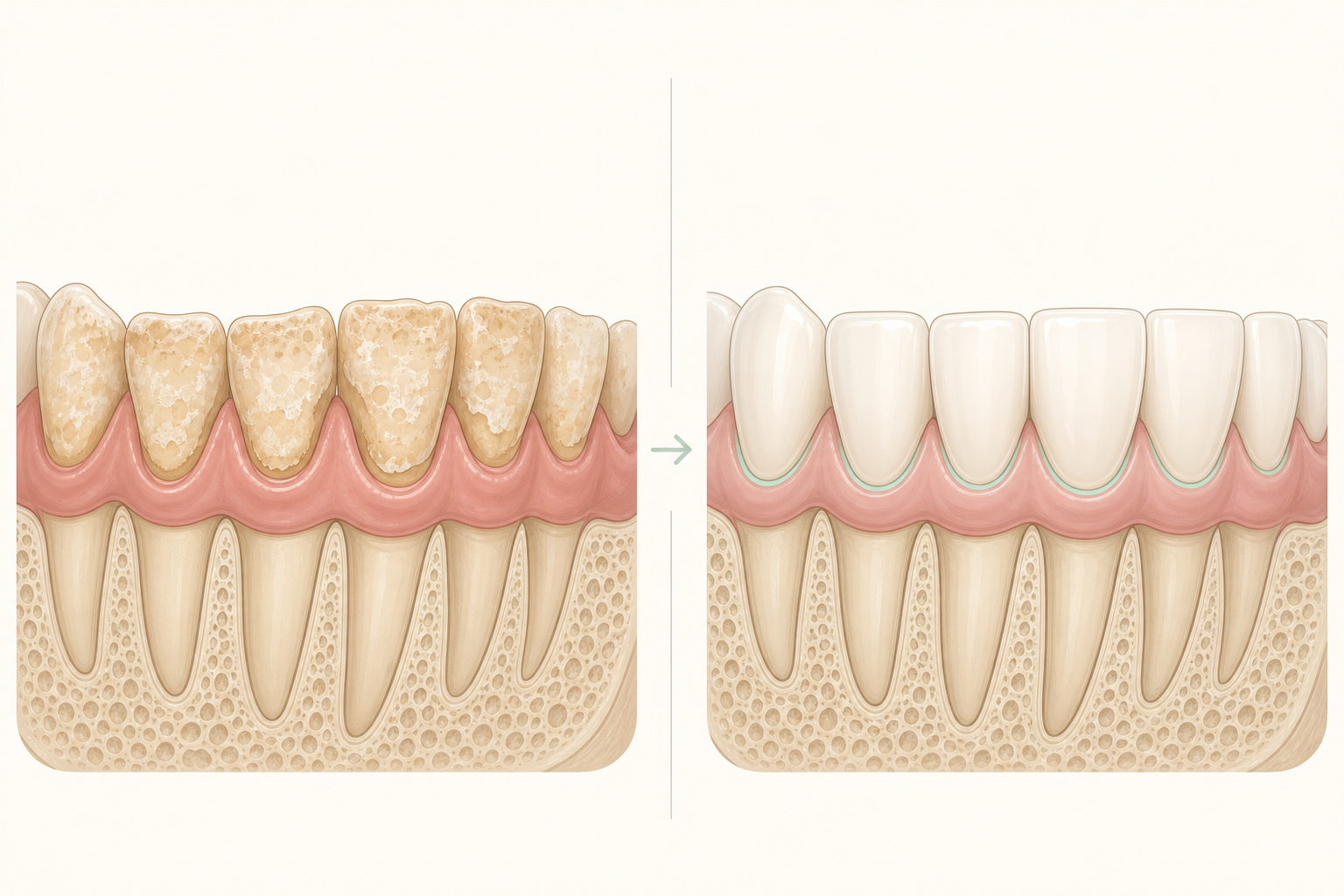
The condition results from inherited changes that affect enamel formation. It is present as teeth develop and is not caused by a child failing to brush or by a particular food.
The useful clinical stage is based on whether the relevant teeth are visible, partly erupted, or still within the jaw, and whether nearby teeth or the bite are affected. Imaging can clarify position when the finding cannot be seen directly.
Sensitivity, enamel breakdown, changes in bite, and difficulty keeping rough surfaces clean make an early assessment useful. Family history can help the clinician recognise the wider pattern.
Diagnosis combines dental history, examination, and imaging when needed. The clinician assesses tooth development, spacing, gums, bite, and the relationship between the affected area and nearby teeth before discussing a plan.
Care is planned around the tooth’s stage of development and the amount of enamel present. Protection, repair, and monitoring may be used, with the aim of reducing sensitivity, preserving tooth structure, and supporting function.
Without assessment, the issue may affect eruption, tooth position, tooth structure, comfort, or the bite, depending on the condition. A planned review makes it possible to act if those findings change.
The inherited enamel difference cannot be prevented through home care. Fluoride advice, cleaning support, and planned reviews can help limit the consequences of enamel weakness.