
Aggressive Periodontitis (Grade C)
Grade C identifies periodontitis with a high risk of progression, using health factors such as smoking and diabetes control.
[1][2]The short answer
Grade C periodontitis is the high-progression grade in a system that also records disease severity by stage.
[1][2]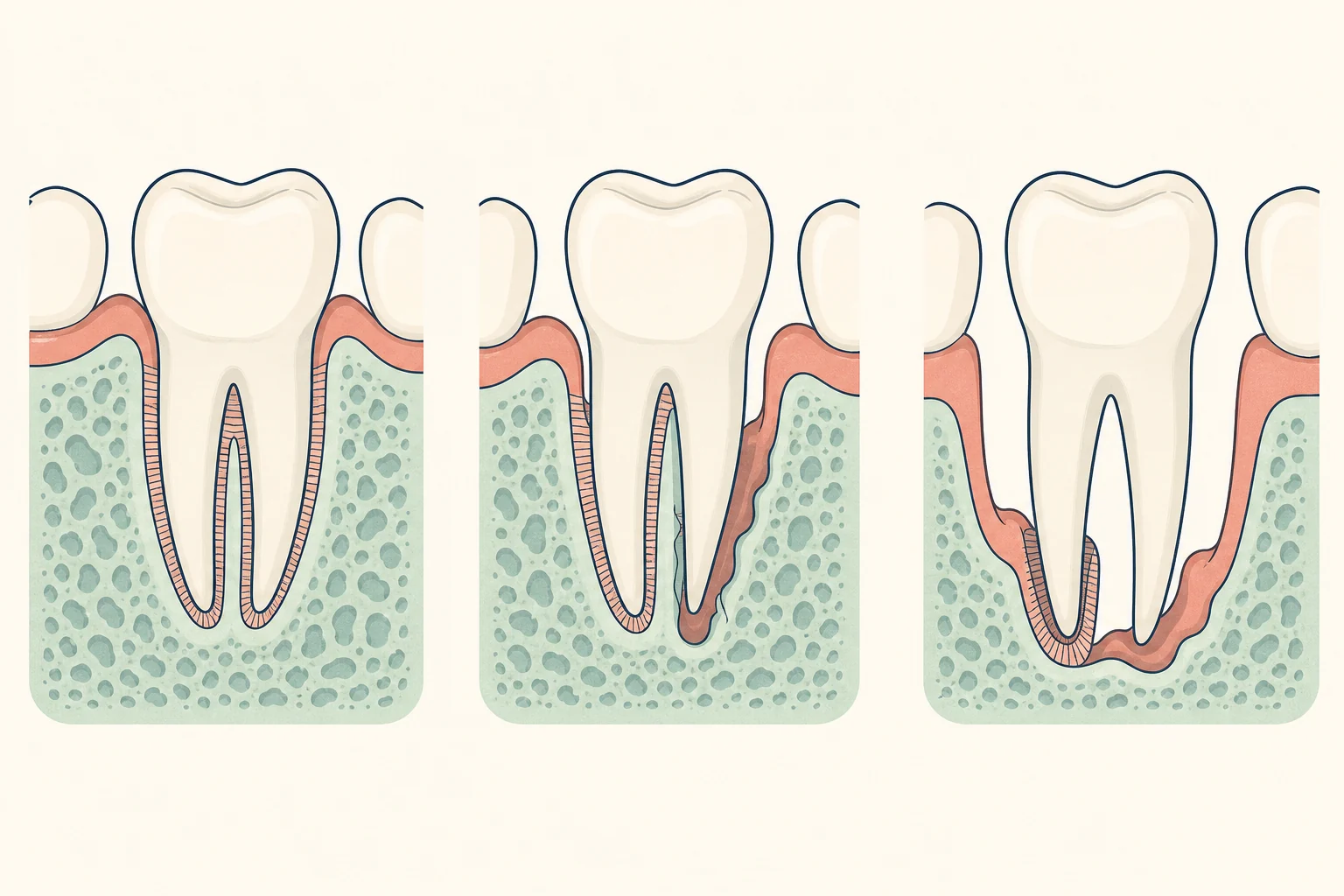
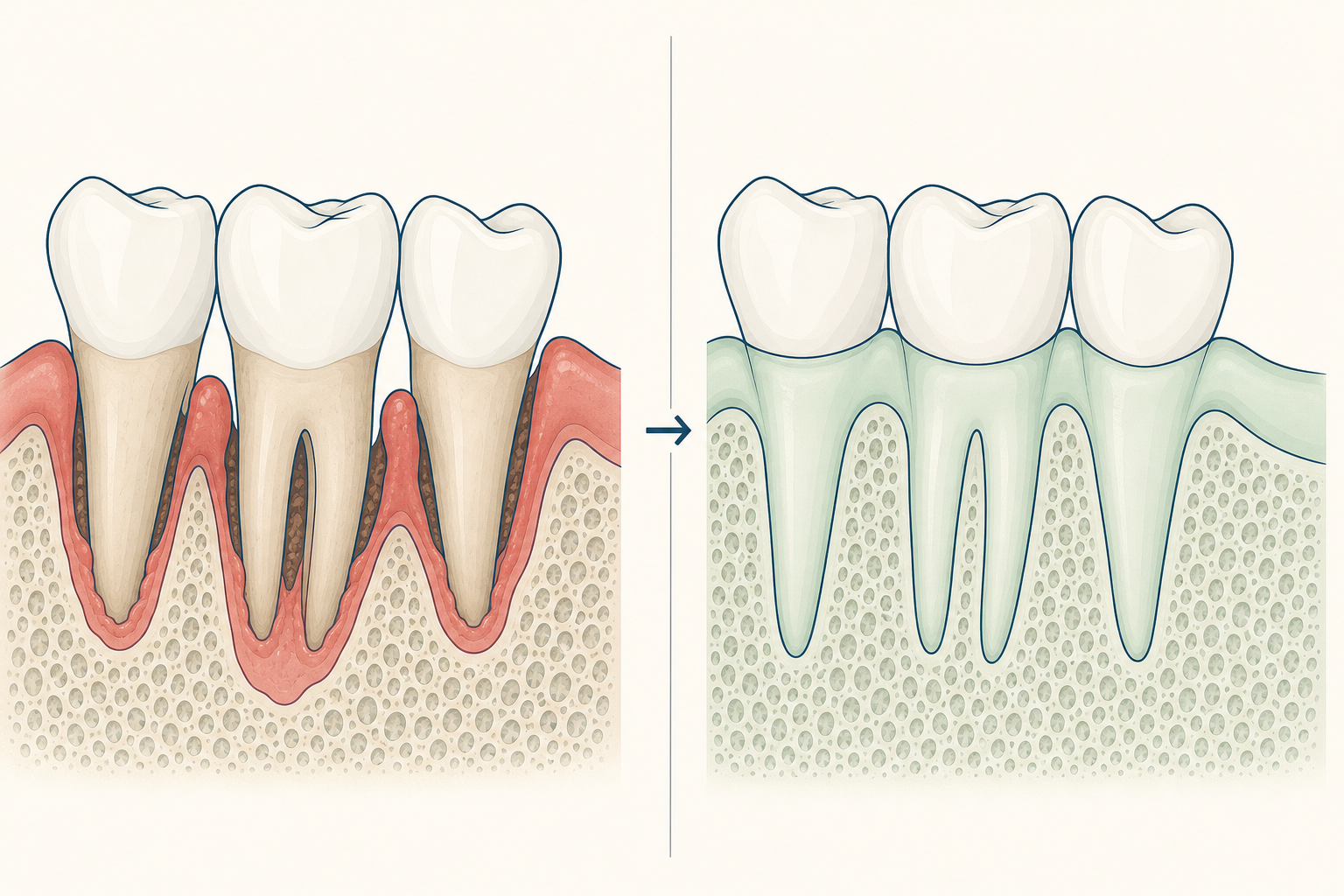
What the change looks like
What symptoms can aggressive periodontitis cause?
Gums may bleed, swell, or feel tender, and persistent bad breath or changes in tooth stability can occur. The visible signs do not replace an examination.
[1]What causes this form of periodontal disease?
The current classification no longer treats aggressive periodontitis as a separate form. It groups it under periodontitis and uses grade to estimate the likelihood and rate of progression.
[2]What do stage and grade mean?
Stage I is the least severe category and Stage IV the most severe. Grade A indicates low progression risk, Grade B moderate risk, and Grade C high risk.
[2]Why is prompt assessment useful?
How is Grade C periodontitis assessed?
Diagnosis uses the staging and grading framework. Stage describes severity; grade communicates progression rate and the anticipated response to treatment.
[2]How is treatment planned?
Initial active treatment uses mechanical debridement, either alone or with antimicrobial drugs. Scaling and root planing can improve clinical measures, though it does not always secure long-term stability.
[3]What should you ask about treatment costs in Dubai?
Care may include debridement, antimicrobial drugs, surgery, or regenerative techniques, followed by a strict maintenance programme and control of modifiable risk factors.
[3]What can happen when periodontal disease progresses?
How can you support gum health?
After periodontal health is achieved, strict maintenance focuses on controlling risk factors for recurrence and tooth loss. Proper oral hygiene supports surgical and regenerative treatment results.
[3]Frequently asked questions
Does Grade C periodontitis need an examination?
A dental examination assesses the gums and tissues supporting the teeth and helps guide treatment planning.
[2]Who wrote this page
This library is published by Dental Nation, a licensed dental group practising in the United Arab Emirates. Pages are written and overseen by the same clinical team that treats patients in our clinics, and are held to a fixed editorial standard for safety and accuracy.
This page is patient education, not medical advice, and cannot replace an examination. Anything urgent — facial swelling, trauma, uncontrolled bleeding or severe pain — needs a dentist or emergency care now.