
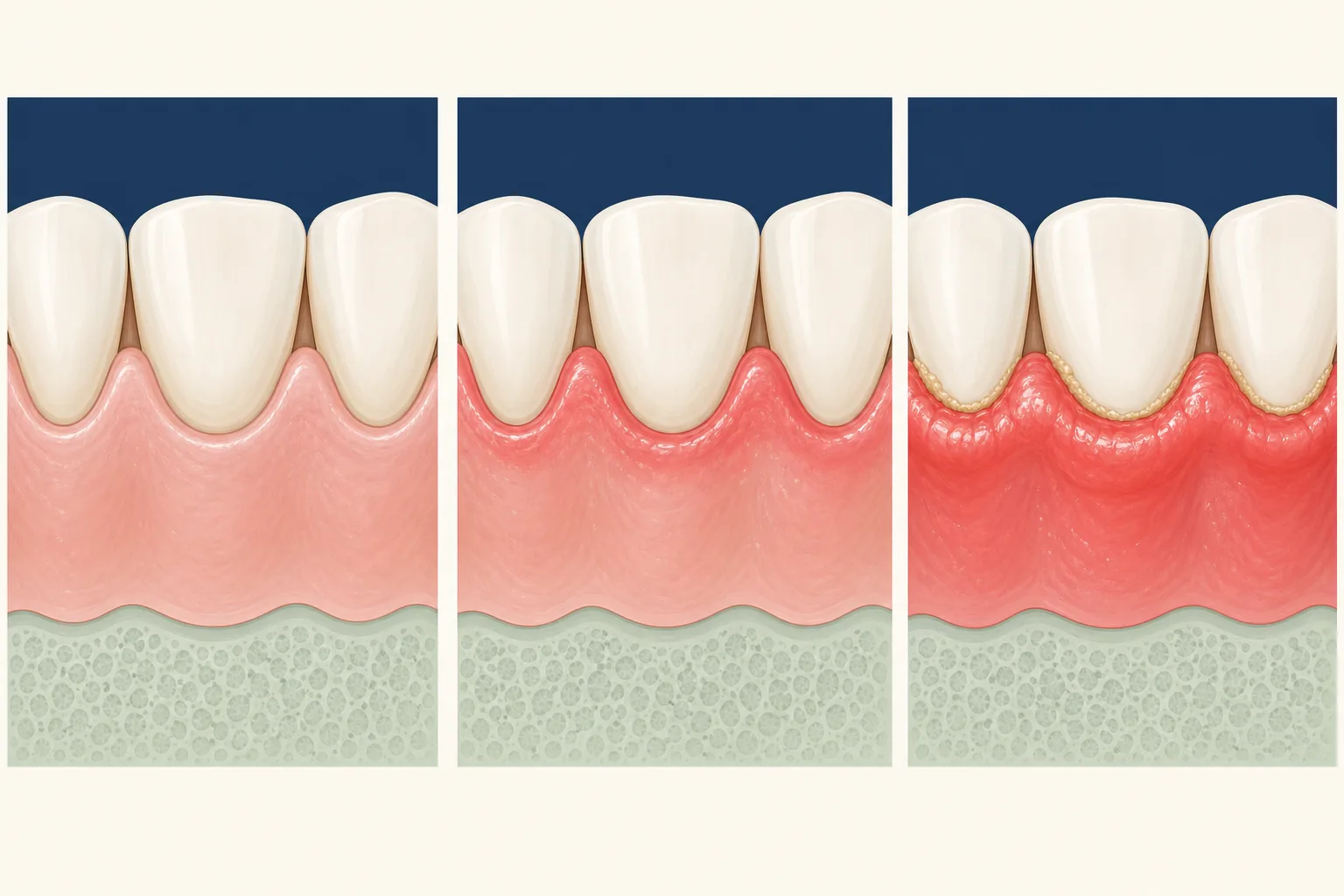
What the change looks like
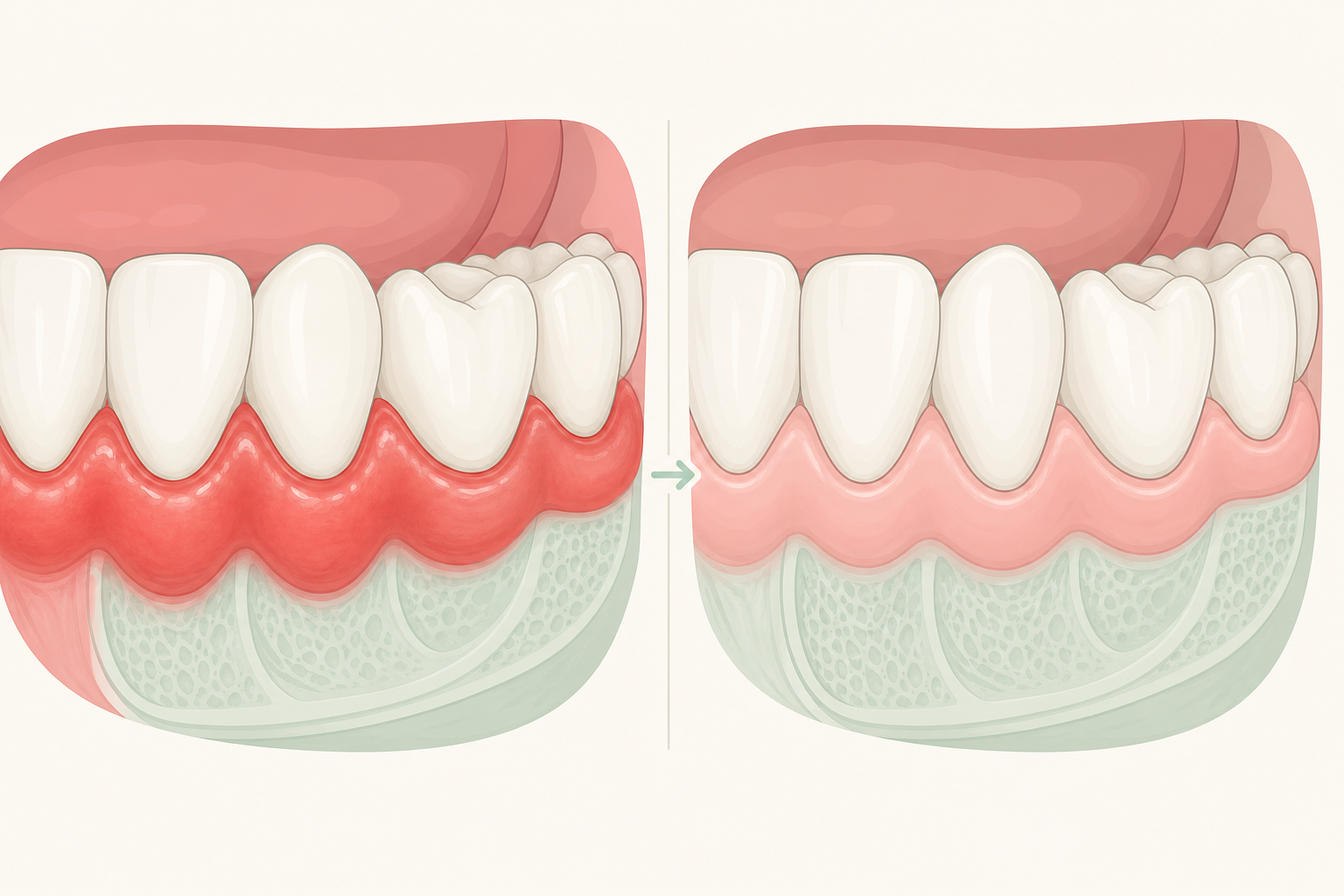
What are the signs?
Inflamed gums may bleed during probing, and dental plaque-induced gingivitis can occur on an intact periodontium or on a reduced periodontium, including in a successfully treated periodontitis patient.
[2]What causes acute gingivitis?
Dental plaque biofilm can trigger plaque-induced gingivitis. Gingival disease can also be non-plaque-induced, when a local oral lesion or a systemic condition is involved and plaque removal does not usually resolve it.
[2]How can it develop?
The condition may affect an intact periodontium or a reduced periodontium. A person previously treated for periodontitis remains a periodontitis patient when gingival inflammation persists, so recurrence or progression must be considered.
[2]What can make it worse?
Local predisposing factors and systemic modifying factors can alter the extent, severity, and progression of plaque-induced gingivitis. Smoking, hormonal states, systemic disease, and local plaque-retaining conditions are among the recognised categories.
[2]How is it diagnosed?
The clinical case definition is primarily based on whether the gums bleed on probing. Assessment also distinguishes plaque-induced disease from non-plaque-induced gingival conditions and considers whether the periodontium is intact or reduced.
[2]How is it treated?
Treatment reduces bacterial plaque and inflammation through oral-hygiene instruction, risk-factor management, and professional care. Gum treatment can be carried out under local anaesthesia when needed.
[1]What affects the cost in Dubai?
The care required depends on the extent of inflammation, the professional cleaning or gum treatment needed, and whether local anaesthesia is used. A single fixed procedure does not describe every case.
[1]What happens if inflammation continues?
Persistent inflammation in a reduced periodontium can signal recurrent or progressive periodontitis. After professional cleaning, gum-line shrinkage may create black triangles and temporary sensitivity to cold or acidic foods.
[2]How can it be prevented?
Excellent daily oral hygiene, risk-factor management, professional care, and regular follow-up help keep plaque and inflammation under control. Follow-up commonly checks whether inflammation has halted or returned.
[1]Frequently asked questions
Does bleeding on probing matter if the gums do not hurt?
Yes. Bleeding on probing is the principal clinical feature used to define gingivitis, even when pain is not the main complaint.
[2]