Dental Nation
Condition guide

Acute Apical Periodontitis

Unprovoked tooth pain, often worse overnight, can signal an acute problem around a tooth root.

[1][2]

The short answer

Unprovoked tooth pain that worsens overnight and a tender swelling can point to an acute infection around a tooth root.

[1][2]
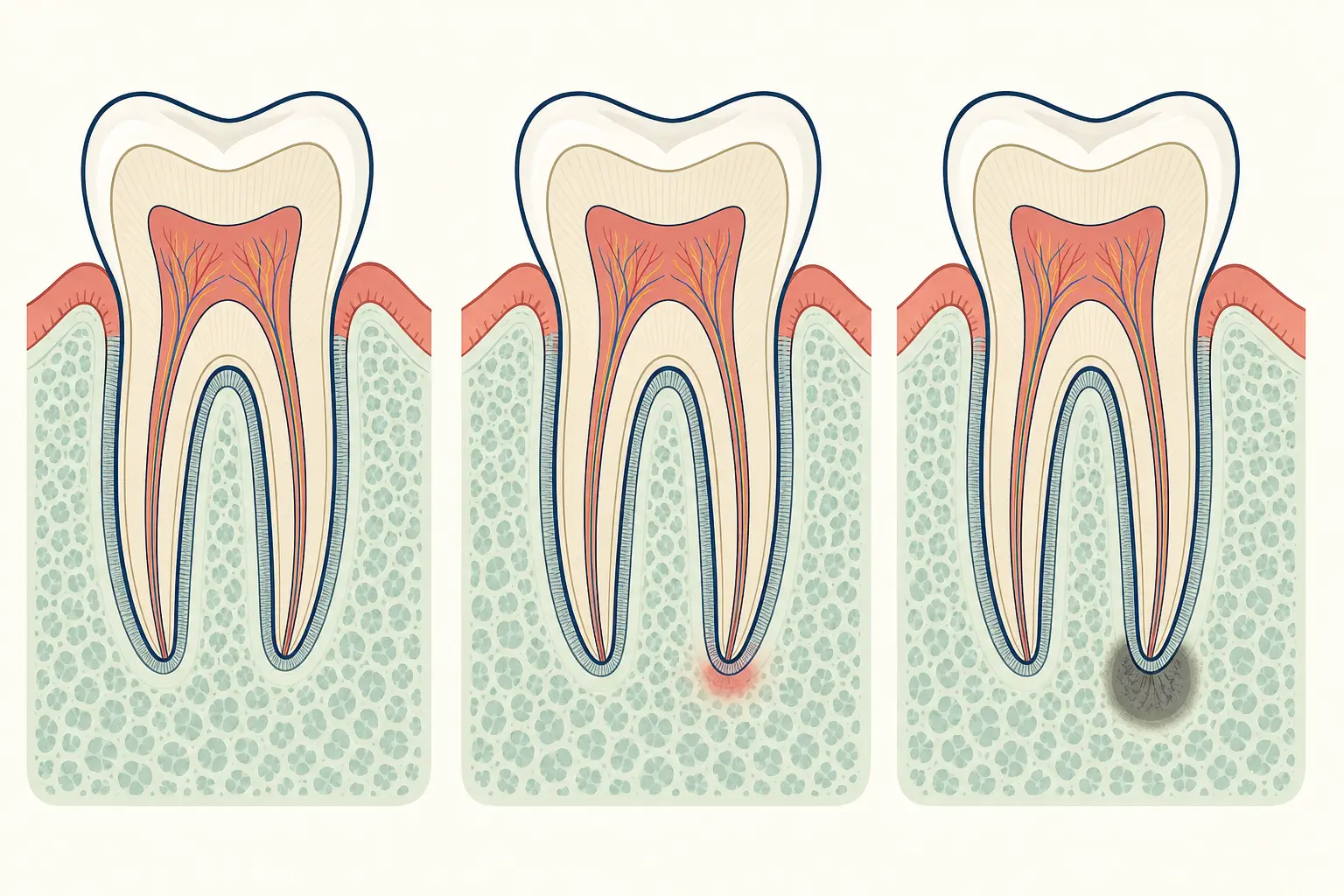
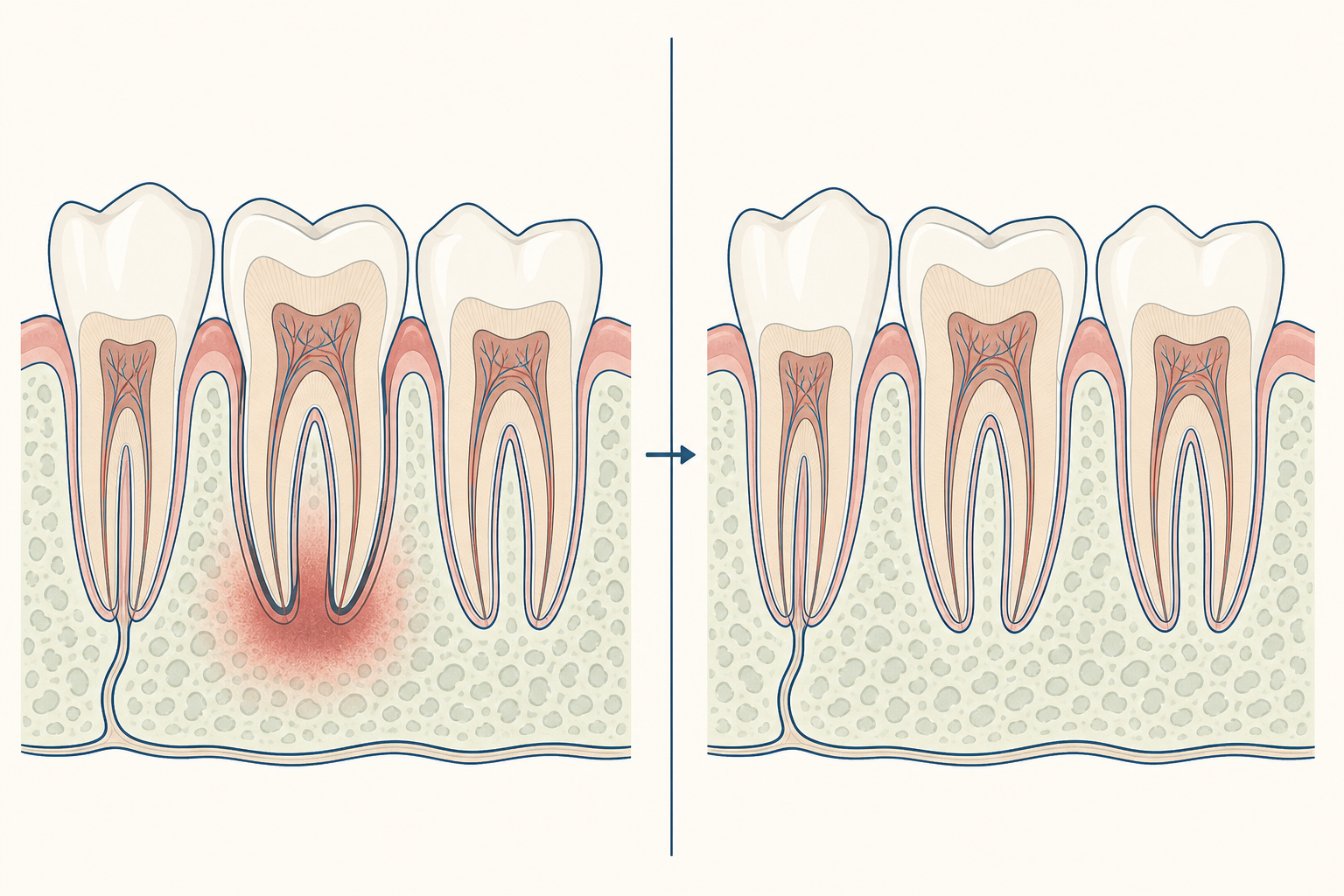
Acute Apical Periodontitis dental educational illustration

What the change looks like

Illustrative diagram: Acute Apical Periodontitis
Illustration — a representative diagram, not a patient photo.
The DN First Look799 AED
Book The DN First Look

What does acute pain around a tooth root feel like?

A periapical abscess may present as a palpable swelling. Fever, facial oedema, trismus, difficulty swallowing or voice change can indicate a more serious infection.

[1][2]
Symptoms that can accompany an acute dental infection
SymptomWhy it matters
Unprovoked pain, worse overnightThis pattern is recorded with irreversible pulpitis[1][2]
Fever or swallowing difficultyThese can signal spread beyond the mouth[1][2]

[1][2]

How can infection reach the root area?

Dental infection can start when bacteria invade the pulp and spread into surrounding tissues. It can also arise from periodontal pockets or pericoronitis.

[1][2]

How can the problem progress?

Pulp vitality can deteriorate from irreversible pulpitis to necrosis. An acute periapical abscess can then develop with pain or a palpable swelling.

[1][2]
A recorded route from pulp disease to infection
ChangePossible result
Pulp becomes necroticInfection can spread beyond the root canal[1][2]
Periapical abscess developsPain or a palpable swelling may occur[1][2]

[1][2]

When is the infection more concerning?

A swollen or firm floor of the mouth, drooling, limited tongue movement and a muffled voice are red flags for advanced or rapidly progressing infection.

[1][2]

How is a root-area infection checked?

Visual inspection and palpation are initial checks for infection. Periapical, bitewing or panoramic radiographs can show caries, a periapical abscess and bone loss.

[1][2]

What treats the source of the infection?

Treatment removes the source with drainage, endodontic therapy or extraction. A large abscess or deep-space infection may need hospital admission, intravenous antibiotics and an operation.

[1][2]
Treatment steps named for dental infection
Clinical findingNamed treatment
Source within a toothDrainage, endodontic therapy or extraction removes the source[1][2]
Large abscess or deep-space infectionHospital admission and parenteral antibiotics may be needed[1][2]

[1][2]

What can make care more extensive?

Care becomes more extensive when infection spreads into deep facial or neck spaces. Hospital treatment and operative intervention are sometimes required for those infections.

[1][2]

What complications can develop?

Infection can spread contiguously into the deep neck spaces, mediastinum, facial sinuses or brain. It can cause airway compromise or sepsis.

[1][2]

What helps reduce dental infection risk?

Daily brushing, flossing and reducing sugar-containing foods help reduce dental cavities. Proper oral hygiene and early treatment reduce the prevalence of dental infections.
[1][2]

Frequently asked questions

Can swelling near a tooth mean an abscess?

A periapical abscess may present as a palpable swelling, and it can arise from the pulp, periodontal structures or both.

[1][2]
Which mouth and throat symptoms are urgent?

Marked trismus, trouble swallowing, drooling, limited tongue movement, a swollen mouth floor and voice change are red flags for advanced infection.

[1][2]
