
Acquired Tooth Loss
Gum disease, cavities, trauma, and grinding can lead to tooth loss, which can shift nearby teeth and reduce jaw-bone support.
[1]The short answer
Acquired tooth loss is the loss of a permanent tooth, most often linked with gum disease, tooth decay, trauma, or teeth grinding.
[1]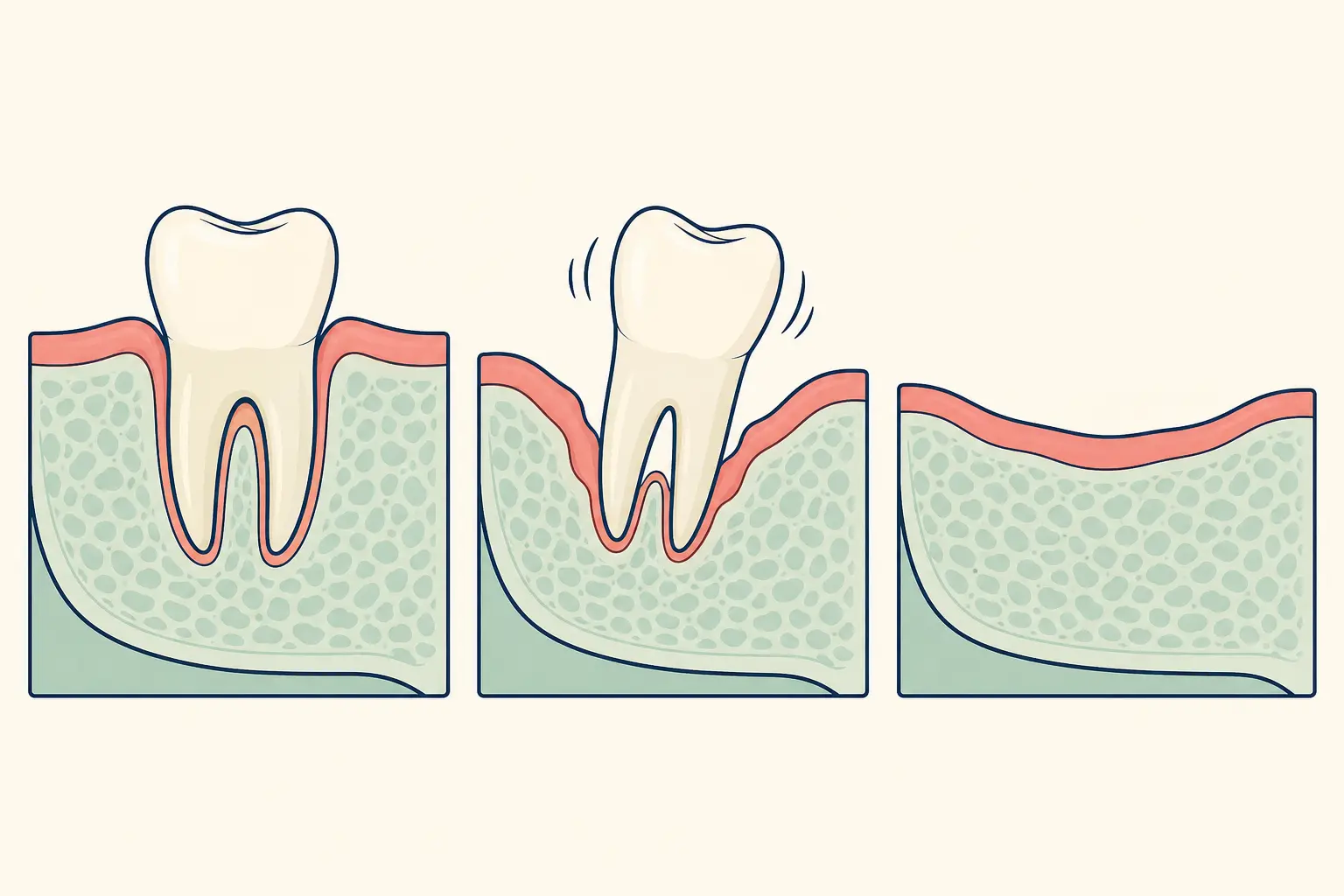
What the change looks like
What symptoms can appear?
What can cause it?
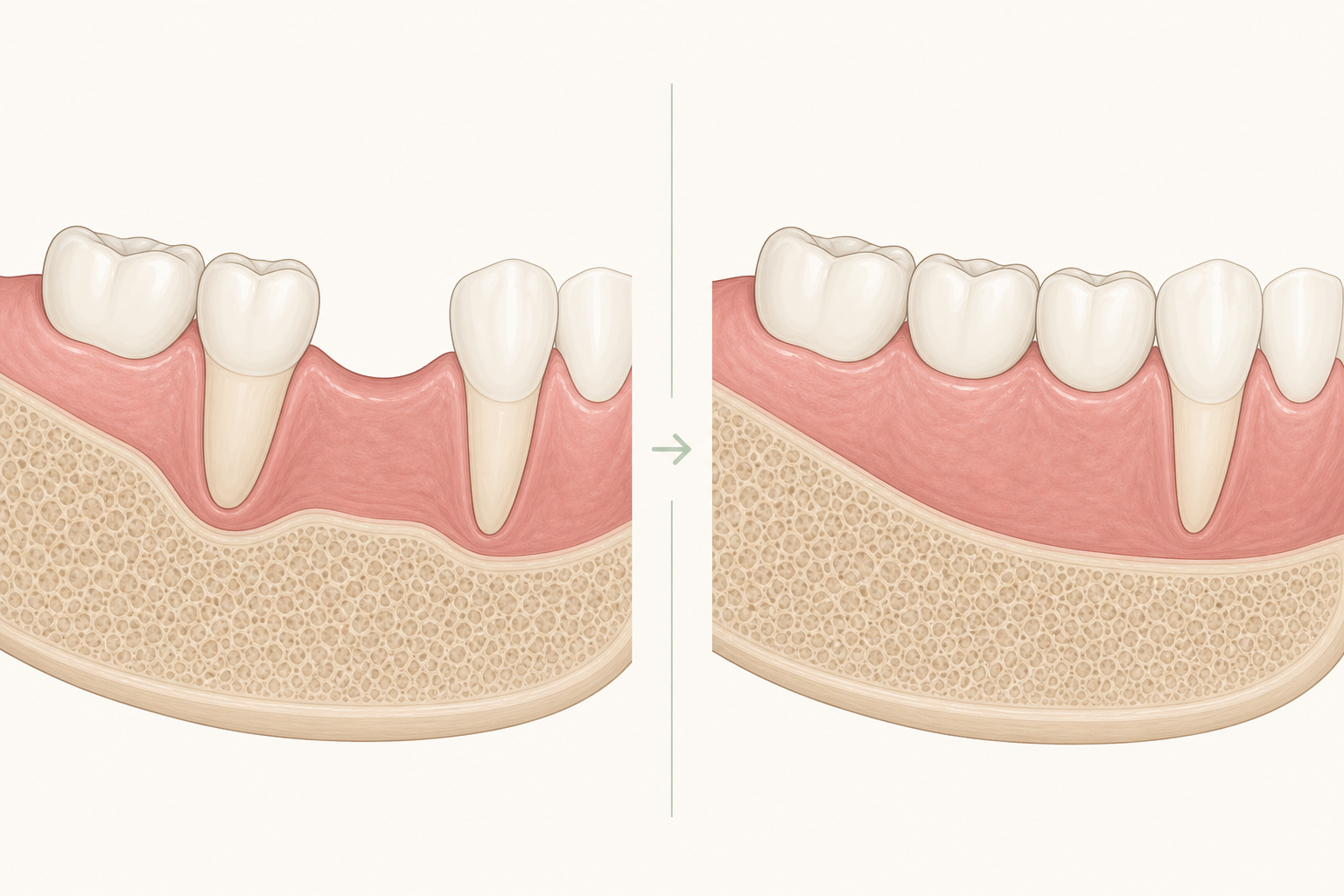
Decay, trauma, or another oral problem can remove a developed tooth, reducing chewing efficiency and changing the contacts, space, and position of nearby or opposing teeth.
[1]What stages might a dentist describe?
Tooth loss can involve one missing permanent tooth or complete tooth loss, meaning no natural teeth remain. The practical issue after a loss is whether nearby teeth, bite contacts, bone, speech, or chewing have also changed.
[1]What can increase the chance of it?
The leading causes are cavities, periodontitis with bone loss, and smoking. Dry mouth, poor oral hygiene, tobacco use, under-managed diabetes, hormonal changes, some medicines, and a family history of gum disease can raise the chance of tooth loss.
[1]How is it diagnosed?
How is treatment chosen by stage?
A dental implant can replace a single missing tooth, including in the back of the mouth. It can avoid removing sound tooth structure from neighbouring teeth to support a replacement.
[3]What should I know about costs in Dubai?
What can happen if it is left untreated?
Without treatment, tooth loss can lead to jawbone loss, shifting teeth, excess pressure on remaining teeth, a changed bite, speech changes, and temporomandibular joint disorder. It can also make further tooth loss more likely.
[1]Can it be prevented or reduced?
Tooth loss is largely preventable through oral hygiene, general self-care, and dental care. Dental sealants can prevent cavities for many years, and fluoridated water helps rebuild, strengthen, and protect tooth surfaces.
[1]