
Abfraction Lesions
Abfraction is a disputed term for a notch near the gum line linked with chronic traumatic forces and other wear processes.
[2][3]The short answer
Abfraction is a cervical notch linked with chronic traumatic occlusal forces, although its status as a separate process is questioned.
[3]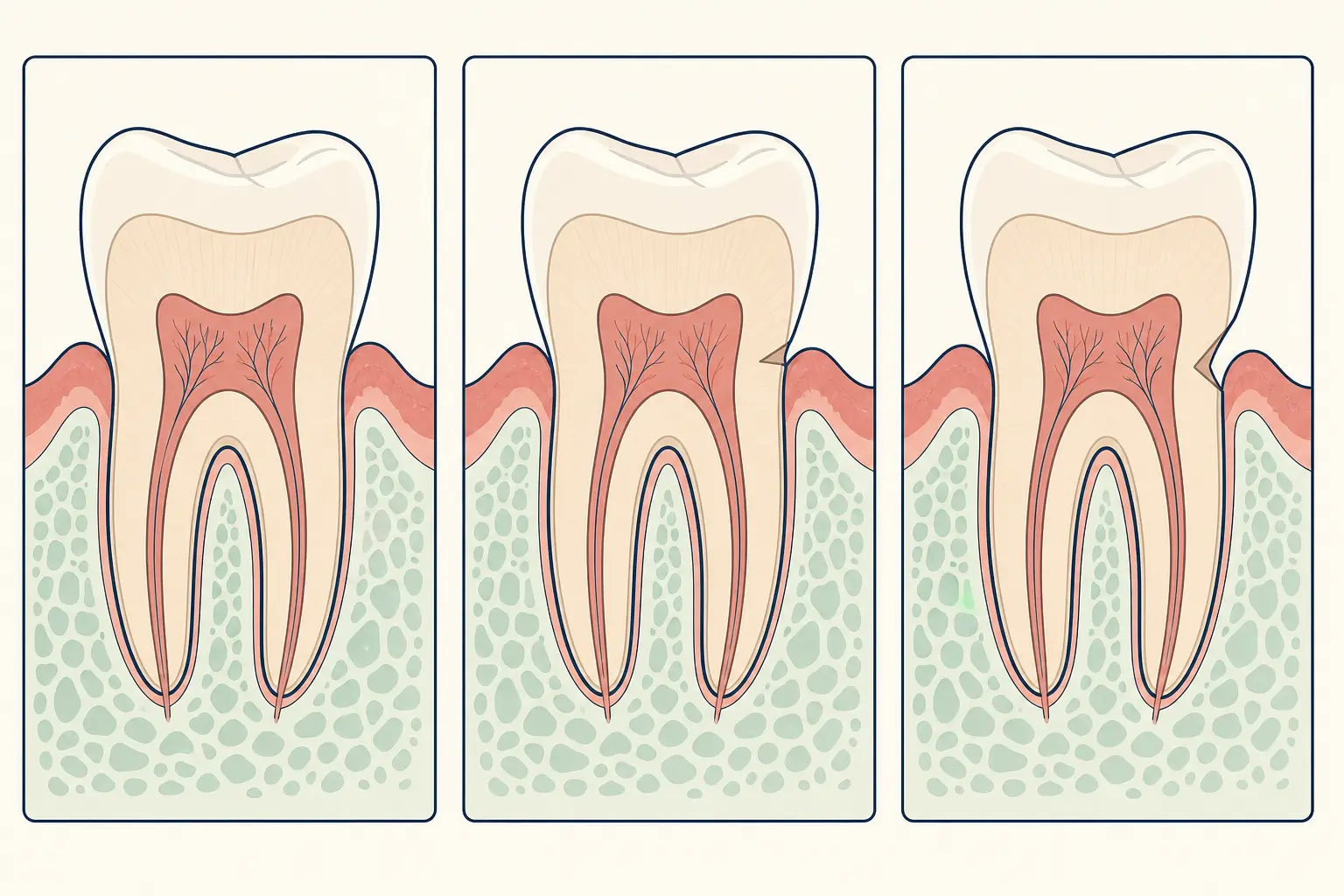
What the change looks like
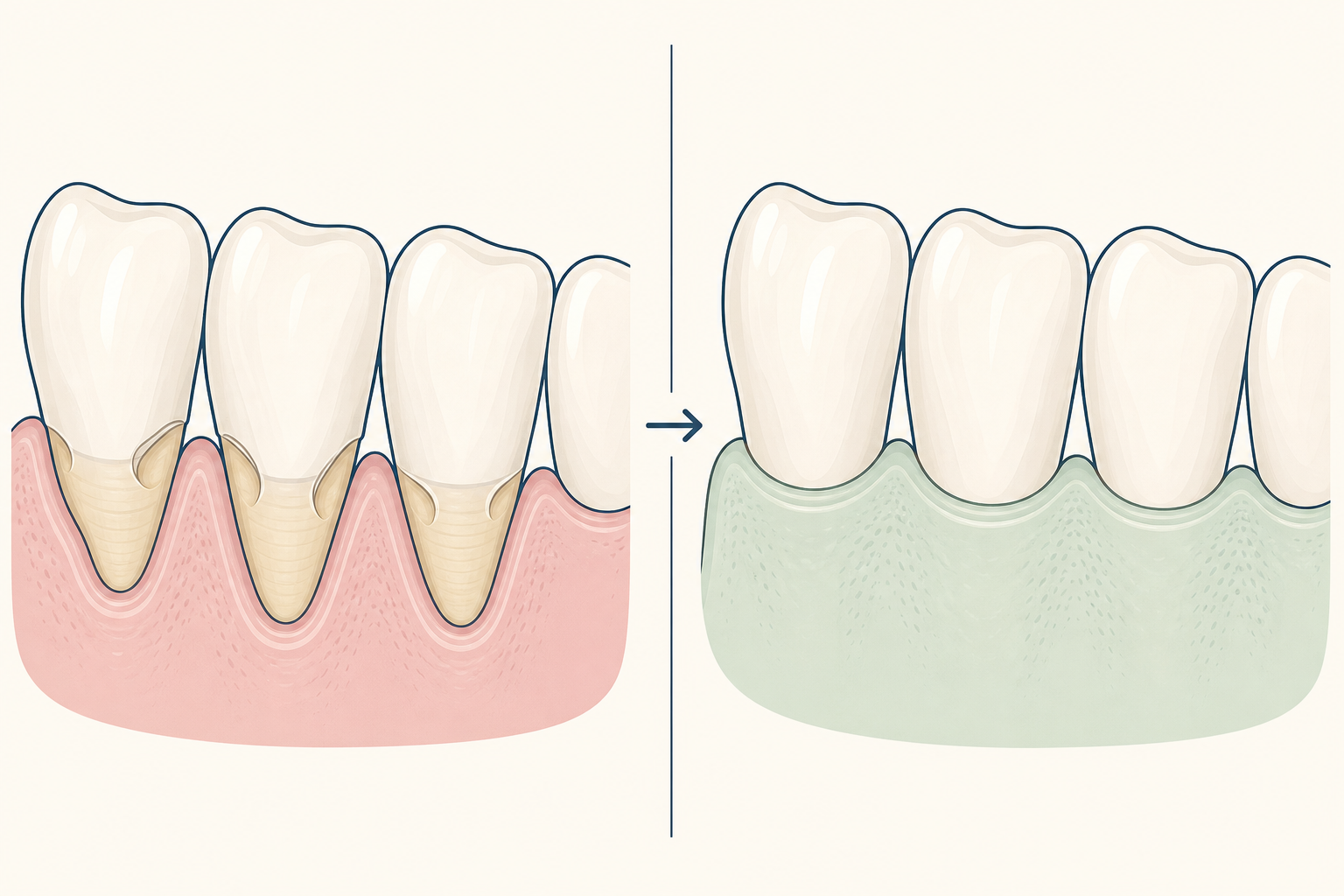
What might an abfraction lesion feel like?
What can contribute to an abfraction lesion?
Tooth wear can have more than one contributing process. The assessment considers forces on the tooth together with other forms of wear, rather than assigning the cause from a photograph. Information about grinding, clenching, diet, brushing, and previous dental work may help the clinician interpret the pattern, when those details are relevant to the examination.
[2][3]How is the finding described over time?
What should you tell the dentist?
How is an abfraction lesion diagnosed?
Diagnosis begins with an examination of the affected tooth and the surrounding pattern of wear. The dentist considers the lesion's position and appearance, asks about symptoms, and looks for contributing factors. This approach helps separate a suspected abfraction lesion from other kinds of tooth wear and guides the next discussion.
[2][3]What treatment might be discussed?
Care is chosen according to the lesion, its symptoms, and the factors that may keep wear active. The discussion may focus on monitoring, addressing contributing forces, or restoring the defect when that is appropriate. There is no automatic treatment that suits every abfraction lesion.
[2][3]What should you ask about the cost in Dubai?
What can happen if the finding is left unexplained?
The main concern is losing the chance to understand continuing wear or an unresolved symptom. The evidence links tooth wear with assessment and management decisions, so a changing lesion, persistent sensitivity, or concern about the tooth deserves a dental examination rather than a conclusion based on appearance alone.
[1][2][3]How can you reduce further tooth wear?
Prevention follows the factors found in the examination. Discuss the way you brush, any clenching or grinding, and other sources of tooth wear with the dentist. The aim is to identify modifiable contributors and to monitor the tooth surface, with care adjusted when symptoms or the wear pattern changes.
[2][3]