
Treat in Dubai or travel to Turkey
Travel veneer care can cost less upfront, but a repair or revision after you return can add travel and treatment costs.
[1][2]The short answer
Veneers abroad need a plan for fitting, follow-up, and repair, because porcelain and composite veneers can still chip, crack, wear down, or loosen.
[1][2]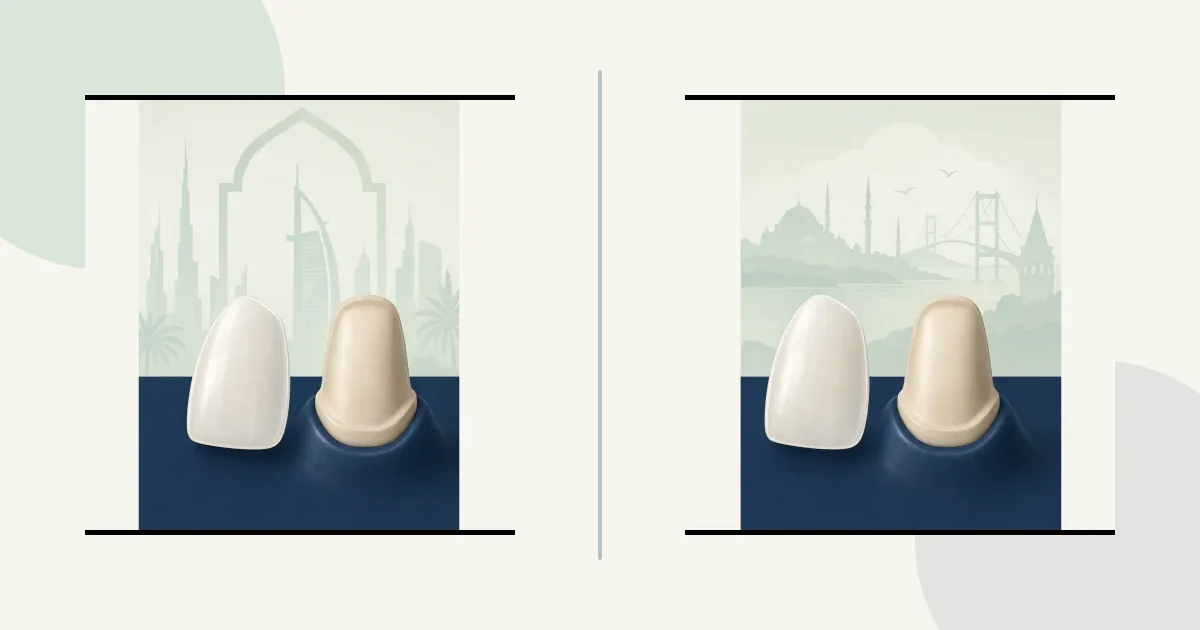
The two options, side by side
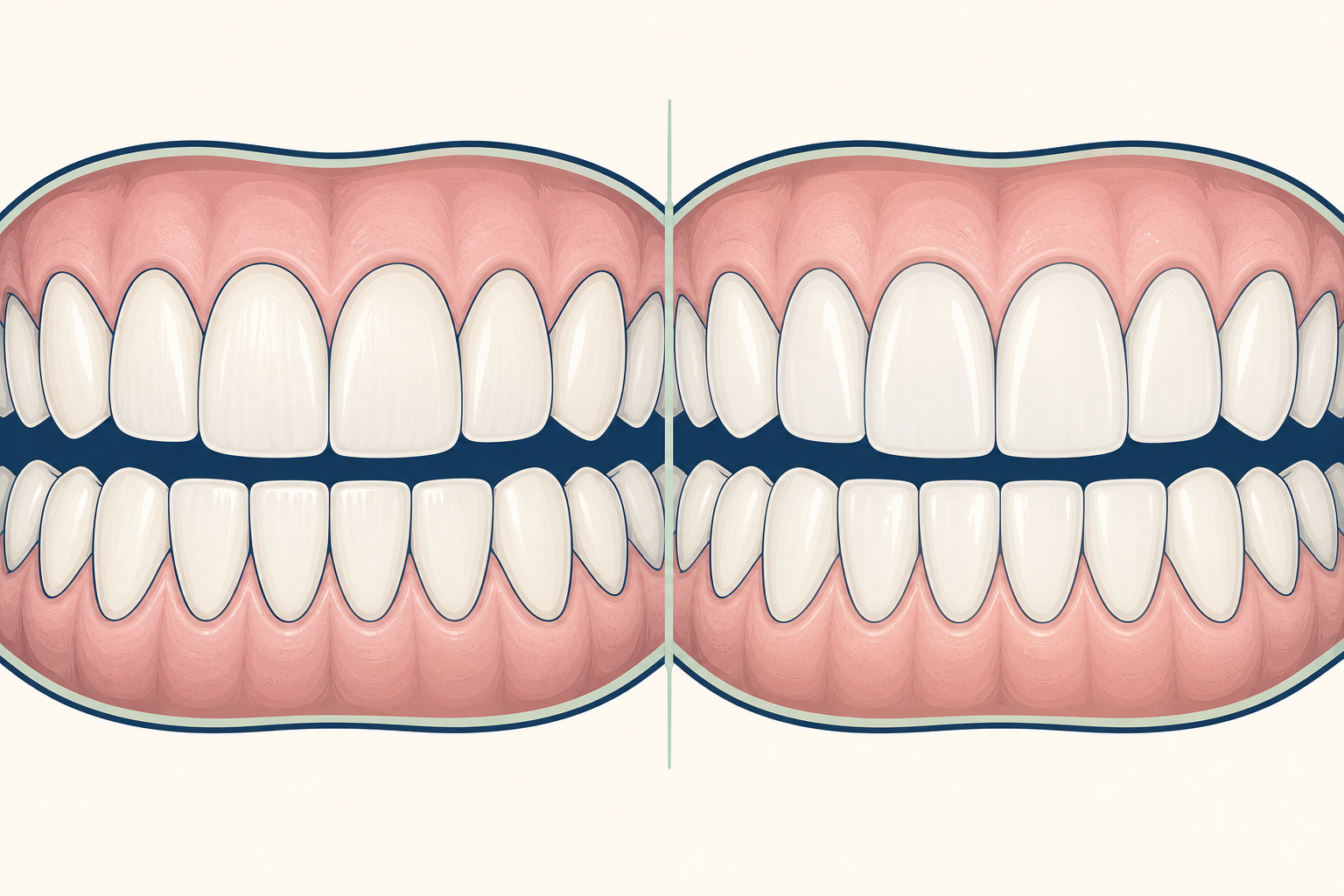
Dubai or Turkey: what changes?
| Question | Dubai | Travel treatment |
|---|---|---|
| Provider oversight | Use a licensed dentist | Dentists abroad may not face the same licensure oversight[1][2] |
| Follow-up | Placement and later repair can be arranged locally | A repair or revision after returning may mean another journey[1][2] |
Choose Dubai if
Choose travel only with a clear care plan
What should the price include?
What happens after placement?
What are the safety concerns?
When are veneers the wrong starting point?
Veneers may be unsuitable for teeth affected by clenching, grinding, or a deep overbite. Decay and gum disease need treatment before a veneer is placed over the tooth.
[1]How should the choice be judged?
The decision turns on the veneer material, enamel removal, provider licensing, and how future repairs will be managed. Porcelain is a custom shell; composite is tooth-coloured filling material bonded to the tooth and may require fewer visits.
[1]Frequently asked questions
Why might a veneer trip cost more than the quote?
Travel, accommodation, infection, an unsatisfactory result, or a later revision can increase the total cost.
[1][2]Can insurance pay for veneers?
Veneers are classed as cosmetic dentistry, so cover may be unavailable unless they are medically necessary.
[1]