Dental Nation
Treatment comparison

Brighten what you have vs cover it

Whitening changes natural teeth only, while veneers cover a tooth with porcelain or composite and require enamel removal.

[1][2]
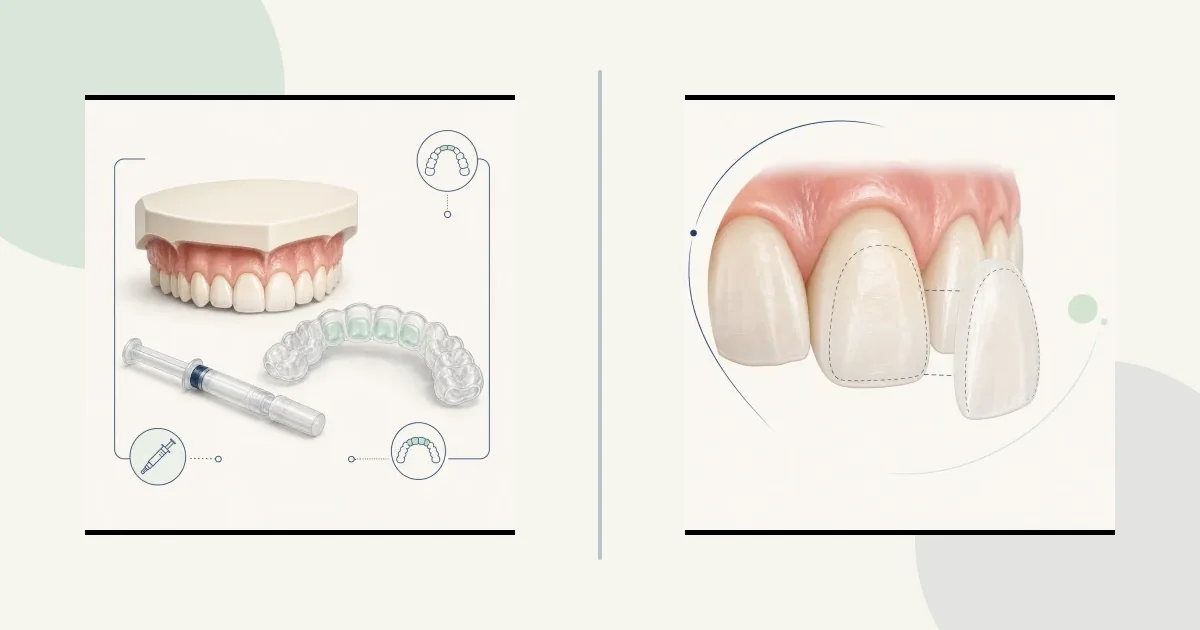
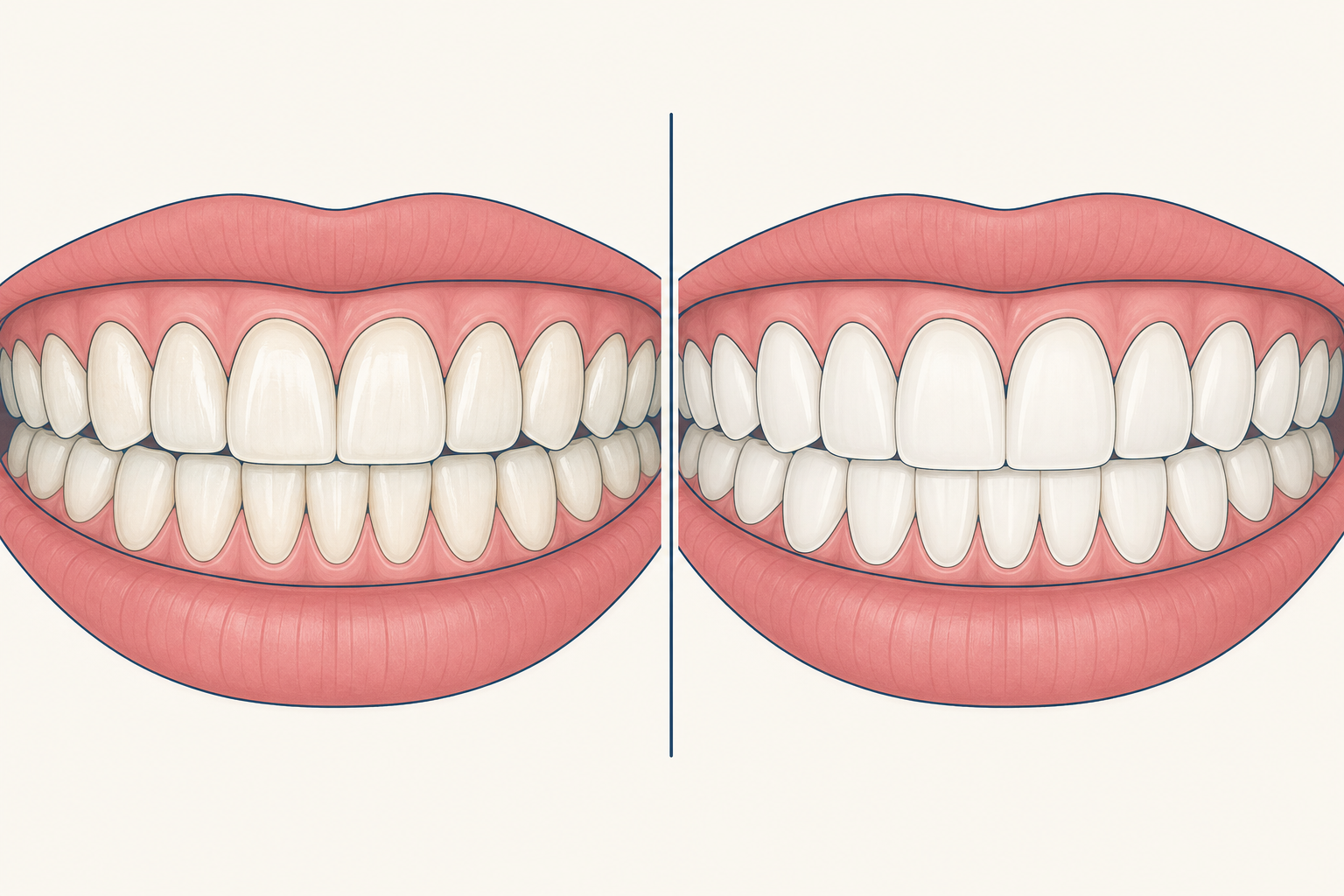
Brighten what you have vs cover it comparison graphic

The two options, side by side

Illustrative diagram: teeth whitening vs veneers
Illustration — a representative diagram, not a patient photo.
The DN Glow Up1,699 AED
Book The DN Glow Up

What changes with each option?

Whitening changes natural teeth only, while veneers cover a tooth with porcelain or composite and require enamel removal.

[1][2]
What whitening and veneers affect
OptionEffectLimit
WhiteningChanges natural teethCrowns and implants do not change colour[1][2]
VeneersCover the front of a tooth with porcelain or compositeEnamel removal makes treatment irreversible[1][2]

[1][2]

When does whitening address the colour concern?

Whitening affects natural teeth. Tooth-coloured restorations, including crowns and implants, do not change colour with bleaching, so they can end up different from the natural teeth.

[1][2]

When do veneers address more than colour?

A porcelain veneer is a custom thin shell on the front of a tooth. A composite veneer is tooth-coloured filling material bonded to the tooth and may need less enamel removal and fewer visits.

[1][2]

Which veneer material changes the trade-off?

Porcelain veneers are strong, long-lasting and tend to cost more. Composite veneers are easier to repair if damaged, but are less stain-resistant and wear-resistant.

[1][2]
Porcelain and composite veneer differences
MaterialAdvantageTrade-off
PorcelainStrong and long-lastingTends to be more expensive[1][2]
CompositeMay need less enamel removal and is easier to repairLess stain-resistant and wear-resistant[1][2]

[1][2]

How can veneers change over time?

A veneer can chip, crack, wear down, or loosen over time. It may then need to be re-bonded, repaired, or replaced.

[1][2]

What are the safety limits?

Veneers should not be placed over untreated decay or gum disease because this may worsen existing problems. Clenching, grinding, or a deep overbite can also make veneers a poor choice.

[1][2]

Which home whitening methods should be avoided?

Charcoal and table salt were abrasive and ineffective. Acid-containing fruits, vinegar, charcoal products, and oil pulling lack reliable evidence of safe, measurable whitening benefit.

[1][2]

What separates the two decisions?

Whitening works on natural teeth, whereas veneers are an irreversible covering treatment. The condition of the teeth and gums, existing restorations, and biting forces determine which concern each option can address.
[1][2]

Frequently asked questions

Will whitening make my crown match my natural teeth?

No. Bleaching changes natural teeth, while crowns and implants do not change colour.

[1][2]
