Dental Nation
Treatment comparison

Removable cosmetic arch vs fixed

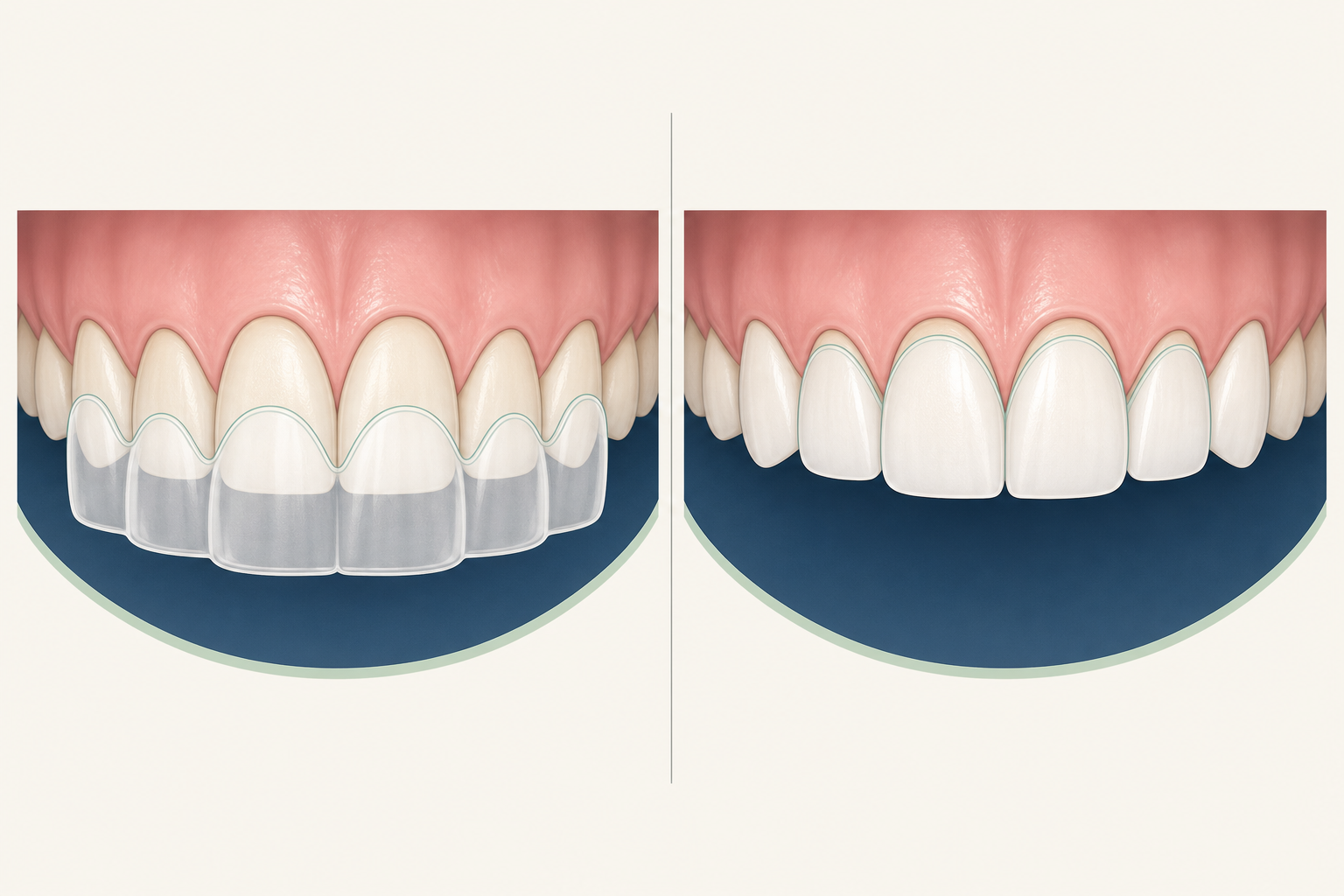
Plastic snap-on arches conceal teeth temporarily, while veneers are bonded shells that require enamel removal and change the tooth permanently.

[1][2]

The short answer

A plastic snap-on arch sits over the teeth to hide missing, discoloured, or chipped teeth temporarily. A veneer is a thin shell bonded to a tooth's front surface after enamel is removed, so the fixed option is irreversible.

[1][2]
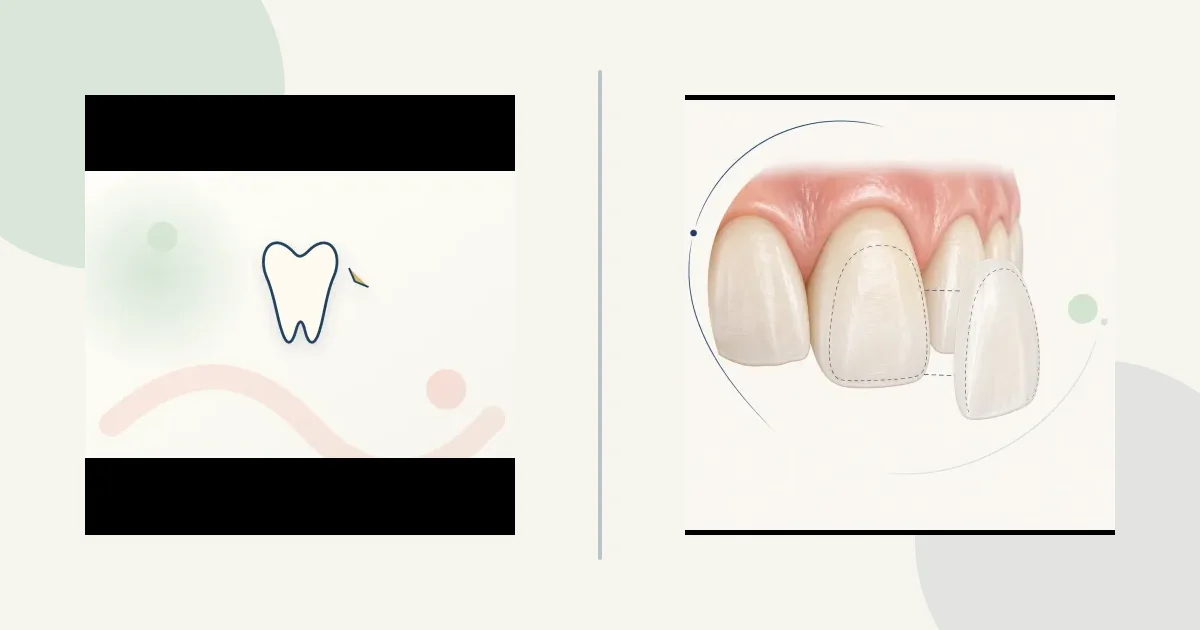
Removable cosmetic arch vs fixed comparison graphic

The two options, side by side

Illustrative diagram: snap on smile vs veneers
Illustration — a representative diagram, not a patient photo.
The DN Glow Up1,699 AED
Book The DN Glow Up

How do snap-on arches and veneers differ?

The practical difference
FeatureSnap-on archVeneer
PositionSits over teeth as a temporary coverBonds to the front surface of a tooth[1][2]
Effect on enamelDoes not require enamel adjustmentRequires enamel removal and cannot be reversed[1][2]

[1][2]

Choose a fixed veneer when you want a bonded restoration

A veneer is a professional bonded restoration for the front of a tooth. Porcelain is a custom-made shell that is strong and long-lasting; composite is tooth-coloured filling material bonded to the tooth and is easier to repair if damaged.

[1][2]

Treat a snap-on arch as temporary concealment

Snap-on plastic veneers are sought as a temporary way to conceal teeth, often because their initial cost is lower. They do not have the same quality as professional porcelain veneers and can damage tooth enamel.

[1][2]

Does the lower initial price settle the choice?

A lower initial price does not remove the oral-health limitations of a snap-on arch. Food can be trapped against the tooth surface beneath the plastic, increasing the risk of decay and gum disease.

[1][2]
What the lower-cost temporary route does not change
QuestionSnap-on archVeneer
Initial purposeTemporary concealmentA bonded change to the front surface[1][2]
Damage and upkeepCan trap food and damage enamelMay chip, crack, wear down, or loosen and need repair or replacement[1][2]

[1][2]

What happens when a fixed veneer is damaged?

A veneer may chip, crack, wear down, or loosen with time. It can then need re-bonding, repair, or replacement. Composite veneers are easier to repair after damage, but they resist staining and wear less well than porcelain.

[1][2]

What are the oral-health risks?

Plastic snap-on products can trap food against teeth, raising the risk of tooth decay and gum disease, and they can damage enamel. Veneers placed by an unlicensed individual may bring infection and nerve-damage risks and can be placed over unhealthy teeth.

[1][2]

When should neither be placed yet?

Decay and gum disease need treatment before a veneer is placed because covering unhealthy teeth can worsen existing problems. Veneers may also be a poor fit for people who clench or grind their teeth or have a deep overbite.

[1][2]

What should the comparison check?

The decision turns on whether the aim is temporary concealment or a bonded restoration, whether permanent enamel removal is acceptable, and whether the teeth are healthy enough for a veneer. Porcelain and composite then differ in repairability, wear resistance, and cost direction.

[1][2]

Frequently asked questions

Can a snap-on arch trap food around my teeth?

Yes. Plastic snap-on veneers can trap food particles against tooth surfaces, which increases the risk of tooth decay and gum disease.

[1][2]