Dental Nation
Treatment comparison

Regular cleaning or deep cleaning

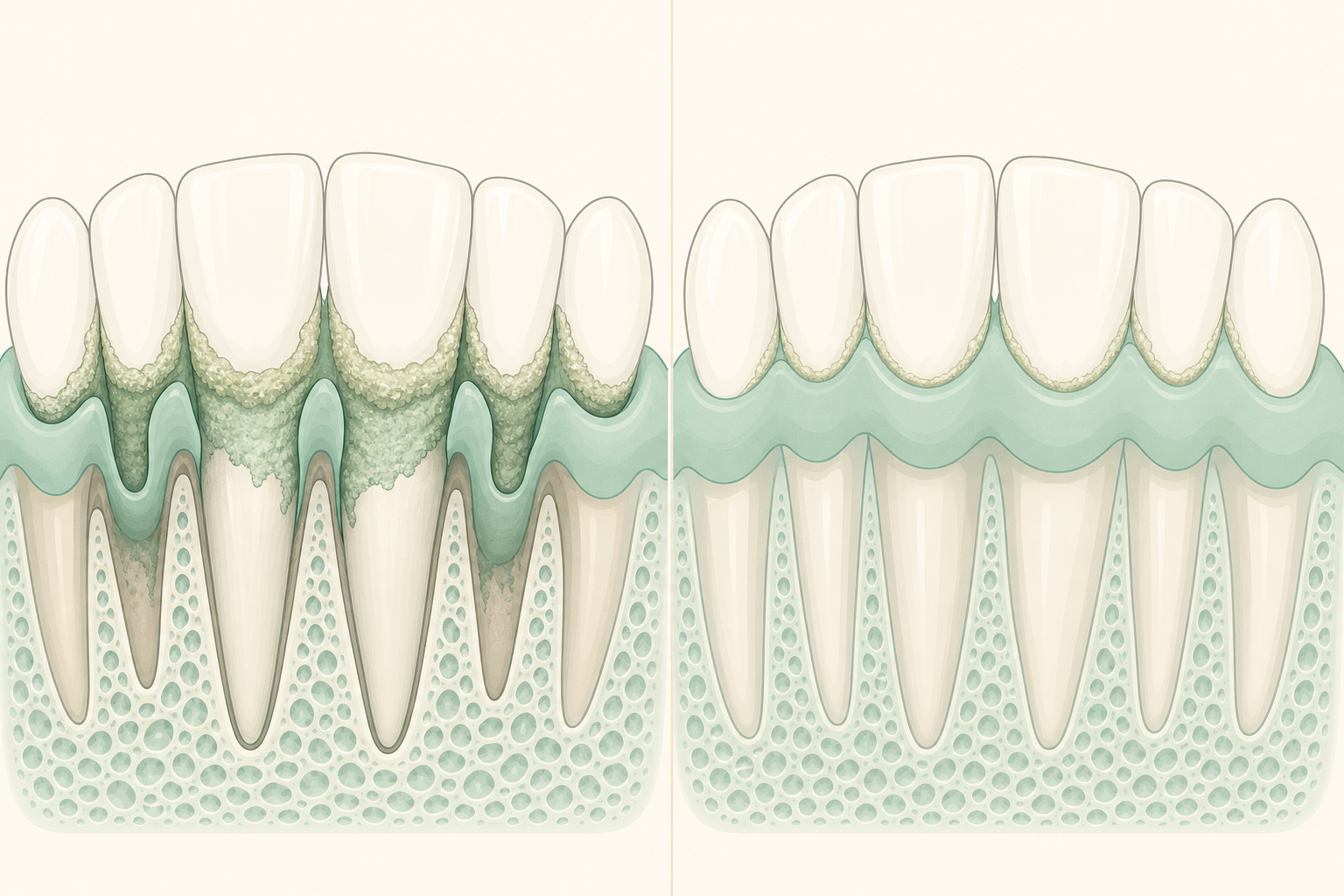
Scaling and root planing cleans beneath the gumline and smooths roots; it is used for chronic periodontitis beyond gingivitis.

[1][2]

The short answer

Scaling and root planing removes plaque and tartar below the gumline, then smooths the roots to help gums reattach to the teeth.

[1][2]
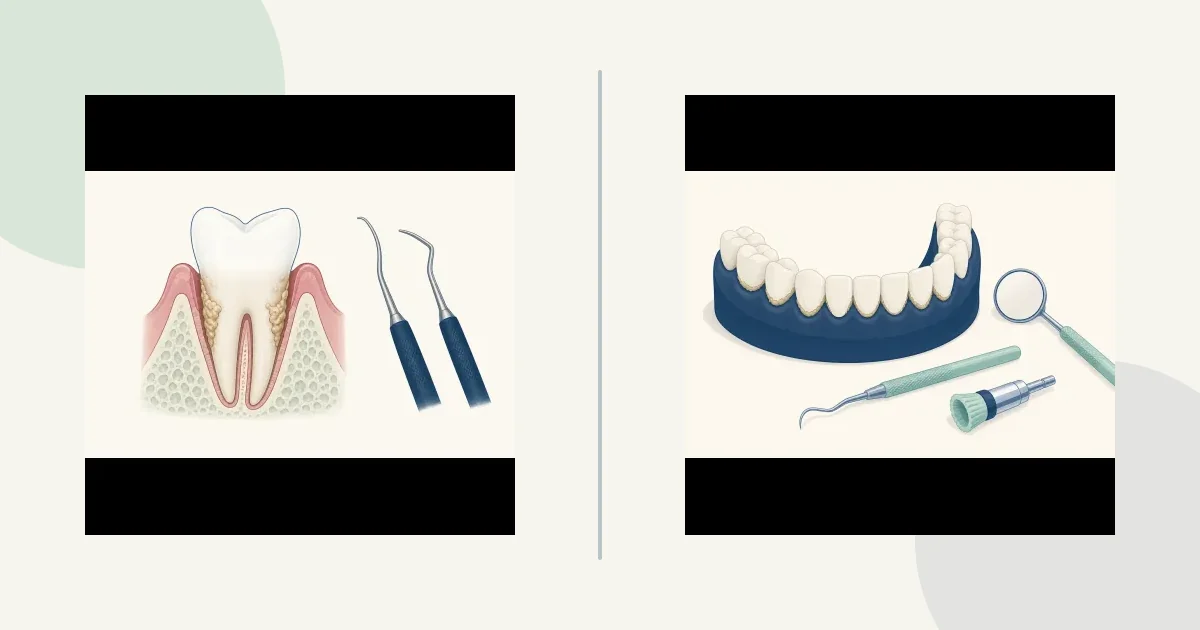
Why the quote jumped from AED 300 to AED 1,500 ("deep cleaning vs regular cleaning" phrasing on-page) comparison graphic

The two options, side by side

Illustrative diagram: scaling and root planing vs teeth cleaning
Illustration — a representative diagram, not a patient photo.
The DN First Look799 AED
Book The DN First Look

What makes a deep cleaning different?

The two parts of scaling and root planing
StepWhat happens
ScalingPlaque and tartar are removed above and below the gumline, down to the bottom of the pocket.[1][2]
Root planingThe root is smoothed to discourage future plaque and toxins from adhering.[1][2]

[1][2]

When is regular cleaning enough?

The evidence here describes scaling and root planing as treatment for chronic periodontitis, which is gum disease that has advanced beyond gingivitis.

[1][2]

When is scaling and root planing used?

During deep cleaning, the tooth root surfaces are treated beneath the gumline to remove plaque and bacterial toxins from periodontal pockets.

[1][2]

What changes the treatment time?

Scaling and root planing can take more than one visit and may require a local anaesthetic. The work includes cleaning to the base of the pocket and smoothing the roots.

[1][2]

What maintenance follows deep cleaning?

Many people do not require additional treatment after scaling and root planing, but ongoing maintenance therapy is needed for many patients to sustain periodontal health.

[1][2]
Expected short-term effects
EffectReported timeframe
PainA day or two.[1][2]
Tooth sensitivityUp to a week.[1][2]

[1][2]

What can you feel afterwards?

After a deep cleaning, gums can be swollen, tender and prone to bleeding. Pain may last a day or two, and tooth sensitivity may continue for up to a week.

[1][2]

When can another treatment be needed?

Non-surgical treatment has limits. When it does not achieve periodontal health, gum surgery may be used; laser treatment is also used for periodontal disease in some situations.

[1][2]

What is checked after treatment?

A follow-up visit measures the depth of the gum pockets after healing. If pockets have become deeper, more treatment may be needed.

[1][2]

Frequently asked questions

Will a deep cleaning make my teeth sensitive?

Sensitivity can last for up to a week after scaling and root planing.

[1][2]

Keep reading