Dental Nation
Treatment comparison

Save vs remove an infected tooth

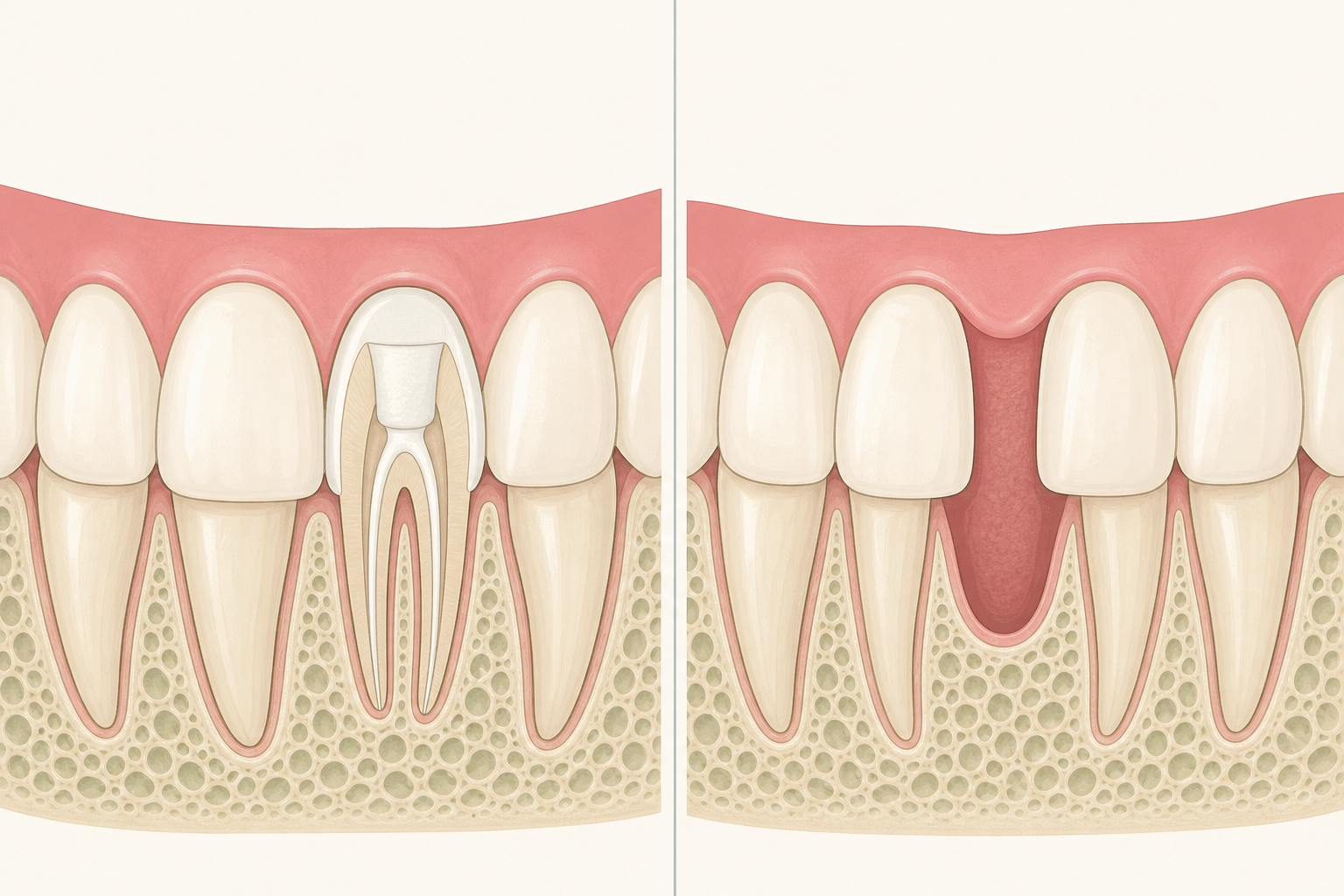
Root canal treatment removes infected pulp and seals the tooth; extraction can lead to replacement with an implant crown or bridge.

[1][2]

The short answer

Root canal treatment removes infected pulp and seals the tooth, while extraction removes it and can be followed by replacement.

[1][2]
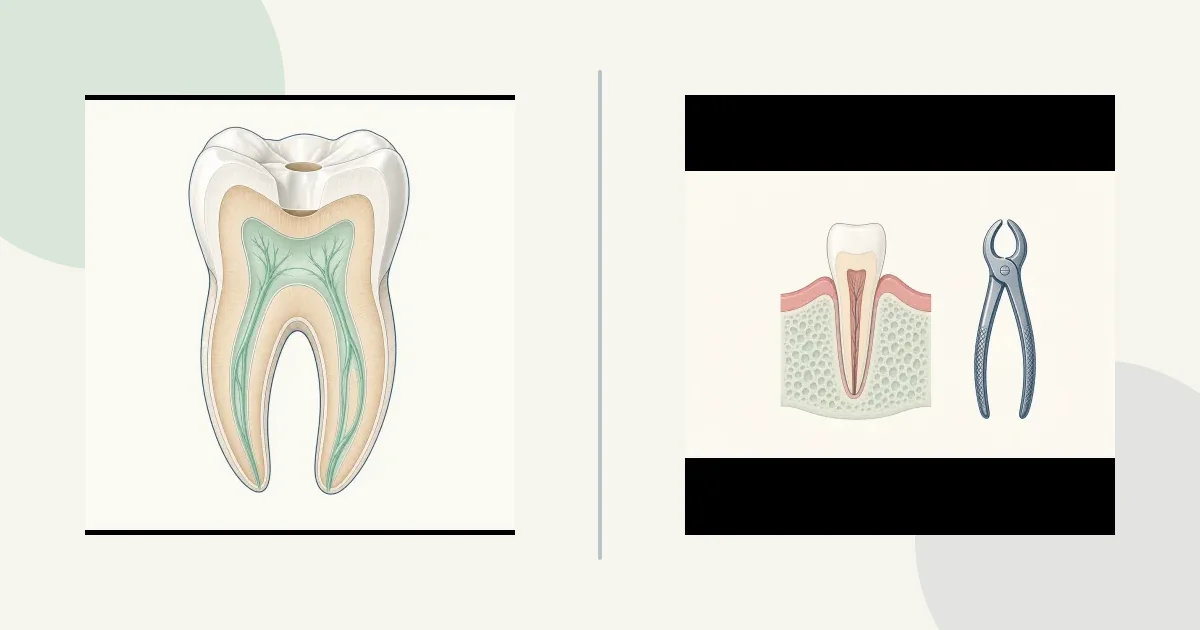
Save vs remove an infected tooth comparison graphic

The two options, side by side

Illustrative diagram: root canal vs tooth extraction
Illustration — a representative diagram, not a patient photo.
The DN First Look799 AED
Book The DN First Look

What is the difference between root canal treatment and extraction?

Two paths for an infected tooth
PathWhat happensPossible next step
Root canal treatmentInfected pulp is removed and the tooth is sealedA crown may be needed for a badly infected tooth[1][2]
ExtractionThe tooth is removedReplacement can be an implant crown or fixed partial denture[1][2]

[1][2]

What happens during root canal treatment?

Local anaesthetic is usually used, so the patient is awake without pain. The tooth is opened, infected pulp is removed, the inside is cleaned and shaped, then it is filled and sealed.

[1][2]

What does choosing extraction mean?

Removing a tooth does not itself replace it. The comparison considered extraction without replacement, an implant-supported single crown, and a fixed partial denture as distinct routes after tooth loss.

[1][2]

What affects the amount of treatment involved?

Root canal treatment usually takes two or more appointments, commonly one to two hours or longer each. A temporary filling may be used between visits, and a badly infected tooth may need a crown.

[1][2]
Root canal treatment details
DetailWhat the treatment can involve
AppointmentsTwo or more[1][2]
Between visitsA temporary filling before the permanent restoration[1][2]

[1][2]

How do the long-term outcomes compare?

In the systematic review, long-term survival for implant-supported single crowns and root canal treatment was similar and both were superior to fixed partial dentures. Direct success-rate comparisons were limited because studies used different criteria.

[1][2]

What are the limits of the evidence?

The reviewed studies varied in design, definitions of success, assessment methods, operator type and sample size. Direct comparisons between treatment types were rare, so success rates could not be compared cleanly.

[1][2]

What if the tooth is removed and not replaced?

Limited data in the review suggested worse psychosocial outcomes after extraction without replacement than after the alternative treatment routes. Loss of a visible tooth was also reported as traumatic in the available psychosocial data.

[1][2]

What is being weighed in this decision?

The decision compares keeping a tooth through root canal treatment and restoration with removing it, replacing it with an implant-supported crown or fixed partial denture, or leaving the gap unreplaced.

[1][2]

Frequently asked questions

Does extracting a tooth replace it?

No. Extraction removes the tooth; an implant crown or fixed partial denture is a separate replacement option.

[1][2]