Dental Nation
Treatment comparison

Legacy vs modern crown

Zirconia and porcelain-fused-to-metal crowns can have similar five-year survival, but each has distinct chipping and retention considerations.

[1][2]

The short answer

Porcelain-fused-to-metal and zirconia crowns can have similar five-year survival, so the choice turns on material-specific complications and the tooth being restored.

[1][2]
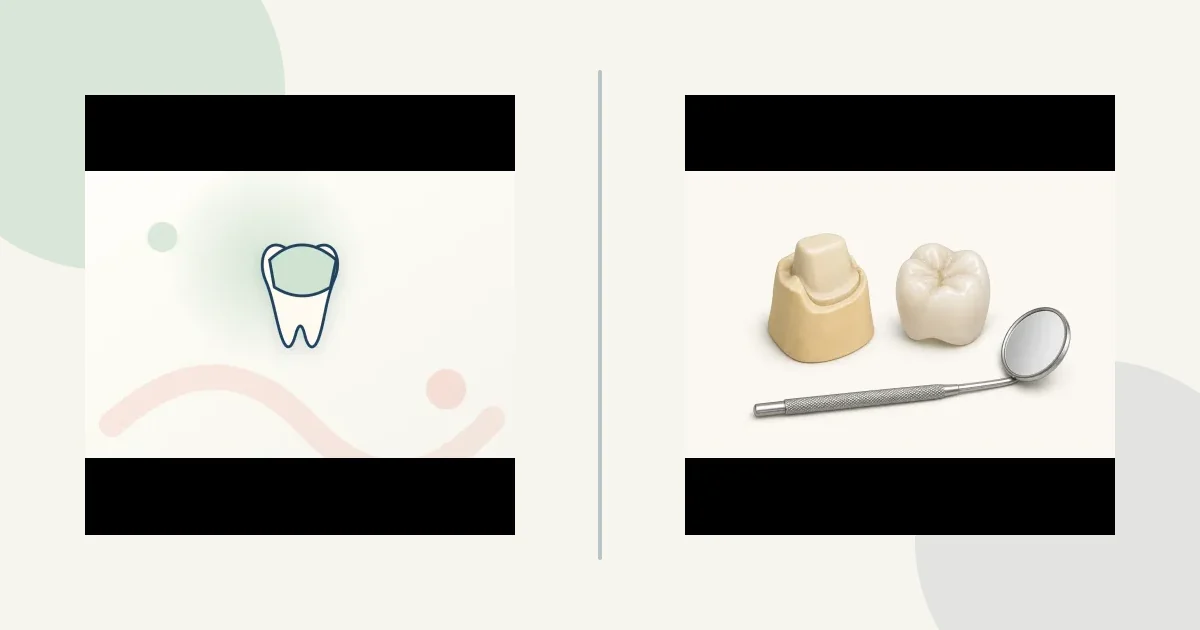
Legacy vs modern crown comparison graphic

The two options, side by side

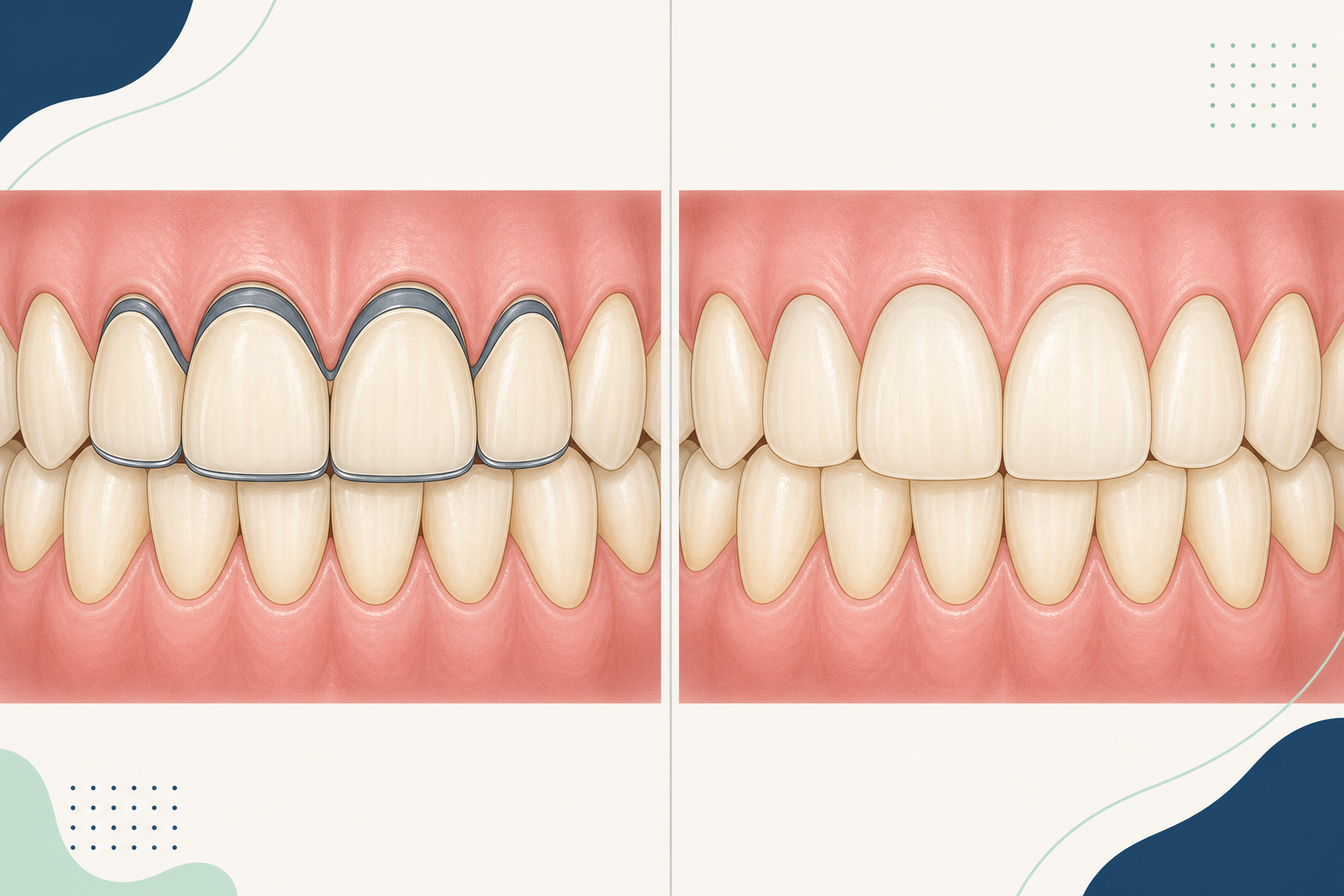
Illustrative diagram: pfm crowns vs zirconia crowns
Illustration — a representative diagram, not a patient photo.
The DN First Look799 AED
Book The DN First Look

Which crown does what?

Points that separate the two crown types
Crown typeEvidence point
Porcelain-fused-to-metalMetal-ceramic crowns had five-year survival comparable with several all-ceramic crown materials.[1][2]
ZirconiaZirconia-based molar crowns did not differ statistically from metal-ceramic molar crowns at five years in one prospective study.[1][2]

[1][2]

When does porcelain fused to metal fit?

Porcelain-fused-to-metal is a metal-ceramic crown option. The comparative evidence placed its five-year survival alongside several all-ceramic single-crown materials, including densely sintered zirconia.

[1][2]
Usual laboratory crown sequence
AppointmentWhat happens
First visitThe tooth is reshaped, an impression is taken for the laboratory, and a temporary crown is cemented.[1][2]
Crown visitsCrowns usually involve two visits.[1][2]

[1][2]

When does zirconia fit?

Zirconia is an all-ceramic crown material. Evidence on molar crowns found no statistical difference in five-year survival compared with metal-ceramic crowns, which makes it a material alternative rather than a guaranteed longer-lasting route.

[1][2]

What changes the cost?

Both choices follow a crown workflow that usually includes reshaping the tooth, taking an impression, laboratory work, and a temporary crown at the first visit. Those steps are part of the treatment route for a conventional crown.

[1][2]

How long do they last?

Five-year survival was similar for metal-ceramic single crowns and several all-ceramic materials, including densely sintered zirconia. Feldspathic or silica glass-ceramic crowns had lower five-year survival than metal-ceramic crowns in the review.

[1][2]

What can go wrong?

For densely sintered zirconia crowns, the review reported a higher risk of veneering-ceramic chipping and loss of retention in back teeth than in front teeth. It did not find a significantly increased risk of framework fracture in zirconia molar crowns versus metal-ceramic molar crowns.

[1][2]

When might neither crown be needed?

A tooth can sometimes be rebuilt with a white filling material that bonds to enamel. For a front tooth with a light bite, a porcelain veneer may be another option.

[1][2]

What should the choice weigh?

Compare the crown material with the tooth position and the type of complication recorded for that material. A front tooth and a back tooth can carry different chipping and retention considerations for zirconia-based crowns.

[1][2]

Frequently asked questions

Is zirconia proven to last longer than porcelain fused to metal?

The available review found similar five-year survival for densely sintered zirconia and metal-ceramic single crowns; it did not establish zirconia as the longer-lasting choice.

[1][2]