Dental Nation
Treatment comparison

Adjunct laser upsell evaluation

Scaling and root planing physically removes deposits from gum pockets; evidence finds no added laser benefit beyond traditional gum surgery.

[1][2]

The short answer

Scaling and root planing removes plaque and tartar from gum pockets, and current evidence finds no added laser benefit beyond traditional periodontal surgery.

[1][2]
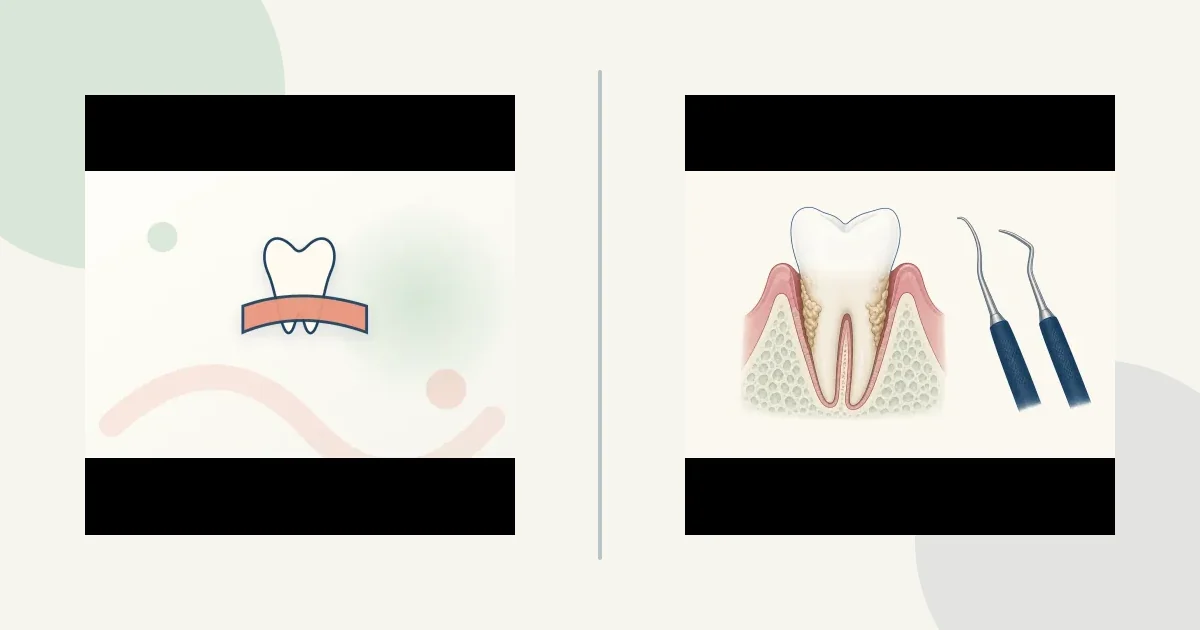
Adjunct laser upsell evaluation comparison graphic

The two options, side by side

Illustrative diagram: laser gum treatment vs scaling and root planing
Illustration — a representative diagram, not a patient photo.
The DN First Look799 AED
Book The DN First Look

How do laser treatment and scaling differ?

What the two approaches do
QuestionLaser treatmentScaling and root planing
Place in careCan be used alone or alongside non-surgical or surgical periodontal treatmentUses mechanical cleaning below the gum line[1][2]
Evidence findingLaser plus mechanical treatment had similar or slightly better outcomes than laser aloneRemoves plaque and tartar, then smooths roots to help gums reattach[1][2]

[1][2]

When does scaling and root planing fit?

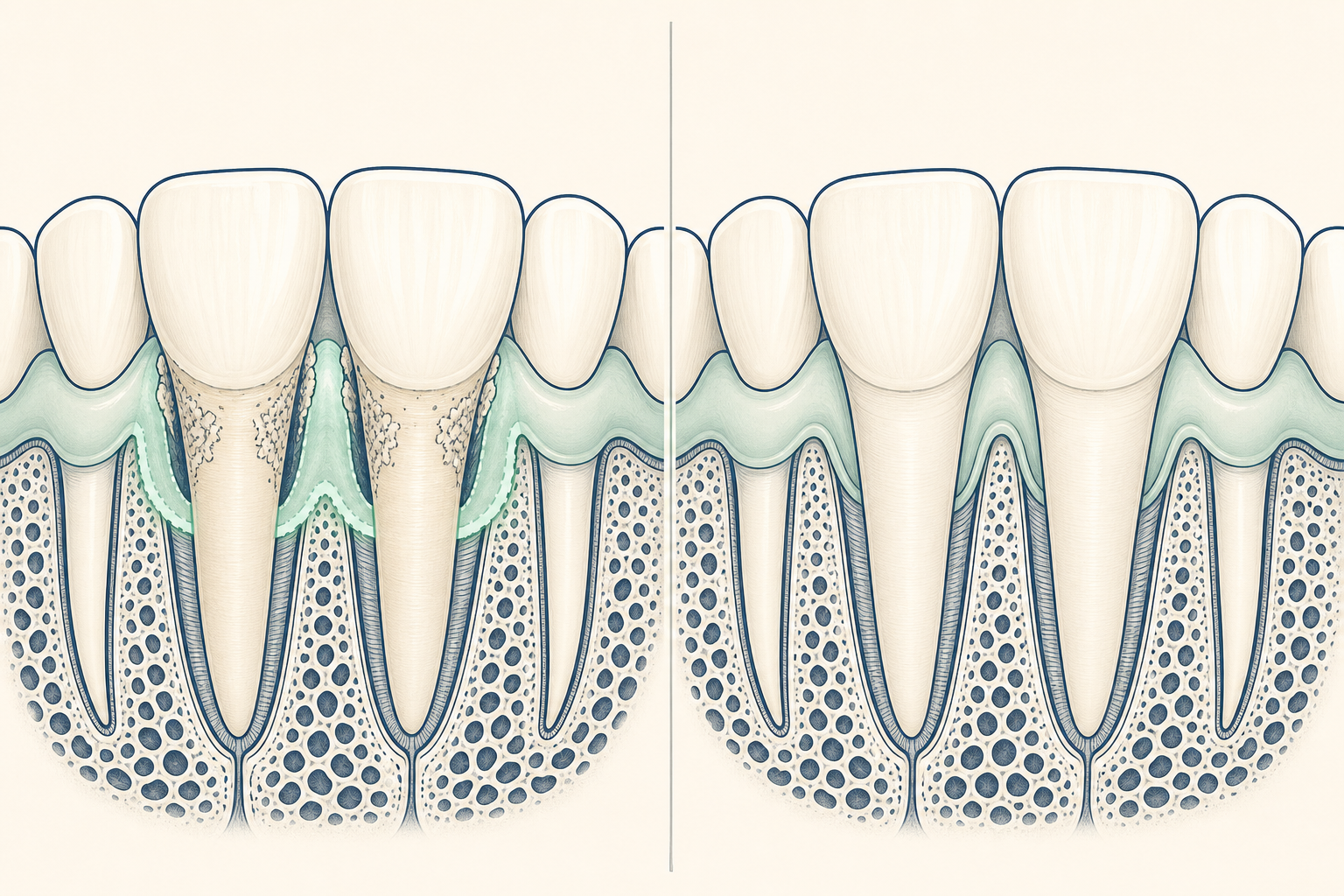
Scaling and root planing is a deep cleaning for gum disease when pockets between gums and teeth are too deep for regular brushing to remove trapped plaque. Scaling cleans down to the bottom of the pocket before root planing smooths the root.

[1][2]

What does a laser add?

Laser treatment may be used as an adjunct to mechanical treatment. The periodontal consensus found laser used with mechanical care produced similar or slightly better outcomes than laser used alone.

[1][2]

What changes the treatment process?

Mechanical deep cleaning has two distinct steps: scaling removes deposits above and below the gum line, and root planing smooths root surfaces. It may need more than one visit and may require local anaesthetic.

[1][2]
What follows deep cleaning
StageWhat happensWhy it matters
After treatmentGums are checked and pocket depths are measured at another visitDeeper pockets may need more treatment[1][2]
Daily careBrush twice a day and clean between teeth dailyHelps keep gum disease from becoming more serious or recurring[1][2]

[1][2]

How is gum health maintained after treatment?

Plaque continually forms on teeth. Brushing twice daily with a soft brush, cleaning between teeth every day, avoiding tobacco and regular dental visits help limit recurrent or worsening gum disease after deep cleaning.

[1][2]

What can deep cleaning feel like afterwards?

Deep cleaning can cause pain for a day or two and tooth sensitivity for up to a week. Gums may swell, feel tender or bleed; medication or a mouth rinse may be prescribed to control pain, prevent infection or support healing.

[1][2]

When is a routine cleaning not enough?

Early gum disease without damage below the gum line may only need professional cleaning. When pockets are deep, plaque becomes trapped beyond the reach of brushing and scaling and root planing may be needed.

[1][2]

What is the useful question about a laser?

Ask whether a laser is being used alone or as an addition to mechanical cleaning. The cited consensus found no additional benefit from lasers beyond traditional periodontal surgery, while laser plus mechanical treatment outperformed laser alone only slightly or similarly.

[1][2]

Frequently asked questions

Can a laser replace scaling and root planing?

The cited consensus found laser plus mechanical treatment performed similarly or only slightly better than laser alone, and found no added benefit beyond traditional periodontal surgery.

[1][2]