Dental Nation
Treatment comparison

Invisible options head-to-head

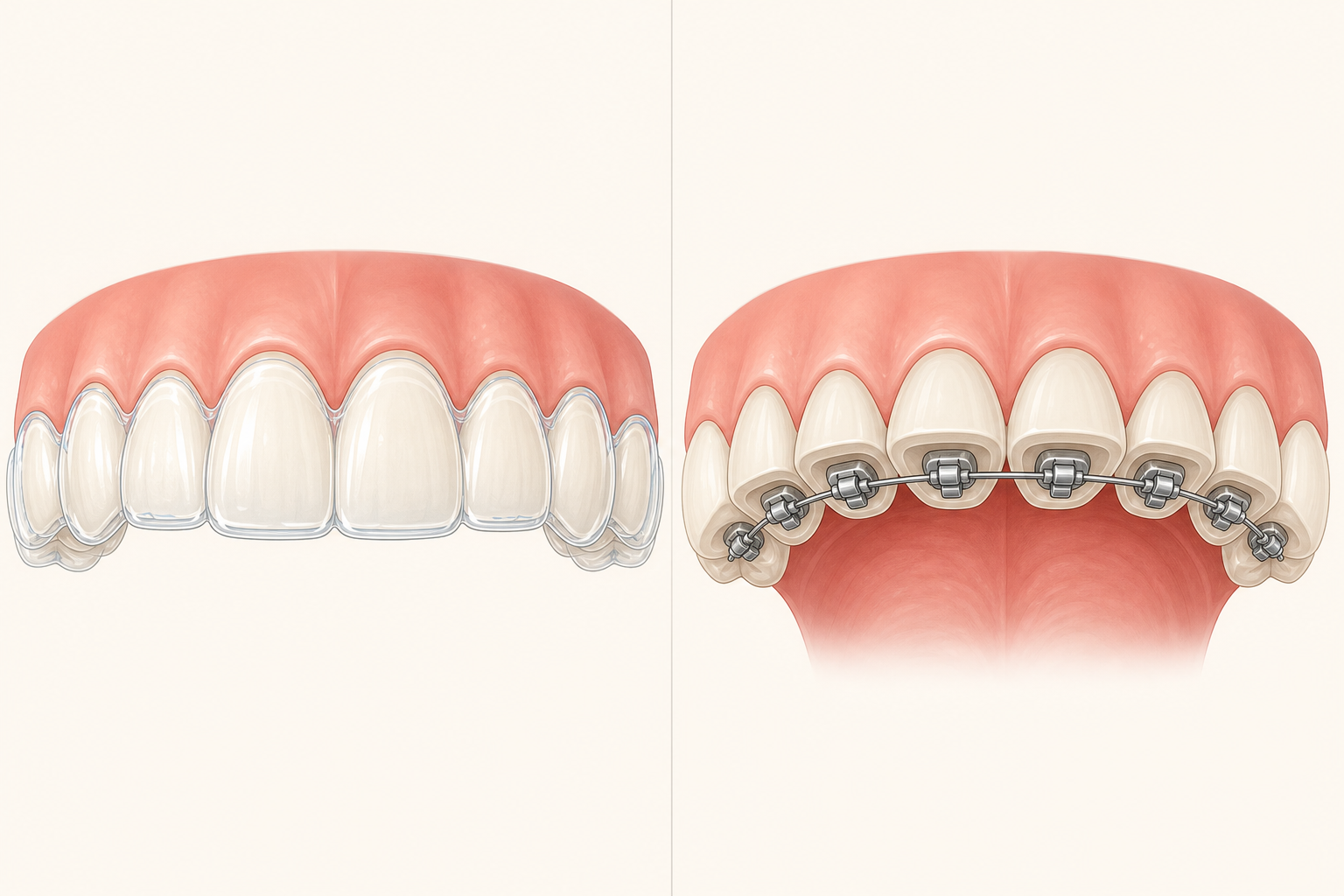
Clear aligners lift out for meals and brushing, while lingual braces stay hidden behind the teeth and give fixed control.

[1][2]

The short answer

Clear aligners are removable plastic shells, whereas lingual braces are fixed behind the teeth and provide greater three-dimensional control.

[1][2]

Invisible options head-to-head comparison graphic

The two options, side by side

Illustrative diagram: invisalign vs lingual braces
Illustration — a representative diagram, not a patient photo.
The DN Scan499 AED · fully deducted if treatment starts within 30 days
Book The DN Scan

Which invisible option does what?

How the appliances differ
FeatureClear alignersLingual braces
Where it sitsOver the teeth as a plastic shellBehind the teeth as fixed brackets[1][2]
How it moves teethGentle pressure gradually repositions teethFixed braces allow greater three-dimensional control[1][2]

[1][2]

Choose clear aligners if removability matters

Clear aligners can come out for eating and brushing, and their nearly invisible plastic shells may suit someone who does not want conventional braces on show.

[1][2]
What clear aligners change day to day
SituationWhat follows
Meal or toothbrushingThe aligner can be removed[1][2]
Crooked or crowded teethGentle pressure is used to reposition teeth over time[1][2]

[1][2]

Choose lingual braces if fixed control is the priority

Lingual braces are concealed on the tongue side of the teeth. Because they stay fixed, they can manage a wider range of problems than removable treatment.

[1][2]

What about cover and cost?

Orthodontic cover can apply to clear aligners and traditional braces, but the accepted cover varies between plans and providers.

[1][2]

What does daily care involve?

A lingual appliance remains attached throughout treatment. Its position behind the teeth keeps it discreet, while fixed braces require consistent oral hygiene to reduce enamel marking.

[1][2]

Does either option hurt or mark teeth?

Clear aligners commonly cause mild discomfort for the first few days and an adjustment period of about a week. Fixed orthodontic treatment carries a small risk of enamel decalcification, which appears as white marks and is linked with poor diet and oral hygiene.

[1][2]

When might neither be the answer?

Crooked or crowded teeth can make hygiene harder and contribute to tooth decay or gum disease. Lingual braces can treat a wider range of problems, while clear aligners move teeth gradually with gentle pressure.

[1][2]

How is the choice made?

The practical distinction is fixed control versus removability: lingual braces stay behind the teeth and can improve a wider range of orthodontic problems; clear aligners are nearly invisible shells that come off the teeth.

[1][2]

Frequently asked questions

Are lingual braces actually hidden?

Yes. Lingual braces are fixed to the back, or tongue side, of the teeth, so they are concealed from the outside.

[1][2]