Dental Nation
Treatment comparison

Graft vs minimally invasive recession fix

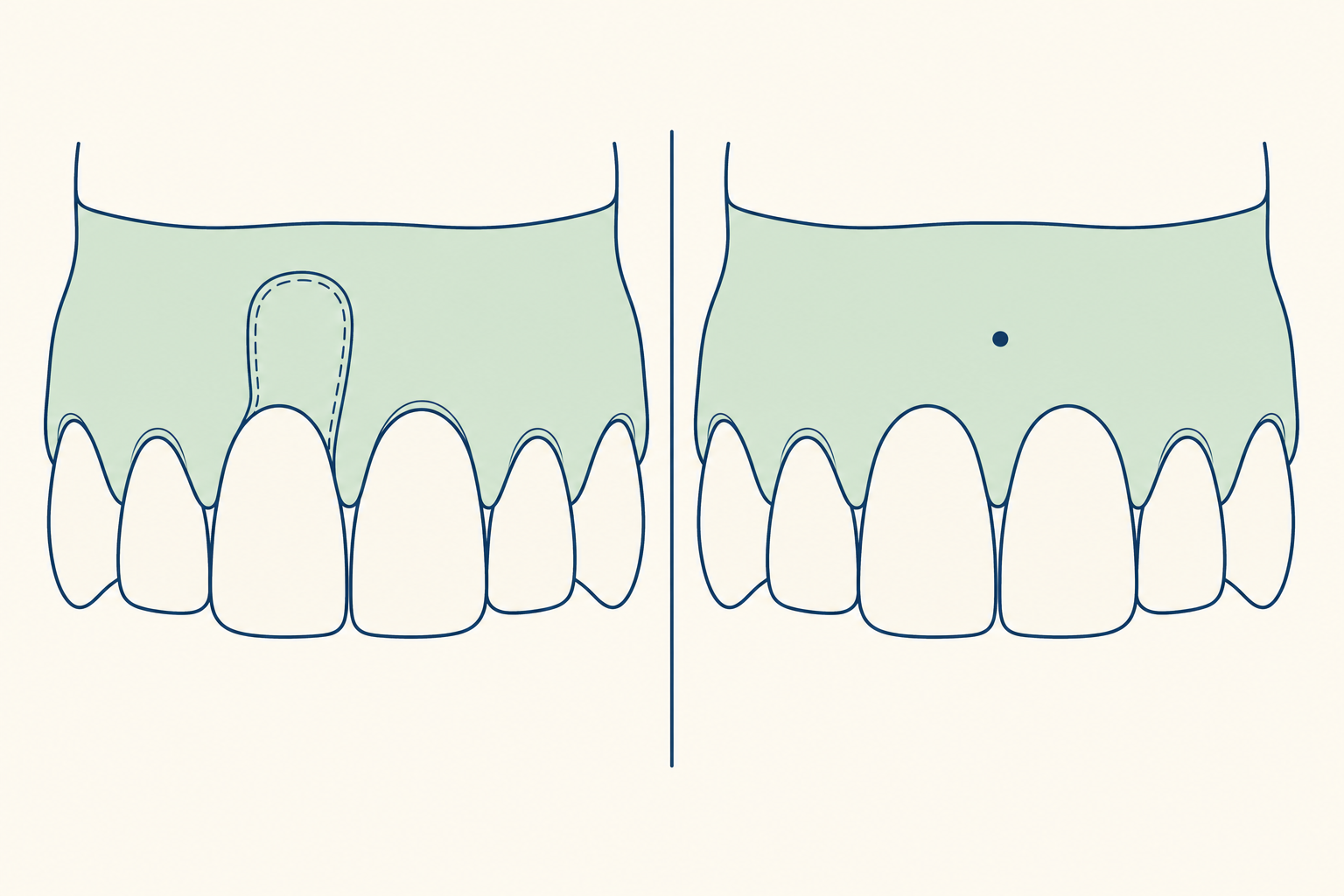
A graft adds your own gum tissue around an exposed root; pinhole surgery repositions tissue through a small opening.

[1][2]

The short answer

A gum graft adds tissue to protect an exposed root, while pinhole surgery repositions gum through a small opening without sutures.

[1][2]
Graft vs minimally invasive recession fix comparison graphic

The two options, side by side

Illustrative diagram: gum grafting vs pinhole surgical technique
Illustration — a representative diagram, not a patient photo.
The DN First Look799 AED
Book The DN First Look

How do grafting and pinhole surgery differ?

How the two approaches address recession
QuestionGum graftingPinhole surgery
How it is doneUses the person's own soft tissue from elsewhere in the mouthUses a pinhole incision and no sutures[1][2]
Main aimProtects an exposed root and limits further gum deteriorationManages marginal tissue recession with minimally invasive access[1][2]

[1][2]

When might a graft be the better fit?

Soft-tissue grafting is used when recession has left gum tissue thin, exposed a tooth root, or put the root at risk of exposure. Covering the root can reduce sensitivity, make home cleaning easier and help protect against future decay.

[1][2]

When might pinhole surgery be considered?

The pinhole technique has been reported for multiple marginal recession sites, especially Miller Class I and II recession. Its small access point avoids sutures, but the cited report is a case series rather than a large comparative trial.

[1][2]

What changes the practical burden?

The practical difference is the surgical route: a graft takes soft tissue from another area of the mouth, whereas pinhole treatment works through a small opening. That difference can shape the early recovery experience.

[1][2]
Early recovery points
PointGum graftingPinhole surgery
DiscomfortPain and discomfort can occur after the operationThe reported case series described minimal patient discomfort[1][2]
Visible changesSwelling and bruising may occur during the first one to two weeksThe technique uses no sutures[1][2]

[1][2]

What result has been reported?

In a five-patient report covering 18 recession sites, pinhole surgery produced 96.7% overall root coverage at six months. Grafting is intended to prevent further gum deterioration while improving the appearance of recession.

[1][2]

What can recovery feel like after a graft?

Pain, swelling and bruising can follow soft-tissue grafting; swelling and bruising usually settle within one to two weeks. Bleeding, infection, a changed gum line and a need for further surgery are possible complications.

[1][2]

When is a recession procedure not the whole answer?

Root coverage does not replace daily plaque control. The aim of grafting includes protecting an exposed root and limiting further recession, so keeping gums clean remains part of protecting the result.

[1][2]

What decides between the two procedures?

The deciding features are whether recession has produced thin gum tissue or root exposure, and whether the recession pattern matches the cases reported for pinhole treatment. The procedures use different surgical routes to pursue root coverage.

[1][2]

Frequently asked questions

Does pinhole surgery use stitches?

The reported pinhole technique uses a small incision and no sutures, unlike a graft that takes soft tissue from another area of the mouth.

[1][2]