Dental Nation
Treatment comparison

Recession/perio surgical options

Gum grafting treats recession with exposed roots using tissue from the mouth; lasers add no proven benefit beyond periodontal surgery.

[1][2]

The short answer

Gum grafting uses soft tissue from elsewhere in the mouth to cover recession-related root exposure, while lasers show no added benefit beyond traditional periodontal surgery.

[1][2]
Recession/perio surgical options comparison graphic

The two options, side by side

Illustrative diagram: gum grafting vs lanap
Illustration — a representative diagram, not a patient photo.
The DN First Look799 AED
Book The DN First Look

What do these treatments address?

The main distinction
ApproachWhat the evidence describes
Soft-tissue graftingA surgical procedure that uses a person’s own soft tissue to treat thin gums and recession-related root exposure.[1][2]
Laser treatmentA treatment considered alone or alongside non-surgical and surgical periodontal care.[1][2]

[1][2]

When does gum grafting answer the problem?

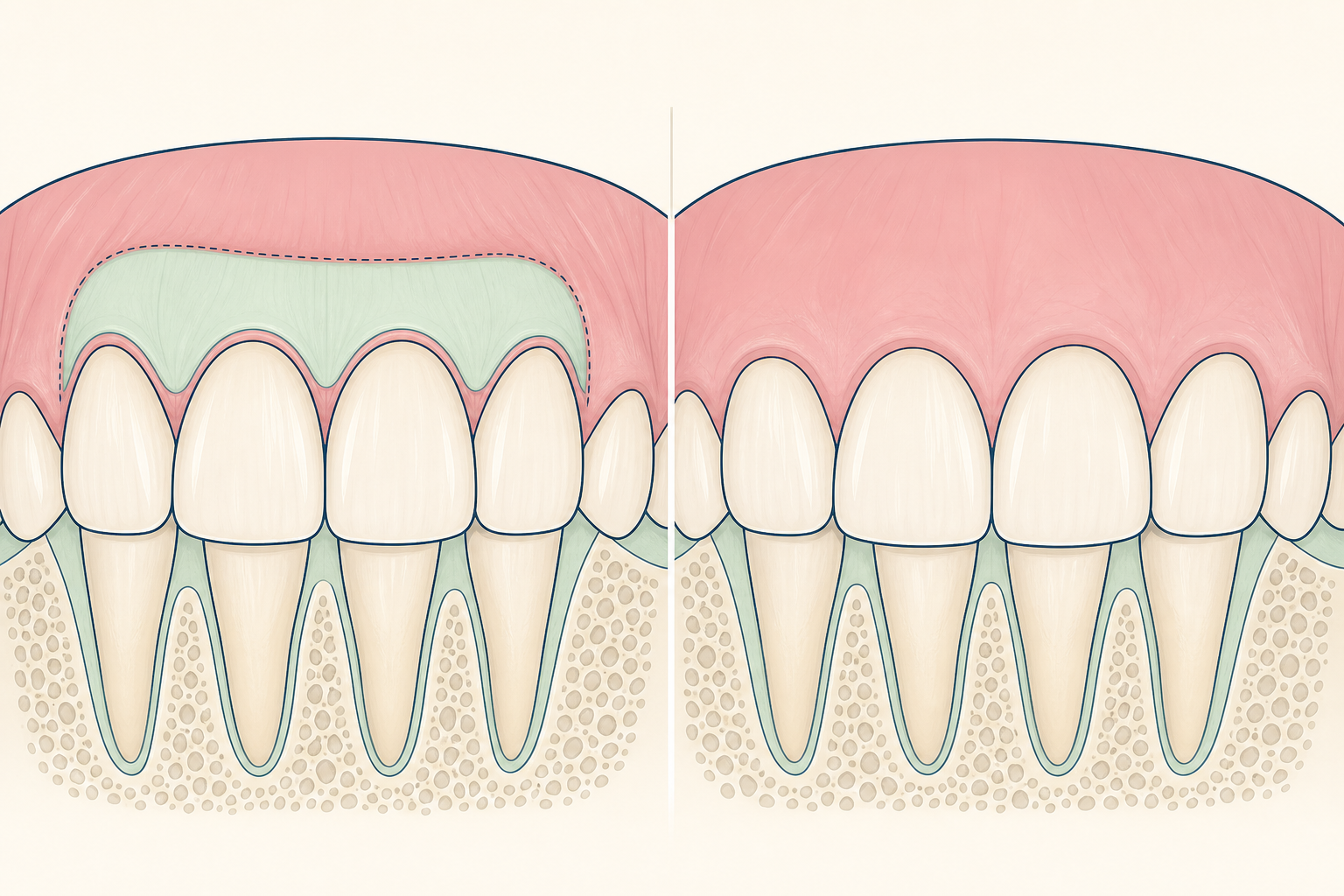
Soft-tissue grafting is used when recession has made gum tissue thin and left a root exposed, or when recession creates a risk of root exposure. It aims to prevent further gum deterioration and improve appearance.

[1][2]

What can laser treatment add?

When laser treatment is added to mechanical treatment, outcomes were similar or slightly better than with lasers alone. The evidence found no additional laser benefit beyond traditional periodontal surgery.

[1][2]

What treatment work is involved?

A gum graft is a surgical procedure that usually takes soft tissue from elsewhere in the mouth. Gum tissue may be thick or thin, and that thickness affects how gums respond to treatment.

[1][2]

What supports long-term gum stability?

Thick gum tissue is more resistant to recession over time. It can also help achieve good aesthetic results around a dental implant.

[1][2]
Why gum thickness matters
Tissue featureReported effect
Thin gumIt can accompany recession that exposes a tooth root.[1][2]
Thick gumIt is more resistant to recession over time.[1][2]

[1][2]

What happens after a gum graft?

Pain and discomfort are normal after grafting and can be controlled with simple painkillers. Swelling and bruising generally settle within one to two weeks; bleeding, infection, uneven gum appearance and further surgery are listed risks.

[1][2]

When is another periodontal approach needed?

Laser use is part of periodontal care, but the current evidence does not show a benefit beyond traditional periodontal surgery. Mechanical treatment remains part of the comparison.

[1][2]

What is assessed before surgery?

The decision considers whether recession has exposed a root, whether further exposure is likely and whether the gum tissue is thin or thick. Those features describe the reason grafting may be used.

[1][2]

Frequently asked questions

How long do swelling and bruising last after gum grafting?

They usually improve within the first one to two weeks after the procedure.

[1][2]