Dental Nation
Treatment comparison

Legacy gold demand

Zirconia crowns had five-year survival comparable with metal-ceramic crowns, though veneer chipping and retention loss are reported.

[1][2]

The short answer

Zirconia crowns showed five-year survival comparable with metal-ceramic crowns, but chipping of the veneering ceramic and retention loss remain reported risks.

[1][2]
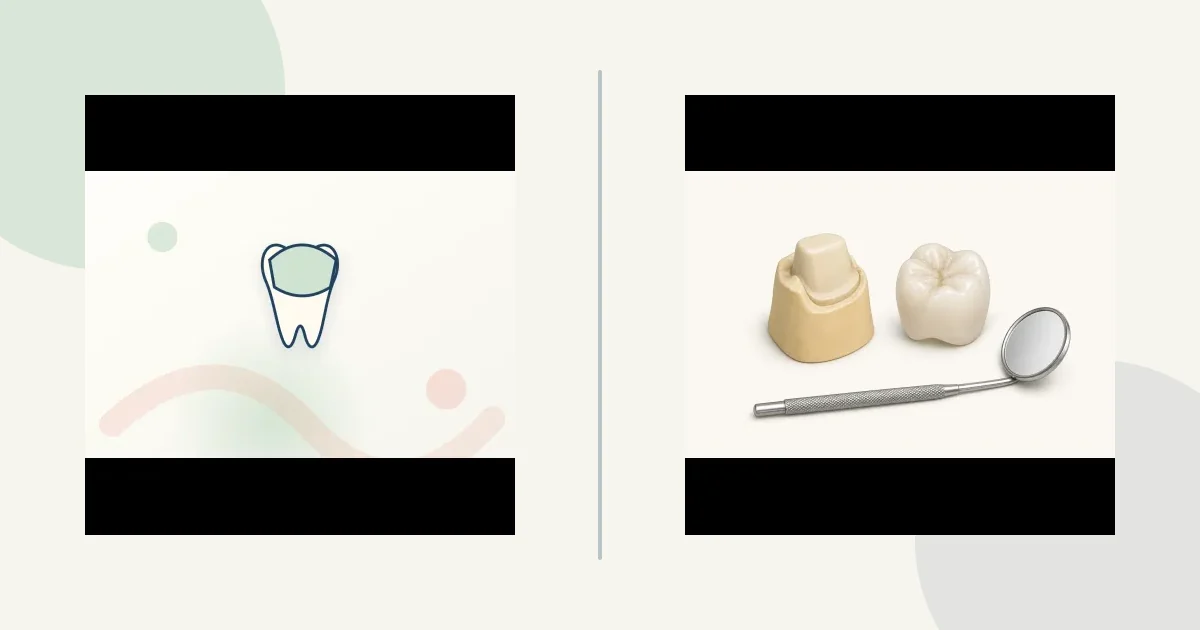
Legacy gold demand comparison graphic

The two options, side by side

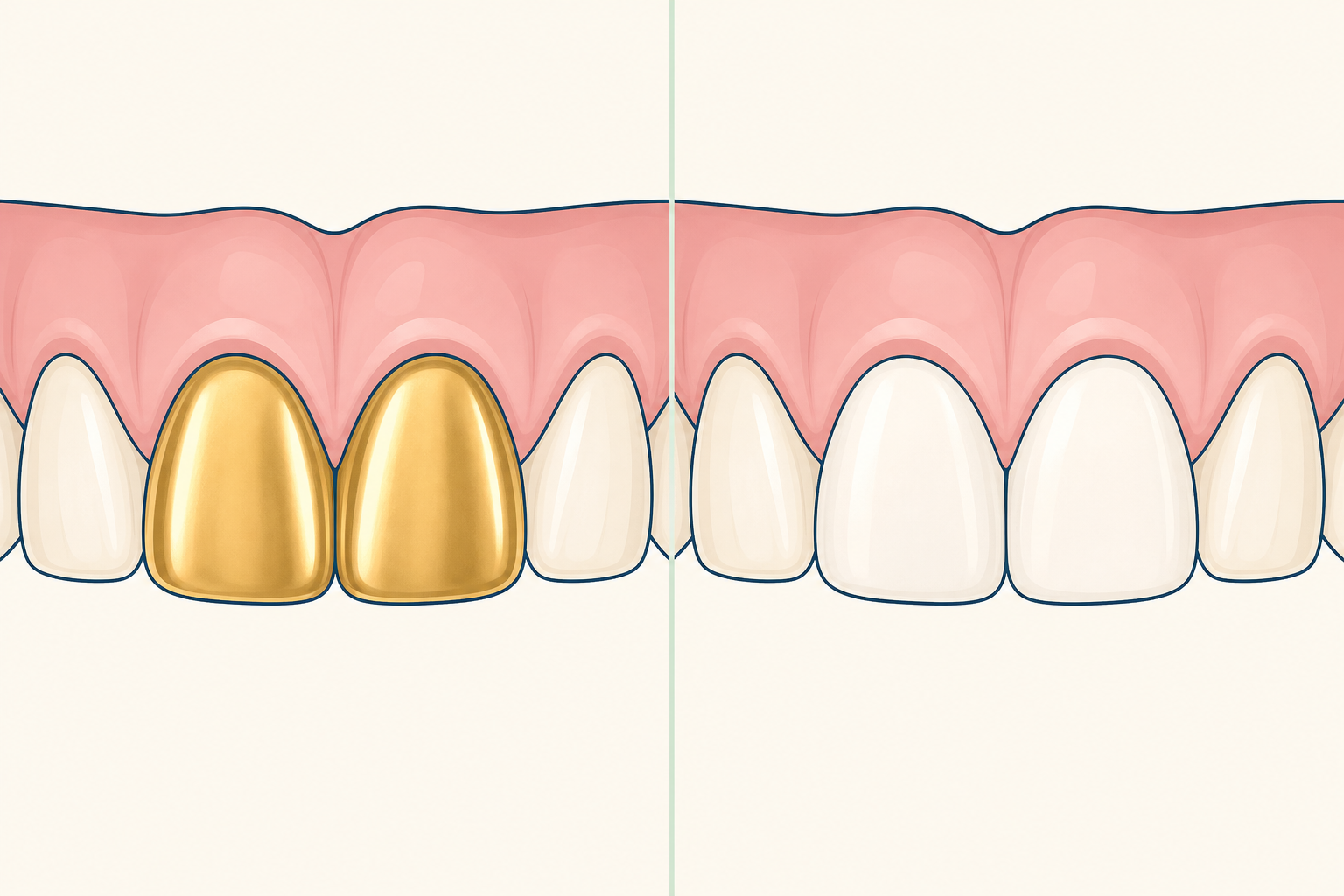
Illustrative diagram: gold crowns vs zirconia crowns
Illustration — a representative diagram, not a patient photo.
The DN First Look799 AED
Book The DN First Look

What does the evidence say about zirconia crowns?

Reported findings for crown materials
Material groupReported result
Densely sintered zirconiaSimilar five-year survival to metal-ceramic single crowns in the systematic review.[1][2]
Feldspathic or silica glass-ceramicLower reported five-year survival than metal-ceramic crowns.[1][2]

[1][2]

When does a zirconia crown fit the evidence?

Zirconia-based molar crowns and metal-ceramic molar crowns did not differ statistically in five-year survival in one prospective study. Other studies reported high survival probabilities for zirconia-based crowns.

[1][2]

When is a metal crown relevant?

Metal-ceramic crowns are the comparison group in the review. Several all-ceramic crown types, including densely sintered zirconia, had similar five-year survival to metal-ceramic single crowns.

[1][2]

What is included in crown treatment?

At the first crown visit, the tooth is reshaped, an impression is sent to the laboratory and a temporary crown is cemented to protect the tooth. A second visit is usually involved.

[1][2]

How durable are the materials?

The review reported 96.1% survival for lithium disilicate crowns for up to nine years and 94.7% for zirconia-based crowns at seven years. These figures were comparable to reported metal-ceramic survival.

[1][2]
Examples of reported survival
Crown typeReported figure
Lithium disilicate96.1% survival for up to nine years.[1][2]
Zirconia based94.7% survival at seven years.[1][2]

[1][2]

What can fail?

For densely sintered zirconia crowns, the review found an increased risk of veneering ceramic chipping and retention loss in the posterior region. Framework fracture was not significantly increased in the cited molar study.

[1][2]

When might a crown be unnecessary?

A tooth can sometimes be rebuilt with a white filling material bonded to enamel. A porcelain veneer can be an option for a front tooth when the bite is not heavy.

[1][2]

What happens before the final crown?

The preparation appointment reshapes the tooth and records an impression for the laboratory. A temporary crown protects the tooth between the usual two appointments.

[1][2]

Frequently asked questions

Can zirconia crowns chip?

The reviewed evidence reported chipping of the veneering ceramic as a risk for densely sintered zirconia crowns.

[1][2]