Dental Nation
Treatment comparison

Premium ceramic choice

For ceramic laminate veneers, lithium disilicate may be preferred for long-term success; both options still need plaque control and maintenance.

[2][3]

The short answer

Lithium disilicate may be preferred for long-term success among ceramic laminate veneers, while both ceramic choices need careful maintenance.

[2][3]
Premium ceramic choice comparison graphic

The two options, side by side

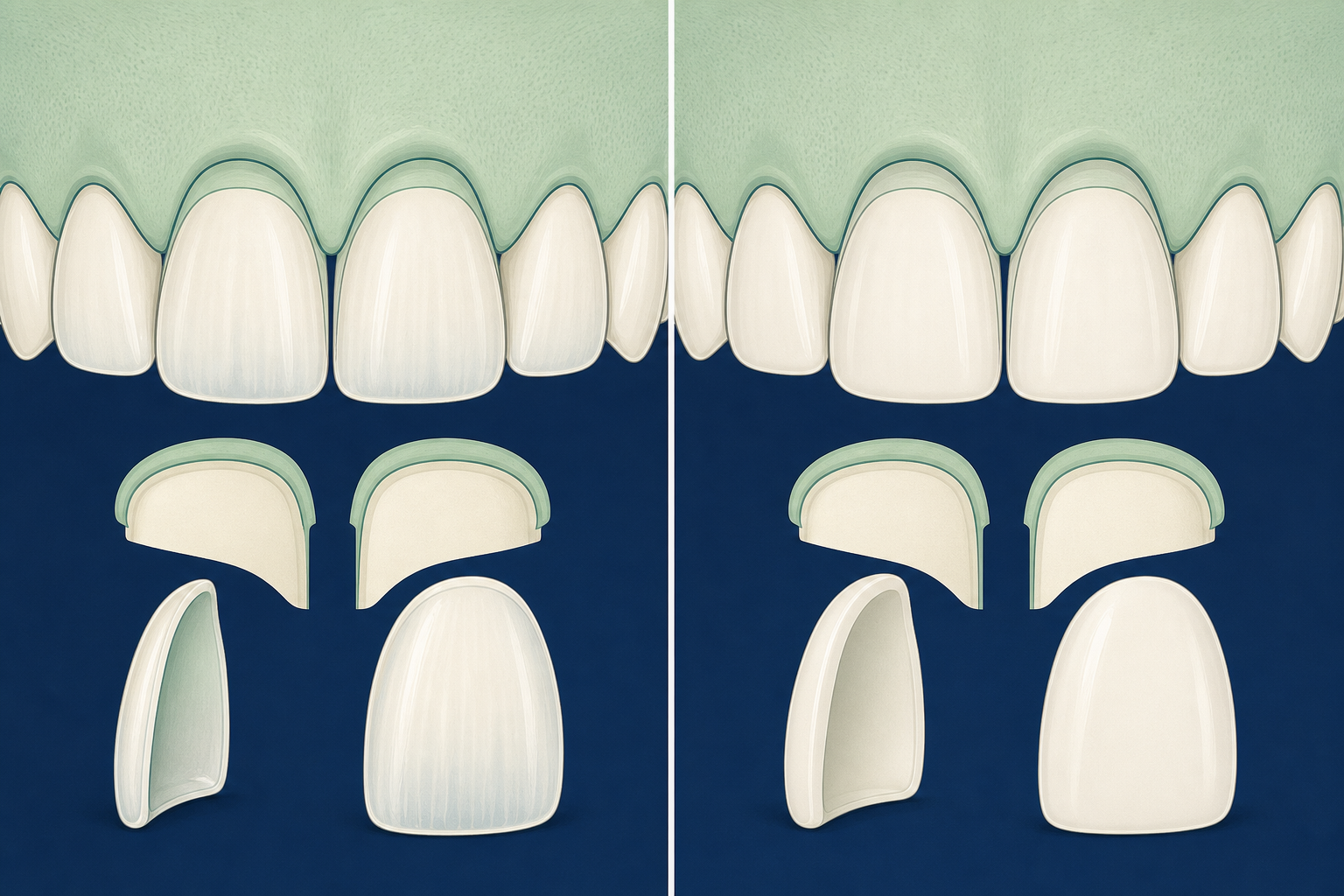
Illustrative diagram: emax veneers vs zirconia veneers
Illustration — a representative diagram, not a patient photo.
The DN Glow Up1,699 AED
Book The DN Glow Up

What does the ceramic evidence support?

Evidence and maintenance points for ceramic veneers
QuestionSupported point
Long-term material signalLithium disilicate may be preferred as a restorative material for long-term success.[2][3]
Plaque controlGums around crowns and veneers are sensitive to plaque build-up, so meticulous oral hygiene is important.[1][2]

[2][3][1]

When does lithium disilicate have the stronger evidence signal?

For ceramic laminate veneers, lithium disilicate may be preferred when long-term success is the material priority. Ceramic laminate veneers are a reliable treatment option.

[2][3]

What should a zirconia discussion still cover?

A zirconia veneer discussion still needs to cover gum condition, plaque control and the planned appearance. Tooth-coloured restorations can be matched to natural tooth shape, small gaps and marks.

[1][2]

What cost comparison can be made from the materials?

The material comparison is about long-term success and maintenance rather than a stated price. Ceramic veneers are restorations whose final appearance can be matched to the natural teeth.

[2][3]

What affects veneer longevity?

Diet, oral hygiene, cleaning between teeth, smoking, daily wear and grinding affect how long crowns, veneers and bridges last. Plaque around restorations can be associated with bleeding gums.

[1][2]
Factors linked with restoration longevity
FactorWhy it matters
CleaningToothbrushing plus cleaning between teeth with floss or interdental brushes is listed as a longevity factor.[1][2]
GrindingDaily wear and tooth grinding can affect the prognosis for veneers and other restorations.[1][2]

[1][2]

What complications should be considered?

A small percentage of teeth receiving crowns, veneers or bridges may later need root canal therapy. Thin gums can recede slightly and expose a darker root surface or restoration margin.

[2][3]

When might neither ceramic veneer be the answer?

No-preparation ceramic veneers have insufficient evidence for a definitive clinical statement about long-term outcomes. A molar may sometimes be better restored with a gold crown.

[1][2]

What is assessed before choosing a ceramic veneer?

The assessment includes the intended shade and shape, the condition of the gums, plaque build-up, daily tooth wear and whether the tooth may need root canal treatment before permanent cementation.

[1][2]

Frequently asked questions

Can gum recession show around a ceramic veneer?

Thin gums can recede slightly, exposing a darker root surface or the margin of a crown, veneer or bridge restoration.

[2][3]